
Politics
PDP Warns of Judiciary Trust Crisis as Political Feud With APC Intensifies
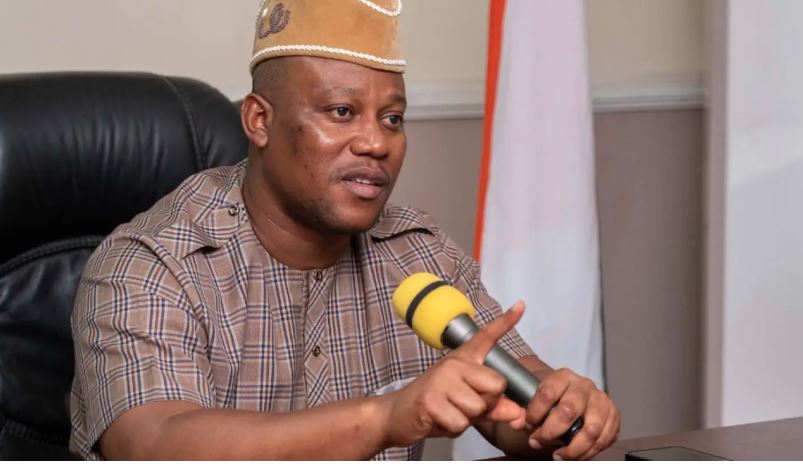
The Peoples Democratic Party (PDP) has raised an alarm over what it describes as a systemic collapse of public confidence in Nigeria’s judiciary. National Publicity Secretary, Ini Ememobong, speaking in a forceful critique on Friday, January 23, 2026, warned that the “judicialisation of politics” is eroding the foundational pillars of the nation’s democracy. The opposition’s remarks come as a sharp rebuttal to Sunday Dare, the Senior Special Adviser to President Tinubu on Public Communications, who recently defended the All Progressives Congress (APC) administration’s governance and institutional reform record.
According to the PDP spokesman, the Nigerian public has grown increasingly disillusioned with a legal system they perceive as being detached from common reality and prone to political manipulation. Ememobong argued that the current climate is defined by an “absence of consequences” for those in power, a situation he believes has turned the temple of justice into a theater for partisan interests. He noted that when legal processes are viewed as tools for political survival rather than instruments of equity, the result is a dangerous level of public cynicism that could hinder democratic consolidation.
The exchange follows a spirited defense of the APC government by Sunday Dare, who asserted that the administration is not afraid of public scrutiny. Dare had argued that the nation’s myriad challenges were inherited from decades of previous mismanagement and that the current economic reforms require patience to yield fruit. He pointed to macroeconomic indicators as evidence that the country is on a path toward institutional maturity.
However, the PDP dismissed these statistical claims as “performative governance.” Ememobong challenged the government to move beyond GDP growth figures and connect their policy pronouncements with the lived experiences of everyday Nigerians. He questioned how the administration could celebrate abstract economic gains while the citizens they encounter reflect a starkly different reality characterized by soaring costs and persistent insecurity. To the opposition, the gap between official data and the “man on the street” is a clear sign of leadership failure.
Beyond the economy, the PDP’s critique focused heavily on the lack of accountability within the ruling party. Ememobong accused the APC of dodging responsibility for the current state of the nation by constantly referring to the past. He insisted that the true measure of a government is its ability to hold its own officials accountable and ensure that justice is applied equally, regardless of political affiliation. Without these safeguards, he warned, trust in governance will continue to evaporate.
The timing of this debate is particularly significant as Nigeria moves deeper into 2026, with political parties already beginning to align their strategies for future electoral cycles. The PDP has positioned itself as the voice of a “people-centered” alternative, promising to prioritize security and welfare over what it terms “ephemeral optics.” By highlighting the judiciary’s struggles, the opposition is tapping into a broader national conversation about the need for total institutional reform to prevent the country from sliding into a state of “democratic fatigue.”
As the war of words between the nation’s two largest political entities escalates, the focus remains on whether the government can restore faith in the institutions that act as the final arbiters of truth and justice. For the PDP, the solution lies in a return to accountability and a judicial system that operates without the shadow of executive influence. For now, the “disconnect between policy and people” remains the central theme of a political struggle that shows no signs of cooling.


