
Sports
Sunday Oliseh Slams Super Eagles for Celebrating AFCON Bronze
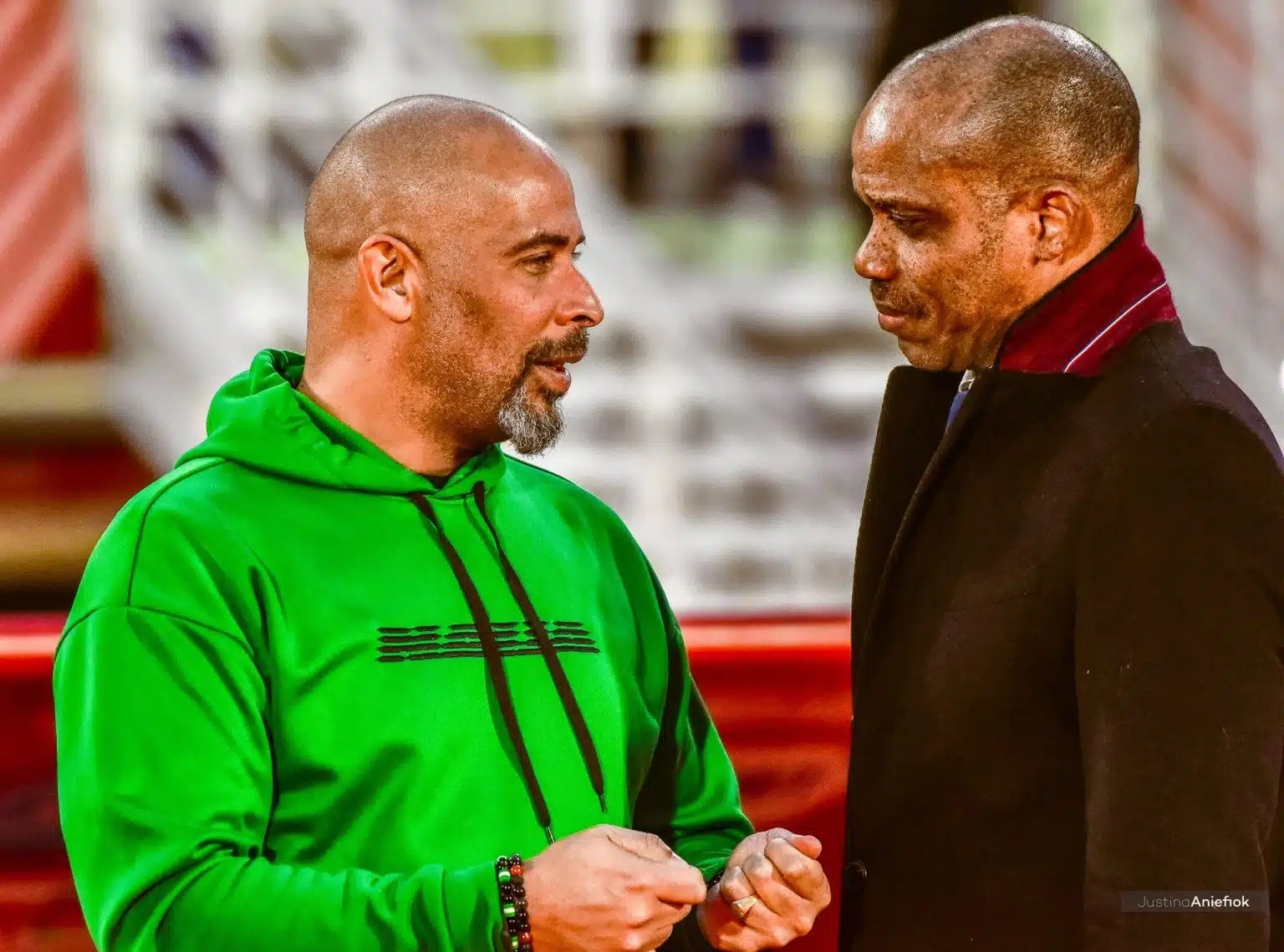
The legendary former captain and head coach of the Super Eagles, Sunday Oliseh, has ignited a fierce debate within the Nigerian football community by openly criticizing the national team’s reaction to their third-place finish at the 2025 Africa Cup of Nations. Following the conclusion of the tournament in Morocco, Oliseh expressed deep concern that the visible joy displayed by the players after securing a bronze medal is a symptomatic sign of declining standards. He warned that such public displays of satisfaction for anything less than the gold trophy are effectively institutionalizing a culture of mediocrity within the nation’s most beloved sport.
The controversy stems from the scenes that unfolded in Rabat last weekend after Nigeria defeated Egypt 4-2 in a tense penalty shootout during the bronze medal playoff. While fans across the country initially cheered the victory over the Pharaohs, which secured Nigeria’s ninth AFCON bronze medal in history, Oliseh found the exuberant post-match celebrations to be deeply unsettling. For a man who was part of Nigeria’s “Golden Generation,” the sight of modern players celebrating a third-place finish felt like a departure from the elite mentality that once defined the team.
Speaking candidly on the Global Football Insight Podcast, Oliseh revealed that the reaction of the Nigerian squad did not go unnoticed by the international community. He recounted his experience sitting in the media tribune during the final stages of the tournament, where he witnessed firsthand the reactions of global football experts. According to Oliseh, a viral video showing the Super Eagles players dancing and celebrating their victory over Egypt became a subject of ridicule among pundits from both Africa and Europe.
The former Juventus and Borussia Dortmund midfielder noted that many international observers were genuinely baffled by the intensity of the celebration. In his view, the mockery from foreign pundits was a painful wake-up call that Nigeria’s status as a continental powerhouse is being diluted by low expectations. He argued that when the rest of the world sees a giant like Nigeria celebrating a consolation prize with such fervor, it sends a message that the team is no longer striving for ultimate dominance.
Oliseh’s critique is rooted in a historical perspective that many younger fans might not fully appreciate. He drew a sharp contrast between the current squad’s attitude and the environment he experienced during his playing days in the 1990s. He reminded listeners that there was an era when the Super Eagles would leave the pitch in tears even after finishing as runners-up. To that generation, the silver medal was often viewed as a missed opportunity rather than a success, and the bronze was barely acknowledged as a cause for festivity.
This shift in psychology is what troubles the former manager the most. He believes that the psychological benchmark for success in Nigerian football has shifted downward. By allowing players to feel a sense of total accomplishment for finishing third, the pressure to evolve and win the championship is diminished. Oliseh contends that if the ultimate goal is to return to the pinnacle of African and global football, the team must cultivate a mindset where anything short of the trophy is met with reflection and a drive for improvement, rather than a party atmosphere.
The 2025 AFCON campaign in Morocco was a roller-coaster journey for the Super Eagles, marked by flashes of brilliance but ultimately ending before the final hurdle. While winning a bronze medal is statistically a positive result in a tournament featuring 24 competitive nations, Oliseh insists that Nigeria should never measure its success against the average. As a three-time champion of the tournament, the nation carries a weight of expectation that requires a more stoic approach to minor victories.
Critics of Oliseh’s stance might argue that in the modern, highly competitive era of African football, any podium finish is an achievement worth noting. However, Oliseh stands firm in his belief that the “Super Eagles” brand is built on being the very best. He maintains that the exuberance seen in Rabat distracts from the technical and tactical shortcomings that prevented the team from reaching the final in the first place. For him, the focus should remain on why the gold was not won, rather than how the bronze was secured.
The fallout from these comments has sparked a wider conversation about the current state of the Nigeria Football Federation’s developmental goals. If the legends of the past feel that the current standards are slipping, it suggests a disconnect between the ambitions of the administrators and the reality on the pitch. Oliseh’s vocal intervention serves as a challenge to the coaching staff and the players to reassess their internal barometers for success as they look toward future qualifiers and international competitions.
Ultimately, Sunday Oliseh’s remarks are a call for a return to the “win-at-all-costs” mentality that made Nigeria the most feared team on the continent decades ago. By labeling the bronze medal celebrations as “mediocrity,” he is attempting to provoke a psychological shift in the locker room. Whether the current crop of Super Eagles players will take this criticism as motivation or dismiss it as the grumblings of a different era remains to be seen, but the debate over what constitutes “success” for Nigeria is far from over.