
NEWS
Police Inspector Detained in Coup Probe
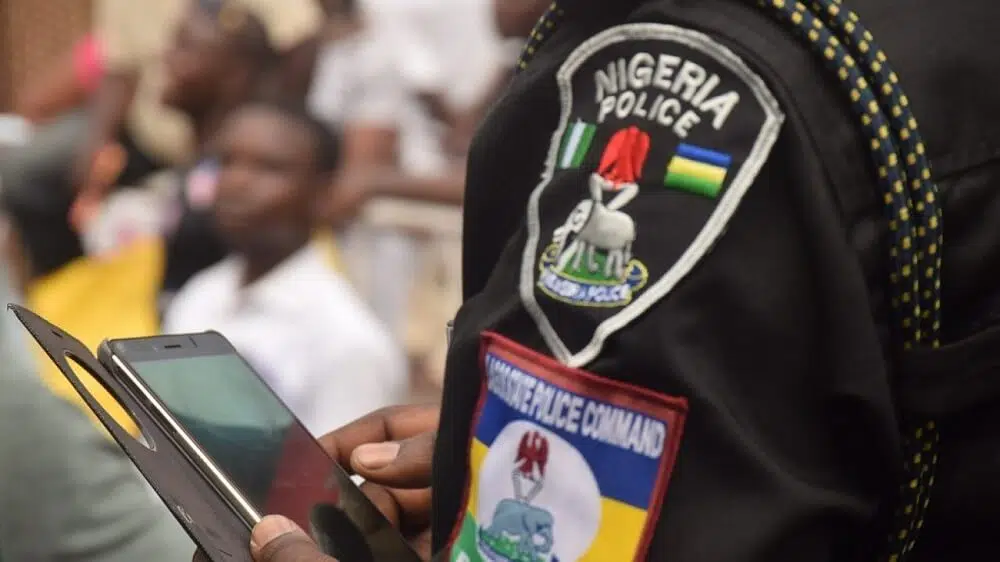
The ongoing investigation into a thwarted attempt to topple Nigeria’s democratic government has taken a startling turn with the inclusion of a high-ranking police officer among the primary suspects. Military authorities have identified the operative as Inspector Ahmed Ibrahim, an indigene of Taraba State, who is now being held in the high-security custody of the Defence Intelligence Agency (DIA) in Abuja. His arrest marks a significant expansion of a probe that was previously thought to be confined solely to the branches of the Armed Forces.
The apprehension of Inspector Ibrahim reportedly followed a series of intense interrogations of military personnel already in detention. Sources close to the investigation suggest that incriminating information extracted during these sessions linked the police officer to the clandestine plot. Ibrahim’s arrest brings the total number of security operatives currently facing scrutiny to thirty-six, a group that comprises a diverse mix of personnel from the Nigerian Army, Navy, and Air Force.
The Defence Intelligence Agency, led by the Chief of Defence Intelligence, Lieutenant General Emmanuel Parker Undiandeye, has been the epicenter of this sensitive operation. While the military has historically handled internal dissent within its own ranks, the involvement of a police officer has necessitated a broader inter-agency collaboration. Ibrahim was reportedly picked up in the nation’s capital, Abuja, as investigators sought to close the loop on how the alleged plotters intended to coordinate across different security services.
This development follows a period of significant tension and official denials. In October 2025, when reports first emerged of arrests within the military, the Defence Headquarters initially dismissed claims of a coup plot. At that time, authorities maintained that the officers were being disciplined for minor service regulation breaches and administrative indiscipline. However, that narrative underwent a dramatic shift on Monday, January 26, 2026, when the military publicly acknowledged that a deliberate plan to overthrow President Bola Tinubu’s administration had indeed been uncovered.
Major General Samaila Uba, speaking for the Defence Headquarters, confirmed that the comprehensive investigation has now been concluded and forwarded to the superior authorities. The findings explicitly identify several officers as having participated in a conspiracy that is fundamentally “inconsistent with the ethics, values, and professional standards” of the Nigerian security architecture. Those found culpable, including the recently identified police inspector, are expected to face a formal trial before a military judicial panel or the appropriate civil-military tribunal.
The inclusion of Inspector Ahmed Ibrahim has raised questions about the level of infiltration the alleged plotters achieved within the Nigeria Police Force. While the military remains the primary focus of the court-martial proceedings, Ibrahim’s status as a non-military officer adds a layer of legal complexity to the upcoming trials. Security experts suggest that his role may have been pivotal in providing the plotters with logistical support or intelligence outside the traditional military command structure.
Efforts to reach the Nigeria Police Force for a formal comment on Ibrahim’s detention have so far been met with silence. Public relations officials have not yet responded to inquiries regarding the Inspector’s service record or the internal disciplinary measures being taken in light of the DIA’s findings. This silence has only fueled public speculation about the extent of the “cleansing” currently taking place within the nation’s various security agencies.
The backdrop to these arrests is a region increasingly sensitive to military interventions. With recent coups and attempted takeovers in neighboring West African nations, the Nigerian government has moved with uncharacteristic speed and secrecy to neutralize any perceived threats to its authority. The cancellation of major national events, such as the October Independence Day parade last year, is now being viewed by many through the lens of these security concerns.
As the nation prepares for what promises to be one of the most significant security trials in recent history, the government is emphasizing its commitment to due process. The Defence Headquarters has reiterated that while the measures are disciplinary, they are essential to preserving the operational effectiveness and constitutional loyalty of the ranks. For Inspector Ibrahim and the thirty-five military officers in custody, the path forward will be determined by the evidence gathered during these three months of intense intelligence work.
The case of the “Taraba Inspector” serves as a grim reminder of the vigilance required to maintain democratic stability. As the judicial process begins, the focus will remain on how a group of thirty-six operatives managed to align themselves against the state, and what further reforms will be necessary to ensure such a breach never happens again.