
NEWS
Abati Rejects Foreign Meddling in Politics
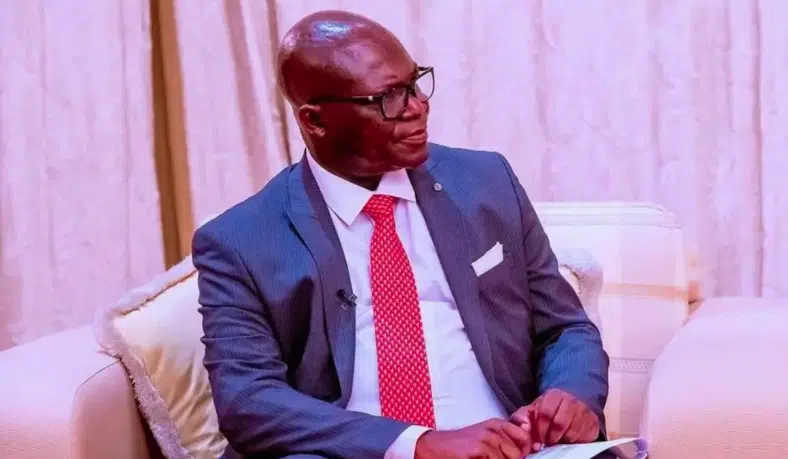
In a bold defense of national sovereignty and domestic political strategy, former presidential spokesperson Reuben Abati has dismissed the notion that United States President Donald Trump should influence Nigeria’s leadership structure. Speaking on Arise Television’s Morning Show on January 27, 2026, Abati emphasized that the democratic choices of Nigerians are not subject to the whims of foreign leaders, specifically addressing the ongoing debate surrounding the 2027 presidential ticket.
The veteran journalist’s comments were sparked by a recent intervention from Hannatu Musawa, the Minister of Art, Culture, Tourism, and Creative Economy. Musawa had publicly cautioned against any attempt to drop Vice President Kashim Shettima from the 2027 ticket. She argued that altering the current “Muslim-Muslim” balance could alienate key Northern demographics, specifically the Kanuri and Hausa-Fulani voters who form a significant portion of the ruling party’s base.
Abati lauded Musawa for her “courageous” stance, noting that her analysis of Northern political literacy was accurate. He pointed out that Northern Nigerian politics is deeply rooted in social identity and historical voting behavior. According to Abati, removing a prominent Northern Muslim from the equation would be a “politically naive” move that ignores the realities of the country’s electoral map.
The discussion has gained traction following rumors that external pressure or shifting internal dynamics might lead President Bola Tinubu to consider a different running mate for his re-election bid. Abati, however, urged the President to show the same resolve he exhibited in 2023. He reminded viewers that the Tinubu-Shettima ticket was a deliberate choice that withstood significant criticism from various quarters, including the Christian community, and should be maintained to ensure continuity.
Addressing the “Trump factor,” Abati was blunt. He stated that the political climate in the United States, under Donald Trump, should not serve as a blueprint for Nigerian governance. He argued that Nigeria must develop its own political solutions based on its unique ethnic and religious diversity, rather than looking toward Washington for validation or direction.
Abati also criticized the leadership of the All Progressives Congress (APC) for what he perceived as a failure to effectively defend the Vice President against recurring “blackmail.” He specifically mentioned Felix Morka, the APC National Publicity Secretary, suggesting that the party needs to be more proactive in protecting the integrity of its joint ticket.
Minister Musawa’s earlier remarks had also touched on the state of the opposition, describing it as “fragmented and overcrowded.” Abati agreed with this assessment, suggesting that the ruling party’s focus should be on internal cohesion rather than worrying about a fractured opposition or foreign opinions.
As the race toward 2027 begins to take shape, Abati’s intervention serves as a reminder of the delicate balance required in Nigerian power-sharing. By championing Shettima’s retention, he is calling for a “stay the course” strategy that prioritizes local alliances over international optics.
The former aide concluded by stressing that the “Muslim-Muslim” ticket was a hurdle the APC already cleared once. To reopen that debate now, he suggested, would be to invite unnecessary instability into the administration’s second-term ambitions.

