
NEWS
Malami Case: New Judge to Oversee ₦212 Billion Asset Forfeiture
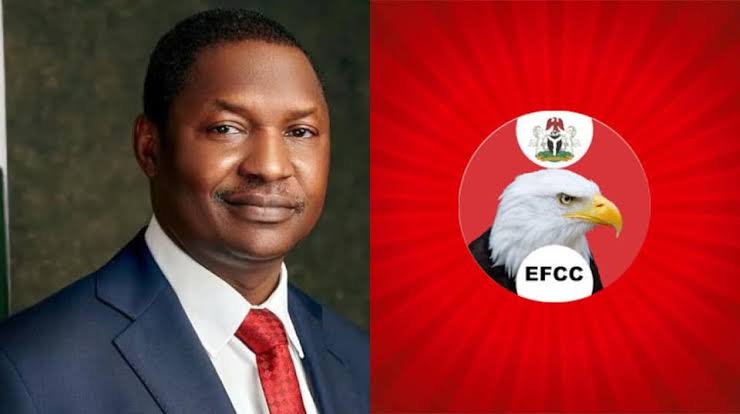
The high-profile legal battle surrounding the astronomical assets of Nigeria’s former Attorney-General of the Federation, Abubakar Malami, has taken a procedural turn. Chief Judge John Tsoho of the Federal High Court is now tasked with reassigning the multi-billion naira forfeiture case following the withdrawal of the presiding judge. This transition marks a critical phase in the Economic and Financial Crimes Commission’s (EFCC) aggressive pursuit of what it describes as the proceeds of unlawful activity.
The case gained significant momentum earlier this month when the EFCC successfully secured an interim forfeiture order on January 7. This judicial freeze covers a staggering ₦212.8 billion worth of assets linked to the former minister. The anti-graft agency has alleged that the properties, which span prime locations in Abuja, Kano, and Birnin-Kebbi, were not acquired through legitimate means but were instead the fruits of illicit dealings during Malami’s tenure.
Justice Emeka Nwite, the jurist who initially signed off on the interim forfeiture of the 57 properties, made the announcement regarding the transfer on Tuesday. He clarified that the case file has been formally returned to the Chief Judge’s office. This move ensures that a substantive judge will be appointed to lead the proceedings toward a final conclusion, maintaining the integrity of the judicial process.
The timeline of the case has been swift but is now facing the nuances of court administration. Justice Nwite had originally adjourned the matter to January 27 with the expectation of considering a final forfeiture order. However, when Tuesday arrived, the case was notably absent from the day’s official cause list, which featured 24 other matters. Despite this omission, the courtroom was packed with legal heavyweights prepared for a showdown.
Among those present was the lead counsel for the EFCC, Jibrin Okutepa, SAN. The senior advocate was joined by a phalanx of defense lawyers representing various interests and third parties. These legal teams had already filed numerous processes aimed at challenging the government’s attempt to permanently seize the assets. The atmosphere in the courtroom underscored the high stakes involved in a case that touches the very top of Nigeria’s former executive branch.
As the court session began, Okutepa sought to keep the momentum going. He pointedly reminded Justice Nwite that the day had been set aside for a report of compliance regarding the interim orders. The EFCC’s counsel pushed for the judge to see the proceedings through to the end, likely hoping to capitalize on the initial progress made during the earlier hearings.
However, Justice Nwite remained firm on judicial protocol. He explained to the assembled lawyers that his role in the matter was born out of his stint as a vacation judge. In the Nigerian Federal High Court system, cases handled during the Christmas and New Year breaks are traditionally returned to the Chief Judge once the regular legal term resumes. This practice prevents any perception of bias and ensures that long-term litigation is managed by a permanent appointee.
The judge’s decision to step back is not a reflection of the merits of the case but a adherence to administrative tradition. He noted that the Chief Judge holds the prerogative to reassign the file to any judge of his choosing within the division. This means the next chapter of the ₦212.8 billion saga will be written by a different hand, potentially bringing a fresh perspective to the complex web of property ownership and financial trails.
The assets in question represent one of the largest individual forfeiture targets in the EFCC’s recent history. The list of 57 properties includes luxury real estate and commercial holdings that the commission claims were amassed through a breach of public trust. Malami, who served as the nation’s chief law officer for eight years, has consistently faced scrutiny regarding his wealth, though the current court proceedings represent the most formal challenge to his estate yet.
As the legal community and the public await the Chief Judge’s decision on the new assignment, the focus remains on the EFCC’s ability to prove the “unlawful” origin of these assets. The upcoming hearings under a new judge will likely delve deep into the financial records and acquisition histories of the properties in Kebbi, Kano, and the Federal Capital Territory.
The transition of the case highlights the procedural rigors that govern high-stakes corruption trials in Nigeria. While the interim forfeiture remains in place, protecting the assets from being liquidated or transferred, the path to a final judgment is now subject to the court’s administrative calendar. For the EFCC, the goal remains a permanent transfer of these billions to the federal coffers.
This case is being watched closely as a litmus test for the current administration’s stance on accountability for past officials. With the file now sitting on Chief Judge Tsoho’s desk, the eyes of the nation are on the Federal High Court to see who will ultimately decide the fate of Malami’s vast empire.


