
NEWS
Funding Crisis Rocks Senate as Committees Decry Zero Allocations
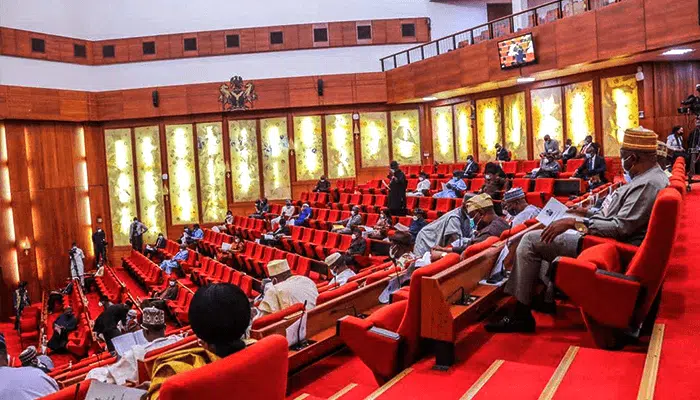
The hallowed chambers of the Nigerian Senate witnessed a surge of legislative friction on Friday as senators openly clashed over the persistent underfunding of standing committees. What was intended to be a routine planning session for the 2026 fiscal year quickly dissolved into a session of grievances, with lawmakers warning that the upper chamber’s oversight functions are currently on life support.
The drama unfolded during a high-stakes meeting convened by the Chairman of the Senate Committee on Appropriations, Senator Olamilekan Adeola. While the primary agenda was to establish a timetable for the ₦58.472 trillion 2026 budget, the conversation was abruptly hijacked by lawmakers who claimed they lacked the basic financial resources to even convene meetings with government agencies.
Senator Anthony Ani of Ebonyi South set the tone for the confrontation. He dropped a bombshell by revealing that the Senate Committee on South East Development Commission has remained effectively dormant since its inauguration due to a total lack of funding. Ani pointed out the irony of being asked to vet a multi-trillion naira national budget when his own committee has received “zero allocation” to carry out its basic constitutional duties.
The lawmaker further alleged that this financial drought is not isolated. According to Ani, several other committees tasked with overseeing zonal development commissions are currently stranded. He questioned the logic of creating legislative bodies to supervise national development while simultaneously starving them of the administrative funds required to function.
Echoing these sentiments, Senator Titus Zam of Benue North West cautioned that the initial optimism following the creation of various regional commissions is rapidly evaporating. He noted that the “excitement” felt by Nigerians over these new development bodies is being replaced by “lamentation” within the Senate halls. Zam warned that without immediate intervention, these committees would exist only on paper.
The debate took a more technical and troubling turn when the Deputy Minority Leader, Senator Oyewunmi Olalere, shifted the focus to the broader failure of budget implementation. He raised the alarm over the government’s ambitious plan to return to a single, streamlined budget cycle by April 1, 2026. According to Olalere, this goal is being actively undermined by a massive backlog of unpaid contracts from the 2024 and 2025 fiscal years.
With the 2024 capital budget still largely unfulfilled and the 2025 budget components looming, Olalere warned that the Senate is staring down a “multiple budget implementation” crisis. He reminded his colleagues that as of late January, the window to clear these outstanding financial obligations is closing fast. The pressure is now on revenue-generating agencies to perform a “miracle” in collections to prevent a total fiscal overlap.
The atmosphere grew more tense as Senator Francis Adenigba Fadaunsi confirmed the severity of the debt crisis. He shared a vivid account of the fallout from unpaid 2024 budget obligations, noting that unpaid contractors have taken to the streets in protest. Fadaunsi emphasized that it is difficult for lawmakers to engage with new budgetary figures when “unpaid contractors are still carrying placards” across the country.
Fadaunsi urged the Appropriations Committee to bypass the usual pleasantries and engage directly with the “appropriate authorities” to resolve the funding bottleneck. He argued that the credibility of the 2026 budget hinges entirely on the government’s ability to tidy up its past debts before the April deadline.
In a bid to restore order and prevent the meeting from spiraling into a full-blown rebellion, Senator Adams Oshiomhole stepped in as a voice of moderation. The former Edo State Governor urged his colleagues to exercise patience and refrain from “lamentation” until the full, granular details of the ₦58.472 trillion 2026 budget are laid bare before the Senate.
Oshiomhole’s intervention momentarily calmed the room, but the underlying frustration was palpable. Recognizing that the sensitive nature of the discussion was not suitable for public consumption, Senator Adeola took the executive decision to move the meeting behind closed doors. Journalists were promptly excused as the senators entered a private session to “harmonize” their positions.
The outcome of that secret session remains unknown, but the public display of dissatisfaction highlights a deep-seated friction between the Senate’s legislative ambitions and the reality of Nigeria’s current fiscal constraints. As the April 1st deadline for a unified budget cycle approaches, the Senate finds itself in a race against time to settle internal debts and find the money to keep its own committees running.


