
Politics
The 2027 Ultimatum: Iroegbu Warns of National Collapse Under APC
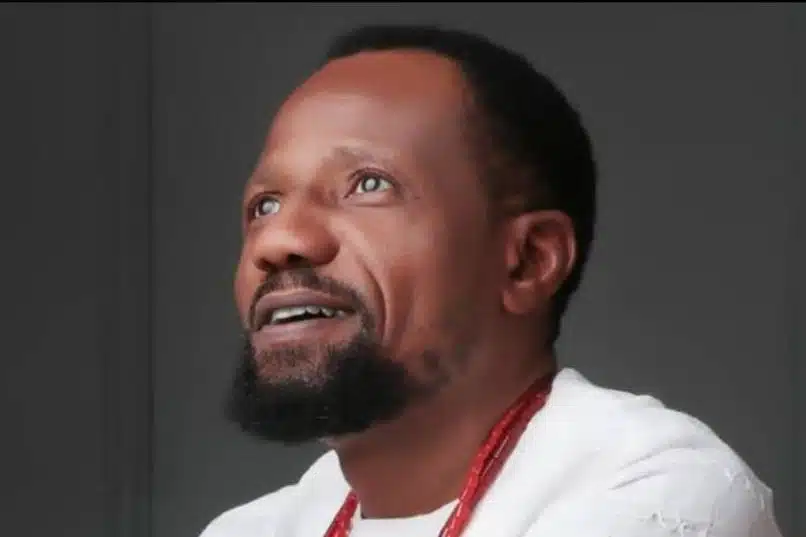
The drums of the 2027 general elections are beating louder, and with them comes a stark warning from the corridors of the opposition. Dickson Iroegbu, a passionate voice within the Peoples Democratic Party (PDP) and a vocal ally of the Obidient Movement, has sounded an alarm that is reverberating across Nigeria’s political theater. For Iroegbu, the next election is not merely a contest for power; it is a battle for the very survival of the Nigerian state.
Appearing on Arise Television’s “Prime Time,” Iroegbu delivered a blistering critique of the All Progressives Congress (APC) administration. His message was clear and uncompromising: unless the opposition finds a common ground to halt the APC’s momentum, the country faces an existential threat. Borrowing from the rhetoric of former President Muhammadu Buhari regarding corruption, Iroegbu adapted the warning for a new era, suggesting that if Nigerians do not “end” the APC at the polls in 2027, the party may effectively “end” Nigeria.
Iroegbu’s concerns are rooted in a grim assessment of the nation’s socio-economic health. He alleges that since the APC took the reins of power, roughly 50 million Nigerians have been pushed into the abyss of extreme poverty. To him, this isn’t just a statistical failure but a fundamental lack of a roadmap for the welfare of the citizenry. He argues that the ruling party is currently standing on a “falling mandate,” propped up by political maneuvering rather than tangible governance successes.
As a native of Kano State, Iroegbu possesses a keen understanding of the shifting sands of Northern politics. He views the current political climate as a critical juncture where regional interests and national survival must align. His call for a “convergence and realignment” is a direct appeal to fractured opposition parties to set aside their egos and join forces against what he describes as a “common enemy.” In his view, the fragmentation of the opposition only serves to strengthen the APC’s grip on power.
The 2027 election, according to Iroegbu, will be defined by a unique dynamic: the Nigerian people versus the political elite. He believes the ruling class has underestimated the depth of the hardship felt across the country. He predicts that the APC will be “shocked” by the sheer force of a populace that has been impoverished to the point of desperation. This narrative positions the upcoming vote not as a choice between candidates, but as a referendum on the survival of the masses.
Iroegbu’s dual identity as a PDP member and an Obidient Movement supporter reflects the fluid state of the opposition. It suggests a growing realization that neither the traditional “big party” machinery nor the new-age grassroots movements can defeat the incumbent alone. His advocacy for unity hints at a potential “super-coalition” that could mirror the very alliance that brought the APC to power in 2015.
The critique offered by Iroegbu goes beyond mere partisan bickering; it touches on the psychological state of a nation in crisis. He argues that the APC’s policies have created a vacuum of hope, and 2027 represents the final window to reclaim the country’s trajectory. By framing the election in such dire terms, he is attempting to galvanize a voter base that may be feeling exhausted by the current economic climate.
Critics may view Iroegbu’s rhetoric as alarmist, but his supporters see it as a necessary wake-up call. The focus on 50 million citizens in poverty serves as a powerful SEO-friendly metric for the opposition’s campaign, highlighting the human cost of economic policies. Whether this “holy anger,” as others have called it, will translate into a unified voting bloc remains the most significant question hanging over the 2027 cycle.
As political actors begin to map out their strategies, Iroegbu’s interview stands as a testament to the high stakes involved. The “end Nigeria” narrative is a heavy burden for any political party to carry into an election year, and the APC will likely face intense pressure to prove its critics wrong through visible economic recovery. For now, Iroegbu has drawn a line in the sand, daring the opposition to cross it together.
The journey to 2027 is proving to be a marathon of ideology and survival. If Iroegbu’s prediction holds true, the next three years will be a period of unprecedented political realignment, where the primary objective is no longer just winning an office, but preventing a perceived national collapse. The “Nigerian people against the elite” remains the most potent story of the upcoming election season.