
NEWS
Iran Labels European Armies “Terrorists” as EU-Tehran Tensions Boil Over
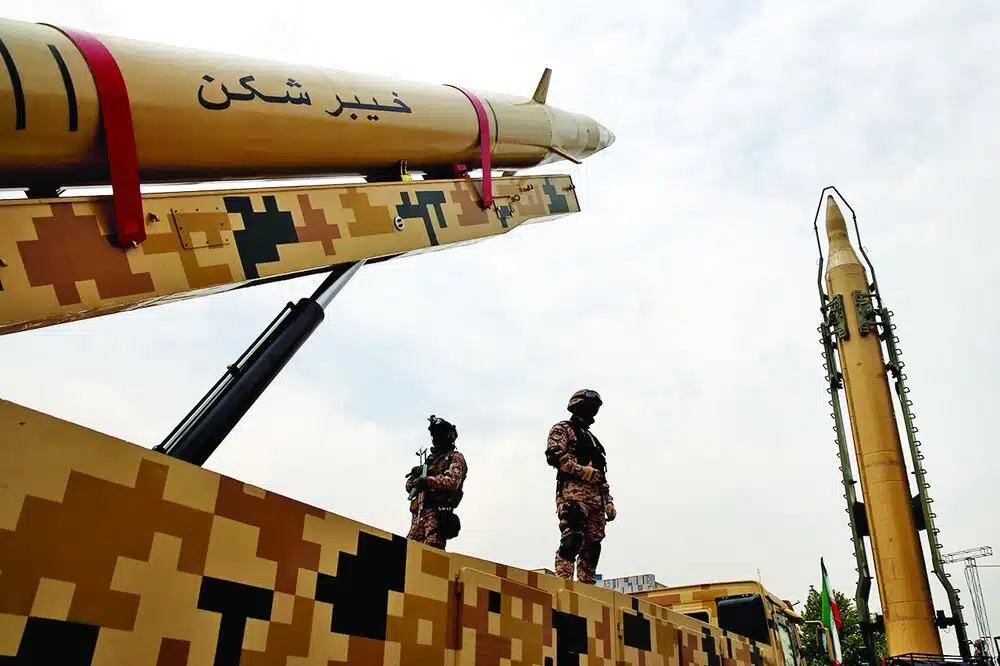
In a dramatic escalation of diplomatic hostilities, Iran has officially designated the armed forces of European Union member states as “terrorist groups.” The move follows the EU’s decision on Thursday, January 29, 2026, to blacklist Iran’s Islamic Revolutionary Guard Corps (IRGC) as a terrorist organization, citing its role in the violent suppression of nationwide protests that reportedly left thousands dead.
The retaliatory declaration was made Sunday, February 1, 2026, by the Speaker of Iran’s Parliament, Mohammad Bagher Ghalibaf, during a high-stakes legislative session. In a vivid display of defiance, Ghalibaf and dozens of lawmakers appeared on the chamber floor wearing the signature green uniforms of the IRGC. The session was punctuated by state-television footage of legislators chanting “Death to America,” “Death to Israel,” and “Shame on you, Europe.”
Ghalibaf grounded the move in domestic law, specifically citing Article 7 of the Law on Countermeasures, a statute originally enacted in 2019 after the United States first designated the IRGC as a terrorist entity. He argued that the EU’s decision was made in “blind obedience” to Washington and Israel, claiming the move has only accelerated Europe’s “marginalization in the future global order.” While the practical impact remains uncertain, Ghalibaf hinted that the parliament’s national security commission would consider further steps, including the expulsion of European military attachés.
The timing of the clash is significant, coinciding with the 47th anniversary of the return of Ayatollah Ruhollah Khomeini, the 1979 revolution’s founder. However, the modern reality is grim; Western governments allege that Iranian security forces killed over 6,000 people during a “bloody crackdown” on domestic protests that began in late 2025. In a rare move of transparency, the office of President Masoud Pezeshkian released a list on Sunday of over 3,000 people killed in the recent unrest, describing the victims as “children of this land.”
The tension is further amplified by a shift in U.S. foreign policy. President Donald Trump, currently in the second year of his second term, has signaled a return to “maximum pressure.” Over the weekend, Trump pointed to a “massive armada” of powerful ships, led by the USS Abraham Lincoln, heading toward the Persian Gulf to force Tehran into a new nuclear and missile deal. “Iran is talking to us, and we’ll see if we can do something; otherwise, we’ll see what happens,” Trump told reporters, while maintaining that he believes Tehran would prefer a deal over military confrontation.
Despite the bellicose rhetoric, backchannel diplomacy appears to be flickering. Ali Larijani, the head of Iran’s Supreme National Security Council, noted on Saturday that “structural arrangements for negotiations are progressing.” Qatar has also stepped in as a key mediator, with Prime Minister Sheikh Mohammed bin Abdulrahman Al Thani meeting Larijani in Tehran to seek a path toward de-escalation.
President Pezeshkian has echoed a desire for a diplomatic resolution, noting that a full-scale war would benefit no one in the region. Meanwhile, ordinary Iranians are caught in the crossfire of anxiety. “Lately, all I do is watch the news until I fall asleep,” said Firouzeh, a 43-year-old homemaker in Tehran, reflecting a nationwide fear that the diplomatic “tit-for-tat” could spiral into a kinetic conflict.