
NEWS
Na’Allah: Don’t Blame the President for Nigeria’s Struggles
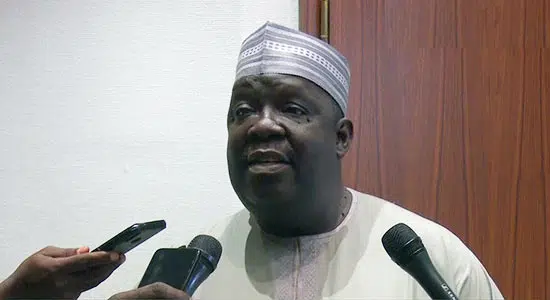
Senator Bala Na’Allah, a prominent chieftain of the All Progressives Congress (APC), has challenged the Nigerian habit of placing the country’s collective failures squarely on the shoulders of the presidency. Speaking on Monday during an appearance on Channels Television’s Sunrise Daily, the former lawmaker argued that the structural and moral decay hindering Nigeria’s progress is a shared burden that extends far beyond the office of the Commander-in-Chief.
Na’Allah contended that while the Nigerian Constitution provides an exceptional framework for governance, its effectiveness is stifled by a political class that often lacks the commitment to uphold its spirit. He pointed out that every successive administration eventually faces the same wall of public dissatisfaction, suggesting that a systemic “invisible hand” or deep-seated institutional rot is at play—something citizens often ignore in favor of pointing fingers at the man at the top.
The biggest hurdle, according to Na’Allah, is the failure of individual elected officials to honor their oath of office. He urged Nigerians to look past the presidency and examine the conduct of representatives at all levels of government. For the APC chieftain, the “smooth running” of the nation depends on a collective adherence to the constitutional framework rather than the singular will of a president.
In his view, the constitution was designed for “committed democrats” who would prioritize the public good over personal or partisan interests. He noted that until Nigerians demand accountability across the entire political spectrum—including from governors and legislators—the cycle of frustration will continue. By framing the issue as one of collective responsibility, Na’Allah sought to deflect the intense scrutiny currently focused on the federal executive.
The senator also touched on the upcoming 2027 elections, warning that the APC must rely on tangible performance rather than a wave of political defections to win back public trust. He stressed that the party has a duty to convince the populace that the current economic hardships are necessary growing pains for a more stable future. For Na’Allah, the path to redemption lies in a return to the spirit of the constitution by every holder of public office.
As Nigeria navigates its complex socio-economic challenges, Na’Allah’s comments serve as a polarizing reminder of the debate over central versus local accountability. While some see his defense as a shield for the ruling party, others interpret it as a call for a more holistic approach to citizenship and governance. Ultimately, he maintains that no single man, no matter how powerful, can fix a system where the “spirit of the document” is habitually ignored by the many.