
NEWS
Death in Zintan: Libya Reels from Assassination of Gaddafi’s Heir
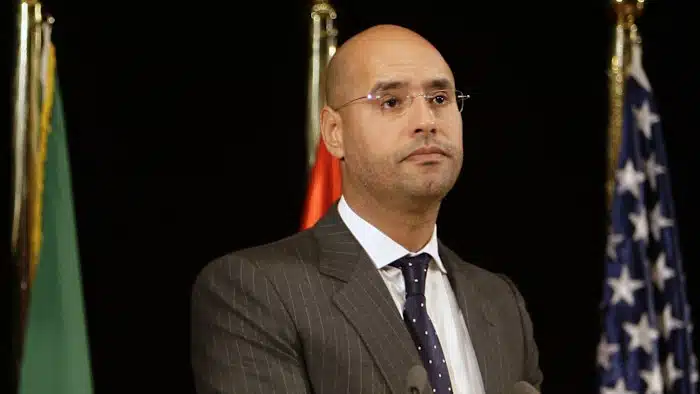
The North African landscape shifted violently this week as Libyan authorities confirmed they have opened a sprawling criminal investigation into the assassination of Seif al-Islam Gaddafi. The son of the late Muammar Gaddafi, once seen as the inevitable successor to his father’s decades-long rule, was reportedly gunned down in the city of Zintan.
According to reports from the national public prosecutor, the brazen attack took place in the northwest of the country, a region that has remained a powder keg of rival tribal loyalties and military friction. The news has sent ripples through a nation that is still struggling to define itself fifteen years after the Arab Spring.
Forensic specialists were dispatched to the scene under heavy guard to collect ballistics and DNA evidence. Investigators are currently focused on the residence in Zintan where Seif al-Islam had been living, attempting to piece together the sequence of events that allowed an armed group to penetrate his security detail.
Local reports suggest the attackers moved with professional precision, entering the home and firing multiple rounds before retreating into the labyrinthine outskirts of the city. To date, no group has stepped forward to claim responsibility for the hit, leaving a dangerous vacuum of information.
The legal counsel for the Gaddafi family has officially confirmed the death but remains tight-lipped regarding specific suspects. This silence is mirrored by the country’s dual administrations—the UN-recognized government in Tripoli and the eastern bloc led by General Khalifa Haftar—neither of which has issued a formal communiqué on the killing.
The political significance of Seif al-Islam’s death cannot be overstated. Even from the shadows, he remained a polarizing figure of immense influence, representing a “third way” for those disillusioned by the chaos that followed the 2011 uprising. His removal from the board fundamentally alters the calculus for upcoming, albeit frequently delayed, national elections.
Moussa al-Kouni, the vice-president of the Presidential Council, took to social media to voice the government’s alarm. He condemned the act not just as a murder, but as a direct assault on the possibility of national reconciliation. Al-Kouni’s plea was simple: Libya cannot afford to return to the era of blood-stained politics.
“No to political assassinations,” al-Kouni posted, emphasizing that force must never again be the primary language of Libyan expression. His words reflect a deep-seated anxiety that this event could serve as a catalyst for a new wave of reprisal killings between the various militias that effectively control the country’s streets.
While Libya stares into an uncertain future, another major security development is unfolding further south. In a move aimed at stabilizing the West African corridor, the United States has officially deployed a specialized military contingent to Nigeria. This marks a new chapter in the defense pact between Washington and Abuja.
General Dagvin R.M. Anderson, the commander of the United States Africa Command (AFRICOM), confirmed the deployment during a briefing on regional security. He noted that the decision follows extensive bilateral talks focused on the rising tide of insurgency and terrorism that has plagued the Lake Chad Basin and beyond.
While the specific headcount of the American team remains classified, military analysts suggest the group is comprised of elite personnel. Anderson described the unit as a small contingent, but emphasized that they possess “unique capabilities” that the Nigerian military currently lacks, likely in the realms of signal intelligence and high-altitude surveillance.
The deployment signals a pivot in U.S. strategy toward a more hands-on advisory role. Rather than a large-scale troop presence, Washington appears to be opting for surgical support designed to empower Nigerian ground forces. The goal is to dismantle extremist networks that have proven remarkably resilient against conventional military tactics.
The news from Nigeria and Libya highlights a continent in a state of flux. In the north, the death of a legacy figure threatens to unspool years of delicate peace negotiations. In the west, the introduction of foreign “unique capabilities” suggests that local conflicts are increasingly being viewed through the lens of global security.
For Libya, the immediate concern is containing the fallout in Zintan. The city has long been a fortress for the Gaddafi faithful, and the breach of its walls is a psychological blow to his supporters. If the investigation fails to produce suspects, the suspicion will inevitably fall on state actors or rival power brokers, further eroding trust in the judicial system.
Journalists on the ground report a palpable tension in the capital, with increased checkpoints and a general sense of unease. The assassination serves as a grim reminder that in the absence of a unified state, the bullet remains the final arbiter of political disputes.
As forensic teams continue their work in the dusty streets of Zintan, the international community remains on high alert. The loss of Seif al-Islam Gaddafi is more than the death of a man; it is the destruction of a specific vision for Libya’s future—one that many hoped would bridge the gap between the old regime and the new order.