
Politics
Hashim-Olawepo: Ten Years of APC Rule Has Wrecked Nigeria’s Economy
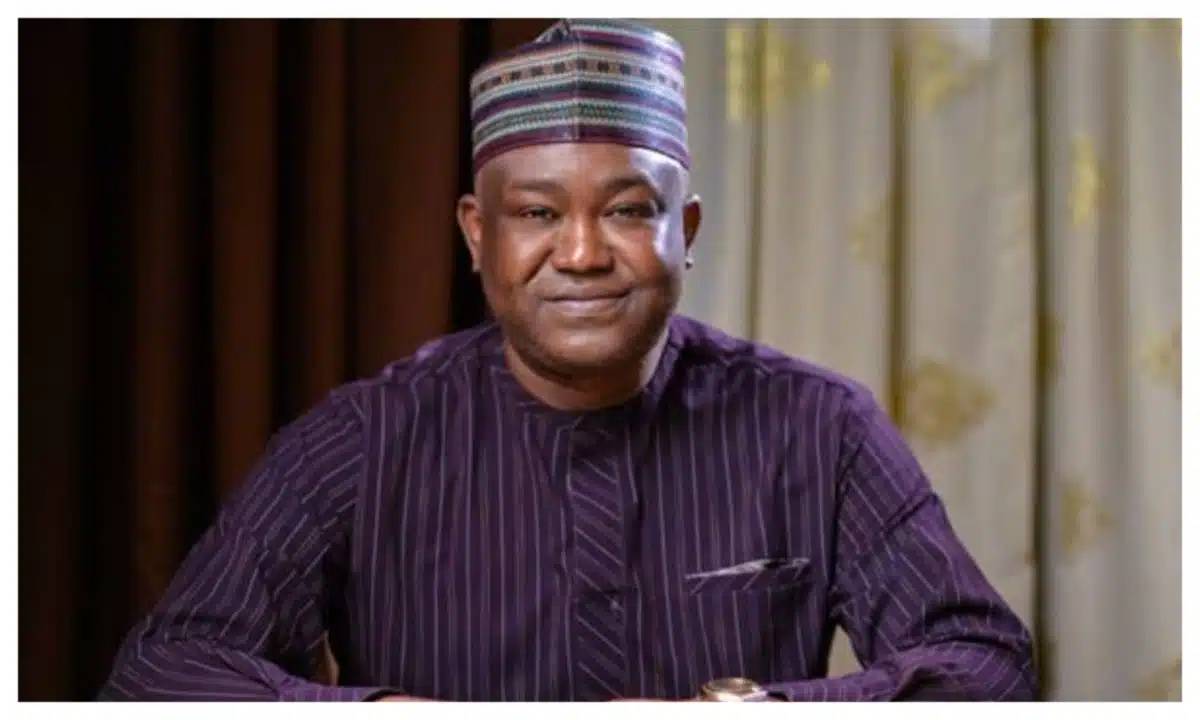
The economic trajectory of Nigeria over the last decade has been described as a “tragic disaster” by Gbenga Hashim-Olawepo, a prominent chieftain of the Peoples Democratic Party (PDP). In a searing critique of the All Progressives Congress (APC) administration, the former presidential aspirant argued that the country has undergone a historic regression, with current economic indicators falling behind levels recorded nearly twenty years ago. Speaking on Channels Television’s ‘Politics Today’ on Wednesday, February 4, 2026, Hashim-Olawepo painted a grim picture of a nation that has lost its status as the “Giant of Africa.”
The central pillar of his argument was a comparative analysis of Nigeria’s Gross Domestic Product (GDP). According to Hashim-Olawepo, citing data from the International Monetary Fund (IMF) and the World Bank, Nigeria’s current GDP fluctuates between $220 billion and $230 billion. This figure, he pointed out, is lower than the $268 billion GDP recorded in 2007 at the end of President Olusegun Obasanjo’s tenure. The implication is staggering: after two decades of supposed growth and development, the size of the Nigerian economy in dollar terms has effectively shrunk.
The PDP chieftain’s criticism was not limited to the early 2000s. He highlighted the significant peak reached during the administration of Goodluck Jonathan, noting that when the APC took over in 2015, the GDP had risen to approximately $574 billion. At that time, Nigeria sat comfortably as the largest economy on the continent following a historic rebasing exercise. Today, Hashim-Olawepo lamented, that dominance has evaporated, with the nation now struggling to maintain a position between fourth and fifth in African economic rankings.
This downward spiral, he asserted, occurred entirely under the watch of the APC. He characterized the ten-year period of APC governance—spanning the eight years of Muhammadu Buhari and the nearly three years of the current administration—as a decade of catastrophic decline. The decline is not just a matter of numbers on a spreadsheet; it represents a hollowing out of the national wealth and a significant loss of ground compared to continental peers like South Africa, Egypt, and Algeria.
Hashim-Olawepo also touched upon the structural weaknesses that have exacerbated this regression. He specifically challenged the government’s fiscal and monetary management, arguing that the persistent devaluation of the naira and skyrocketing inflation have decoupled the currency from its economic fundamentals. He noted that despite a rebound in oil production to roughly 1.8 million barrels per day and a reduction in fuel imports due to local refining capacity, the naira continues to lose value, a paradox he blamed on poor policy execution.
The political heavyweight extended his critique to the “Lagos model” of development often cited by current leadership. Comparing the legacy of President Bola Tinubu in Lagos to that of former military ruler Ibrahim Babangida, Hashim-Olawepo argued that the infrastructural foundation of the commercial capital owes more to the military era than the modern one. He dismissed contemporary tolled projects as minor compared to the massive bridge-building and urban planning of the late 20th century, challenging the government’s economic team to a live public debate.
For Hashim-Olawepo, the current state of the economy is more than a political talking point; it is a national emergency. He warned that the contraction of the GDP while the population continues to grow at an average rate of 2.5% is a recipe for long-term instability. The “dark decade” under the APC, as he terms it, has seen Nigeria move from being one of the fastest-growing economies in the world to one characterized by stagflation and a deepening cost-of-living crisis that has pushed millions into poverty.
As the nation looks toward the next election cycle, Hashim-Olawepo’s intervention serves as a rallying cry for an alternative economic approach. He urged Nigerians to confront the reality that the current path has led to a “shocking regression” for a country blessed with immense human and natural resources. In his view, the tragedy of the last ten years is not just in what was lost, but in the missed opportunities to build a resilient, diversified economy that could have truly redeemed the dignity of its citizens.