
NEWS
The Unfinished Legacy: How Murtala’s Ghost Still Haunts Nigeria
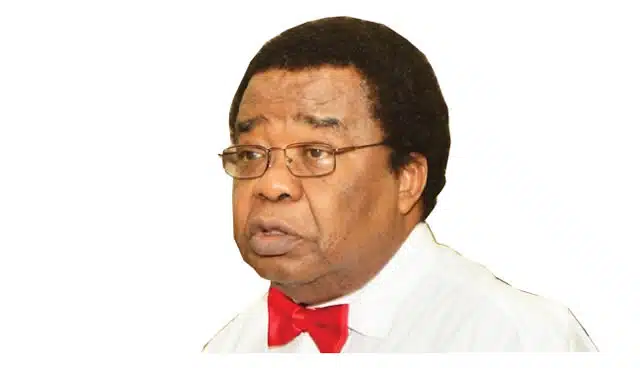
The trajectory of a nation often hinges on a single moment of violence, a split second where the course of history is forcibly diverted. For Professor Bolaji Akinyemi, former Minister of External Affairs, that moment occurred on a dusty Lagos street on February 13, 1976. The assassination of General Murtala Muhammed did more than just end a presidency; it fractured the personal and political destiny of an entire generation of Nigerian intellectuals and policymakers.
Speaking at a strategic workshop in Victoria Island, organized by the Murtala Muhammed Foundation and the Nigerian Institute of International Affairs, Akinyemi offered a rare, vulnerable glimpse into the “what ifs” of Nigerian history. The theme of the gathering, questioning whether Africa has truly “come of age” half a century after Muhammed’s Pan-African vision, served as a backdrop for a deeply personal reflection on leadership and lost opportunity.
Akinyemi’s admission was striking: he believes his own life, not just the nation’s ledgers, would have looked entirely different had the General survived. It was an acknowledgment that Muhammed represented a specific kind of gravity—a leader whose intellectual rigor and stubborn independence pulled everyone around him into a more disciplined orbit. To Akinyemi, the General was not just a military ruler but a catalyst for a brand of excellence that has since become scarce.
The former minister painted a portrait of a man who was dangerously comfortable with dissent. In a country where military culture often demands robotic conformity, Murtala Muhammed was an outlier. He was a soldier who lived on the pages of newspapers, engaging in public intellectual combat long before he ever wore the mantle of Head of State. He was a man who didn’t just issue commands; he argued positions, defended logic, and demanded intellectual accountability from his peers.
One particular anecdote shared by Akinyemi captured the essence of this unpredictability. During a conference at a university, the academic elite were gathered to discuss the Middle East conflict. At the time, the intellectual consensus was fiercely pro-Palestinian and anti-Israel. Many expected a Northern military officer of Muhammed’s background to mirror that sentiment without question.
Instead, Muhammed famously disrupted the flow of the conversation. As he stood up to perform his afternoon prayers, he paused at the door to dismiss the entire debate as a “bloody waste of time.” He wasn’t following a script or bowing to the pressures of his identity; he was expressing a contrary, independent view that challenged the very people who had invited him. To Akinyemi, this wasn’t just arrogance—it was the mark of a leader who prioritized conviction over convenience.
This willingness to stand against the tide is what Akinyemi believes Nigeria lacks today. He lamented the disappearance of leaders in high places who are willing to publicly voice a stance that runs against the majority view. In the modern era of focus groups and political hedging, the image of a Head of State who would give clear, logical reasons for a disagreement—and then stand by them—feels like a transmission from a different planet.
Muhammed’s brief 200-day tenure is often remembered for its “Africa has come of age” speech, a moment that defined Nigeria’s standing on the global stage. Under his leadership, Nigeria didn’t just participate in international diplomacy; it commanded respect. There was a palpable sense of national pride, a feeling that the country finally knew what it stood for. Nigerians, according to Akinyemi, knew exactly what was expected of them because the man at the top wasn’t hiding behind ambiguity.
The loss of that clarity has left a vacuum that decades of subsequent leadership have struggled to fill. Akinyemi’s reflection suggests that the “Murtala era” was not just a period of time, but a standard of behavior. When that standard was assassinated along with the man, the intellectual framework of the country shifted. The “Renaissance” that many hoped for was replaced by a more cautious, less transparent form of governance.
For Aisha Muhammed-Oyebode, the General’s daughter, the loss is a private grief for a father she barely knew. But for Akinyemi and the Nigerian state, the grief is professional and systemic. It is the mourning of a version of Nigeria that was bold, intellectually vibrant, and unafraid to tell the world—and itself—the truth.
As the workshop concluded, the underlying sentiment was clear: Nigeria is still searching for that lost rhythm. The country continues to grapple with the same questions of identity and sovereignty that Muhammed addressed 50 years ago. The tragedy, as implied by Akinyemi, is that we are still asking the questions because the man with the answers was silenced before he could finish the work.