
Politics
Kalu Dismisses Ohafia Ban as Political Propaganda
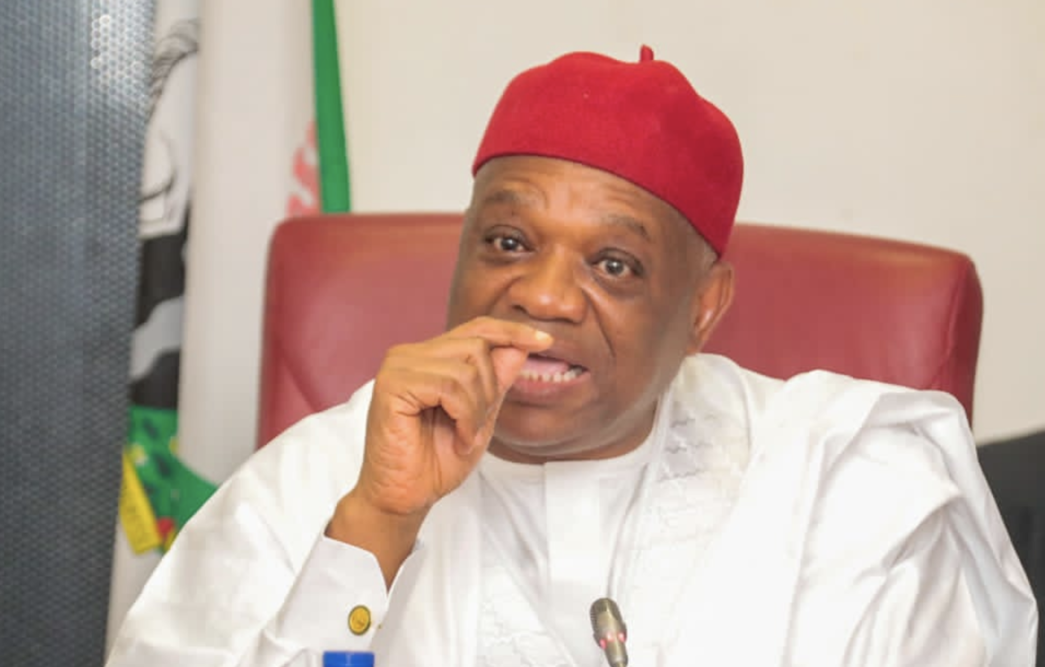
Senator Orji Uzor Kalu, the representative for Abia North, has fired back at a youth group’s attempt to exile him from a key part of his constituency. Responding to a “persona non grata” declaration by the Ohafia Youth Association, the former Abia State governor dismissed the threat as a product of manufactured “misinformation” orchestrated by his political rivals. In a defiant statement released through his media team, Kalu insisted that the truth of his service would eventually silence the noise of what he called coordinated propaganda.
The friction stems from a bitter fallout following the 2023 general elections. The Ohafia Youth Association, led by Chairman Obasi Kalu Obasi, recently reaffirmed a ban on the Senator, accusing him of a grave betrayal. The group alleges that during the election cycle, Kalu branded the Ohafia community an “IPOB stronghold” in reports to federal authorities. According to the youths, this label triggered a heavy-handed security crackdown that resulted in voter intimidation and the mass disenfranchisement of their people.
Kalu’s camp, however, describes these accusations as not only false but strategically designed to erode his popularity. The Senator’s media team argued that the narrative being pushed by the youth group does not reflect the “broader mood” of the district. They maintained that Kalu’s standing remains unshakable across the five local government areas of Abia North—Arochukwu, Ohafia, Bende, Isuikwuato, and Umunneochi—where they claim his leadership is backed by years of visible developmental projects.
The statement painted Kalu as a “courageous advocate” for the Igbo cause at the national level, suggesting that his critics are ignoring his long-standing record of principled representation. By framing himself as a victim of a smear campaign, the Senator is leaning on his history of constituency engagement to counter the localized anger in Ohafia. His team asserted that leadership rooted in genuine service will always command “enduring support,” regardless of the political climate.
Despite this defense, the Ohafia Youth Association remains resolute. The group maintains that the trauma of the last election, characterized by the presence of armored vehicles and a siege-like atmosphere, cannot be easily swept under the rug. For them, the issue is not about political propaganda but about accountability for the labels attached to their community. They view the Senator’s alleged comments as a direct threat to their safety and democratic rights.
Kalu’s response indicates a refusal to back down or apologize for the events of 2023. By asserting that he still enjoys “overwhelming confidence” in Ohafia, he is directly challenging the youth group’s authority to speak for the entire community. This tug-of-war highlights the deepening fracture between the traditional political class and youth movements in the South East, where grievances over security and representation are increasingly leading to public confrontations.
The Senator’s team also hinted that “external political actors” are the ones pulling the strings behind the Ohafia youths. They suggested that the move is a preemptive strike ahead of future electoral cycles, aimed at weakening Kalu’s influence in a critical voting bloc. By labeling the threat as “political theater,” Kalu is attempting to de-escalate the situation while simultaneously rallying his loyalists to defend his reputation.
The standoff raises significant questions about the freedom of movement for elected officials in regions experiencing high social tension. If the Ohafia youths follow through on their threat to bar the Senator, it could set a precedent for other communities feeling marginalized by their representatives. However, Kalu seems confident that his “visible service” will act as a shield, allowing him to navigate the district despite the vocal opposition from the youth association.
As the war of words continues, the underlying tension in Abia North remains palpable. While Kalu insists that “truth will outlive propaganda,” the Ohafia community is demanding a truth that acknowledges their experience during the 2023 polls. The Senator’s ability to mend these fences, or perhaps his willingness to ignore them, will likely define his political trajectory as the 2027 race begins to loom on the horizon.
For now, the Senator remains undeterred, banking on a legacy of “principled representation” to see him through the storm. The Ohafia Youth Association, however, has made it clear that until their grievances are addressed, the “Red Cap” of the former governor will not be welcomed within their borders. It is a classic confrontation between a seasoned political veteran and a disillusioned youth base, with neither side currently willing to blink.


