
NEWS
JOHESU Returns: 84-Day Healthcare Blackout Ends
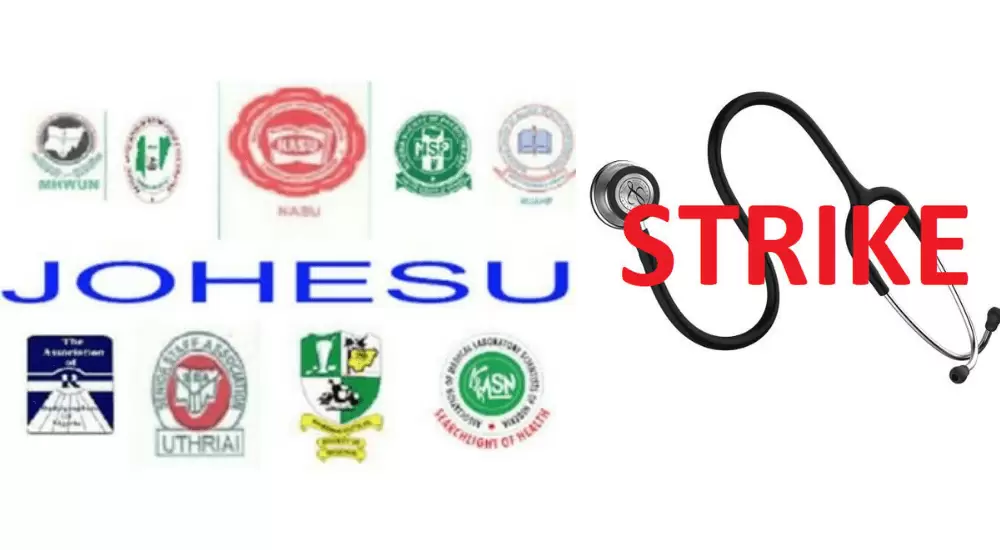
The Joint Health Sector Unions (JOHESU) has officially suspended its nationwide strike after 84 days of a grueling industrial action that paralyzed government-owned hospitals across Nigeria. The decision, reached during an emergency National Executive Council (NEC) meeting in Abuja on Friday, February 6, 2026, marks the end of a standoff that had left thousands of patients stranded since the strike began on November 15, 2025.
In a communiqué signed by National Chairman Kabiru Minjibir and National Secretary Martin Egbanubi, the union directed its members to return to their duty posts effective from midnight on Friday. The suspension follows a high-stakes conciliation meeting held 24 hours earlier at the Federal Ministry of Labour and Employment, where a breakthrough agreement was finally brokered.
The cornerstone of the settlement is the government’s commitment to capturing the adjusted Consolidated Health Salary Structure (CONHESS) in the 2026 Appropriation Act. This salary adjustment, which seeks parity with the medical doctors’ salary structure (CONMESS), has been a bone of contention for over a decade. The union also secured a total withdrawal of the controversial “No Work, No Pay” directive, with an agreement that January 2026 salaries, which had been withheld as a pressure tactic, must be paid immediately.
JOHESU revealed that the resolution was fast-tracked by a 14-day solidarity ultimatum issued by the Nigeria Labour Congress (NLC) and the Trade Union Congress (TUC). The pressure from the larger labor centers, combined with the intervention of high-ranking officials including Senate President Godswill Akpabio and Speaker Tajudeen Abbas, helped soften the government’s stance.
Throughout the nearly three-month crisis, the union remained firm despite government threats. Even when the Office of the Accountant-General was directed to stop salaries in January, JOHESU labeled the move a “common pressure tool” and insisted that their strike was a “dispute of right” protected by law. The union argued that the health system had already suffered enough from “injustice and a trust deficit,” leading to avoidable maternal and infant mortalities during the strike period.
Beyond financial gains, the union received a guarantee against victimization. No member who participated in the 84-day strike is to be sanctioned or intimidated. JOHESU has warned, however, that any failure by the government to honor the specific terms of this settlement would force the NLC and TUC to reactivate their industrial machinery.
While health workers are returning to the wards, the union expressed deep regret over the suffering the strike caused the Nigerian public. They noted that the federal government lost an estimated ₦1tn in internally generated revenue during the shutdown—a figure that underscores the massive economic and social cost of the dispute. For now, the focus shifts to the immediate restoration of services and the actual implementation of the 2026 budget promises.