
Sports
Barcelona Abandons Super League Project, Leaving Real Madrid in Isolation
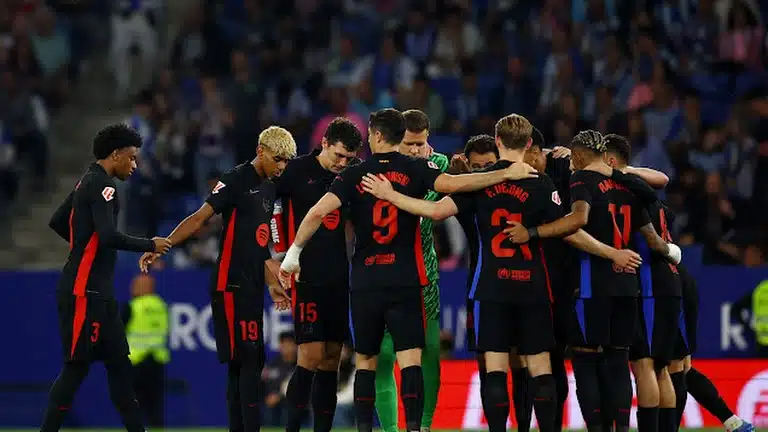
The persistent dream of a breakaway football aristocracy has suffered what many believe to be its final, fatal blow. Barcelona, once a staunch architect of the European Super League (ESL), has officially severed ties with the project, leaving their eternal rivals, Real Madrid, as the solitary figure standing in an empty boardroom. The announcement, made via a brief but seismic statement on the club’s official website this February 7, marks the end of a four-year ideological war between the Catalan giants and the established order of European football.
By formally notifying the European Super League Company and its remaining stakeholders of their withdrawal, Barcelona has signaled a total surrender to the existing structures of UEFA. This move effectively collapses the last remains of a partnership that began in 2021, when twelve of Europe’s most powerful clubs attempted to upend the sporting landscape. While the English “Big Six” retreated within hours of the initial launch due to unprecedented fan fury, Barcelona had remained a defiant holdout, citing the necessity of the league for the club’s financial survival.
The decision to exit is not merely a change of heart but a strategic pivot aimed at institutional rehabilitation. Under the leadership of President Joan Laporta, the club has spent the last several months laying the groundwork for a return to the European Football Clubs (EFC) organization. Having been expelled alongside the other rebels in 2021, Barcelona found themselves increasingly isolated as Juventus and others crawled back to the fold. Rejoining the EFC is seen as a vital step in repairing the club’s strained relationship with UEFA President Aleksander Čeferin.
For the supporters at the Camp Nou, this withdrawal represents a return to “normality.” The Super League had become a polarizing shadow over the club’s identity, often seen as a betrayal of the democratic values that underpin the “Més que un club” philosophy. By walking away, the board has prioritized the immediate benefits of being part of the Champions League over the theoretical, long-term riches of a closed-shop competition. It is a pragmatic concession to the reality that a league with only two teams—or in this case, one—is no league at all.
Real Madrid, however, shows no sign of following suit. President Florentino Pérez remains entrenched in a legal crusade that has moved from the pitch to the highest courts in Europe. While Barcelona seeks peace, Madrid is pursuing “substantial damages” from UEFA, emboldened by previous court rulings that criticized the governing body’s “anti-competitive” practices. The Spanish giants continue to argue that the current monopoly held by UEFA is a violation of European law, even as the sports world moves on without their proposed alternative.
The legal landscape remains murky despite the exodus. Last May, Madrid’s commercial court echoed the European Court of Justice by ruling that FIFA and UEFA had abused their dominant positions. Yet, UEFA has cleverly pivoted, amending its regulations to ensure that while new competitions can technically be proposed, the authorization process remains a gauntlet that few can survive. The governing body’s stance remains firm: legal technicalities do not equate to a mandate for a breakaway league that lacks the support of the broader football pyramid.
The fallout of this split between the two Spanish titans will likely be felt in the corridors of La Liga as much as in Nyon. For years, Madrid and Barcelona presented a united front against league president Javier Tebas, fighting together for a larger slice of the commercial pie. With Barcelona now realigning themselves with UEFA and the EFC, the “United Front” has crumbled. Real Madrid now stands as a legal and philosophical island, fighting a battle for a project that has lost its last credible partner.
Looking back, the European Super League will likely be remembered as the most expensive and public failed experiment in sporting history. It served as a catalyst for UEFA to reform the Champions League format, but it also exposed the deep financial desperation of Europe’s traditional elite. Barcelona’s exit is an admission that the power of the fans, the threat of government intervention, and the weight of history are forces far more formidable than a balance sheet.
As the dust settles on this latest withdrawal, the football world turns its attention back to the pitch. Barcelona is now free to focus on its domestic and continental campaigns without the distraction of a pending legal divorce. Real Madrid, meanwhile, continues to play a high-stakes game of poker with a hand that has grown increasingly weak. The Super League may still exist on paper in the offices of A22 Sports Management, but as a living, breathing threat to the beautiful game, it appears to have finally drawn its last breath.