
NEWS
Military Siege Over Visa Dispute Sparks Outcry in Abuja
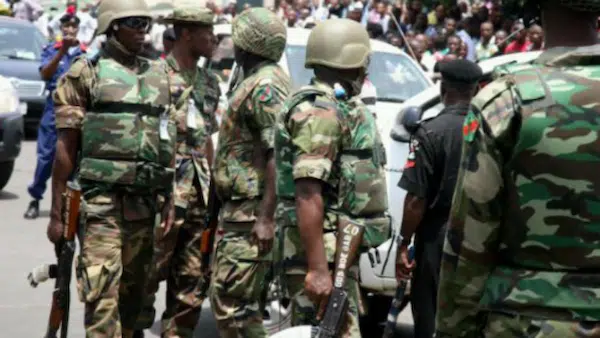
The lines between civil disputes and military intervention have blurred dangerously in the nation’s capital following the reported abduction and detention of a travel agency employee by armed personnel. The management of SMT Limited, a prominent Abuja-based visa firm, has sounded the alarm over the fate of their staff member, Mr. Dan Wesley, who was allegedly taken at gunpoint from their Gwarimpa office. The incident, which reportedly took place in the presence of horrified onlookers, has cast a grim shadow over the conduct of security agencies in private commercial disagreements.
The roots of the crisis trace back to a failed Canadian work visa application. According to the company, a third-party agent known only as Mr. Leo facilitated a contract for a client, Mrs. Bridget Ladi. While the firm maintains that standard procedures were followed—including a formal interview with a prospective Canadian employer—the application hit a stalemate when the employer ultimately declined to proceed. This professional setback triggered a chain of events that bypassed the Nigerian judicial system and moved directly into the realm of armed intimidation.
Demands for an immediate refund became the catalyst for the escalation. While SMT Limited reportedly advised the agent to submit a formal request in accordance with a 60-day refund policy, the resolution process was allegedly met with force. The firm claims that Mr. Leo arrived at their King Jaja Street premises not with a lawyer or a police officer, but with a military police van attached to the Guards Brigade, Mambilla Barracks. The team was said to be led by a warrant officer, identified as W.O. Abubakar, who allegedly utilized the state’s tactical assets to resolve a private debt.
The climax of this intimidation occurred on January 20, 2026, when the firm alleges that Wesley was forcibly seized and whisked away to the Mambilla Barracks. Since his abduction, his family and employers claim he has been held incommunicado, denied access to legal counsel, and subjected to undisclosed maltreatment. The “gunpoint arrest” of a civilian over a contractual disagreement has been described by human rights observers as a grotesque abuse of power that undermines the rule of law.
What makes the situation particularly chilling are the reports that the detention was sanctioned by “orders from above.” This nebulous justification is frequently used to bypass constitutional safeguards, leaving civilians at the mercy of military units that have no legal jurisdiction over civil contracts or visa disputes. SMT Limited has condemned the act as a blatant attempt at harassment and extortion, maintaining that their professional dealings were transparent and documented.
The Nigerian Army, a central figure in this unfolding drama, has remained conspicuously silent. Despite the gravity of the allegations and the naming of specific officers and units, no official statement has been issued to clarify why a military police van was deployed for a visa refund. This silence has only fueled public outrage, as Nigerians increasingly question the ease with which private citizens can allegedly “hire” military personnel to settle personal scores or recover debts.
Efforts by the firm’s legal representatives to secure Wesley’s release have so far hit a brick wall. Sources close to the case suggest that the military authorities at the barracks have refused to acknowledge the detention officially, creating a legal vacuum that complicates the filing of a writ of habeas corpus. The fear among the agency’s staff is palpable, as the presence of armed personnel at a civilian workplace has sent a clear message of intimidation to the entire travel consultancy sector.
This incident serves as a stark reminder of the persistent challenges regarding the professional boundaries of the Nigerian military. While the Guards Brigade is tasked with the protection of the President and the territorial integrity of the capital, the allegation that its personnel are being used as “debt recovery agents” poses a significant threat to civil-military relations. It raises urgent questions about the internal oversight mechanisms within the Mambilla Barracks and the broader military hierarchy.
The international community often looks at the ease of doing business in Nigeria through the lens of legal security. When a routine business failure—such as a denied visa—can lead to the abduction of an employee by soldiers, the message sent to investors and professionals is one of extreme risk. SMT Limited continues to demand the immediate and unconditional release of Dan Wesley, insisting that the courtroom, not a military cell, is the appropriate venue for resolving financial grievances.
As the standoff continues into its third week, the call for transparency grows louder. Human rights groups are expected to join the fray, demanding an investigation into the role of W.O. Abubakar and the civilian agent, Mr. Leo. For the family of Dan Wesley, the wait for justice is becoming an agonizing test of endurance in a city where the “orders from above” seem to carry more weight than the constitution itself.


