
NEWS
Strike at the Border: IDF Seizes Jamaa Islamiya Commander in Har Dov
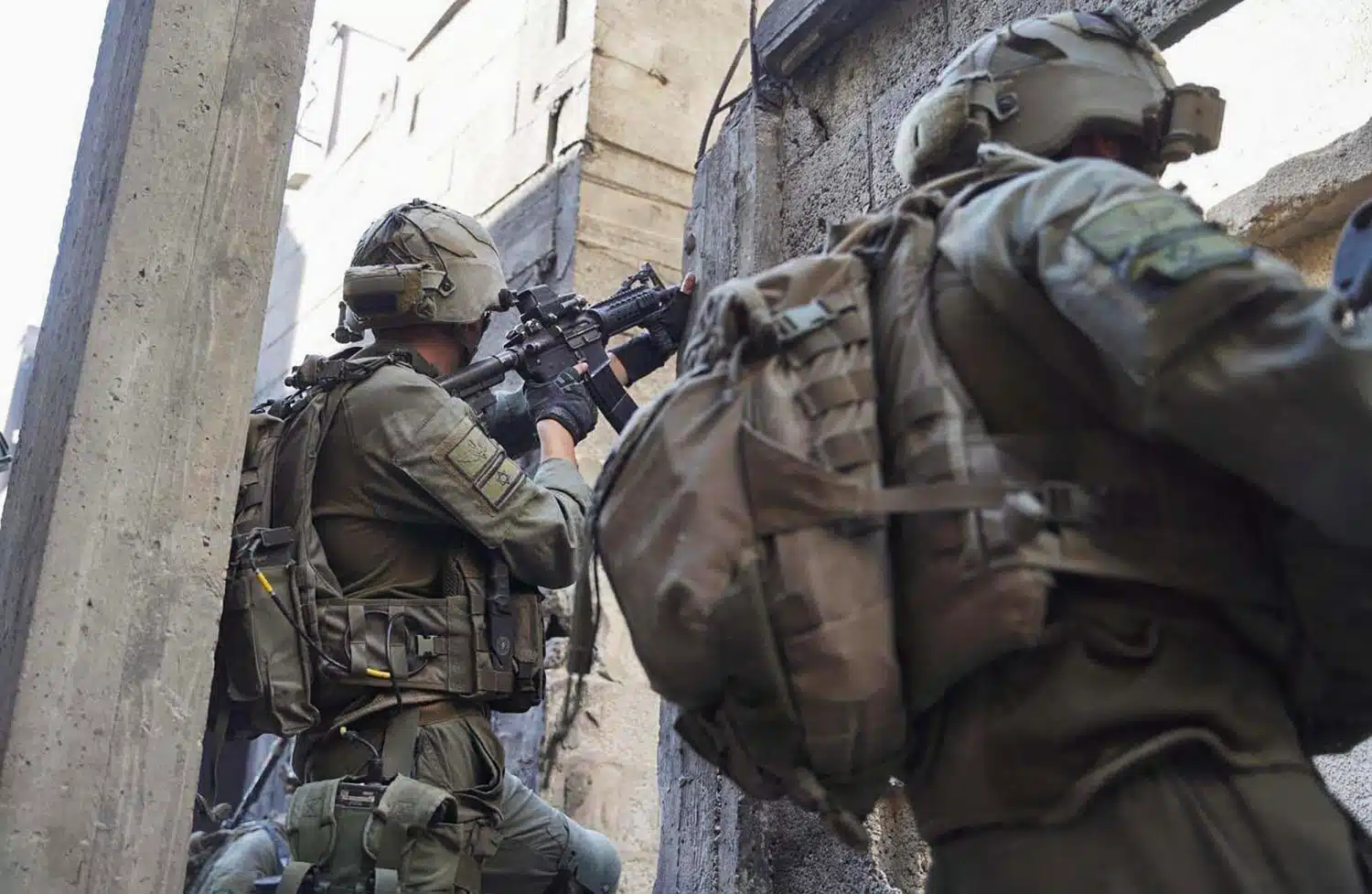
The Israeli military has intensified its campaign against regional paramilitary factions with the capture of a high-ranking official from the Jamaa Islamiya group. In a precision operation conducted under the cover of darkness in the Har Dov region, Israel Defense Forces (IDF) units successfully neutralized and detained the operative. The military confirmed the development through a formal announcement on its official social media channels early Monday morning.
Described as an intelligence-driven mission, the raid targeted a specific location where the senior figure was believed to be coordinating activities. Following a swift breach and apprehension, the suspect was moved across the border into Israeli territory for specialized interrogation. Military officials noted that the site of the arrest was not merely a hiding place but a functional outpost, as various weapons were discovered and seized during the sweep.
The suspect belongs to Al-Jama’a al-Islamiyya, a Sunni organization rooted in the broader political ideology of the Muslim Brotherhood. While often overshadowed by larger regional players, the group maintains a lethal armed wing known as the al-Fajr Forces. This militia has a long-standing history of confrontation with Israel, dating back to its formation in the 1980s during the height of the Lebanese civil conflicts.
In the contemporary landscape of the 2023–2024 conflict, Jamaa Islamiya has emerged as a tactical partner to Hezbollah. Despite the ideological differences between the Sunni faction and the Shiite-dominated Hezbollah, the two have increasingly synchronized their efforts. This partnership has focused primarily on launching cross-border strikes from Lebanese soil, aimed at destabilizing Israel’s northern frontier.
The IDF has been vocal about the persistent threat posed by the al-Fajr Forces, accusing them of orchestrating numerous attacks against both military personnel and civilian populations in northern Israel. The military maintains that the group has leveraged the chaos of the ongoing regional war to advance its own agenda of terror. By capturing a senior member of their leadership, the IDF aims to disrupt the command-and-control hierarchy of the organization.
Har Dov, the site of the operation, remains one of the most volatile sectors along the Blue Line. Its rugged terrain and strategic elevation make it a prime location for guerrilla tactics and clandestine movement. The success of an “intelligence-based” operation in such a contested area suggests a high level of surveillance and infiltration by Israeli security services into the group’s operational network.
The arrest comes at a time of extreme tension, as the broader Middle East remains on edge over the potential for a full-scale escalation. For the IDF, targeting the mid-to-high-level leadership of groups like Jamaa Islamiya serves a dual purpose. It provides valuable actionable intelligence through interrogations while simultaneously forcing the militants to retreat or reorganize, providing temporary relief for the communities living under the shadow of rocket fire.
While Hezbollah remains the primary adversary in the north, the IDF’s focus on Jamaa Islamiya highlights the multi-front nature of the current security challenge. Small, agile factions often provide larger groups with deniability or act as force multipliers during complex attacks. By dismantling these smaller cells, the Israeli military seeks to peel back the layers of the irregular forces operating along its borders.
The transfer of the operative to Israel for questioning indicates that the military believes he possesses critical information regarding future strike plans or the whereabouts of other key leaders. Historically, such interrogations have led to a “domino effect” of subsequent raids and preventive strikes. The recovery of weapons at the scene further confirms that the group was actively prepared for combat operations at the time of the intervention.
Public reaction in the region remains split, with supporters of the Sunni faction viewing the arrest as a provocation, while Israeli security analysts see it as a necessary defensive measure. The IDF has reiterated its commitment to sustaining military pressure until the threat to northern residents is eliminated. This latest capture is a clear signal that no group, regardless of size or affiliation, is beyond the reach of targeted intelligence operations.
As the conflict continues to evolve, the integration of Sunni and Shiite militant activities creates a more complex web for regional stabilizers to untangle. The involvement of a Muslim Brotherhood-linked group in active hostilities against Israel adds a unique political dimension to the military struggle. It suggests a broadening of the “Unity of Fronts” strategy employed by various anti-Israel actors across the region.
The IDF has signaled that this operation is part of a larger, ongoing strategy to degrade the capabilities of all armed groups operating near its territory. With tensions showing no signs of abating, the interrogation of this senior commander may prove to be a turning point in understanding the current coordination between Lebanese-based factions. The military remains on high alert, anticipating potential retaliatory measures following this high-profile seizure.