
NEWS
ADC Official Echoes Tinubu’s 2014 Criticism as Insecurity Grips Kwara and Katsina
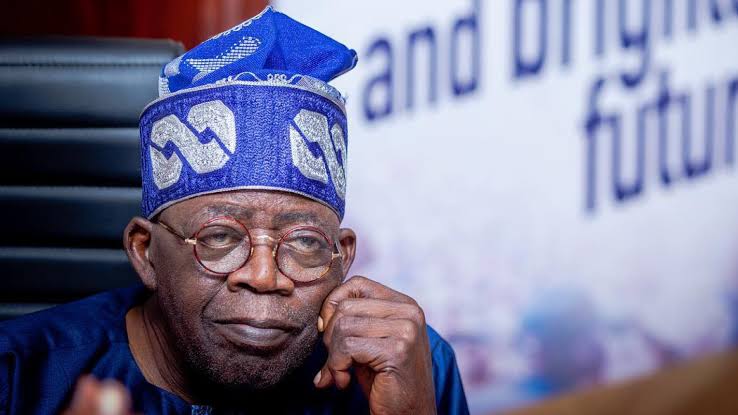
The cyclical nature of Nigerian political rhetoric has been thrust into the spotlight once again following a scathing assessment of the nation’s security architecture by a high-ranking official of the African Democratic Congress (ADC). Bolaji Abdullahi, a former Minister of Youth and Sports and the current National Publicity Secretary of the ADC, has sparked a national conversation by using President Bola Tinubu’s own past words to describe the current state of the federation. His remarks come at a time of profound mourning in the North Central and North West regions, where banditry has reached a devastating crescendo.
The genesis of this latest verbal volley lies in a digital artifact from over a decade ago. In September 2014, while the nation was reeling from Boko Haram’s expansion in the North East, then-opposition leader Bola Tinubu had famously tweeted that the “festering” attacks and the “massacre of innocent citizens” served as “concrete proof that Nigeria has no government.” At the time, this was viewed as a blistering indictment of the Goodluck Jonathan administration’s inability to protect its people—a sentiment that helped propel the APC to power a year later.
Now, with the shoe on the other foot, Abdullahi has repurposed that exact phrase to address the current administration’s struggle with armed groups. Reacting to the surge of violence in states like Kwara and Katsina, the ADC chieftain asserted that the same logic must apply today. For Abdullahi, if the inability to stop massacres was proof of a government’s absence in 2014, then the gruesome scenes currently unfolding in local communities suggest a similar vacuum of authority in 2026.
The weight of these words is felt most heavily in the Kaiama Local Government Area of Kwara State, which recently became a theater of horror. Reports from the Woro community indicate a humanitarian tragedy of staggering proportions. Residents were forced to bury at least 75 of their kin last Wednesday following a brutal raid by bandits. The following day, an additional 13 bodies were recovered from the surrounding bushes and interred, as families desperately searched for dozens of others who remain missing.
In Katsina State, the situation is equally dire, with kidnapping and targeted killings becoming a daily reality for agrarian communities. The sheer scale of these attacks has shattered the perceived safety of these regions, leading many to question the efficacy of current military and police deployments. For the ADC, the persistence of these “festering” security breaches is not just a failure of strategy but a fundamental failure of the social contract between the state and its citizens.
Abdullahi’s decision to mirror the President’s historical rhetoric serves as a tactical reminder of the promises made during the APC’s rise to power. It highlights a growing frustration among opposition figures and civil society members who believe that the security situation has merely mutated rather than improved. By using Tinubu’s own 2014 metric for “good governance,” the ADC is attempting to hold the Presidency to its own established standards, forcing a public reckoning over the current casualty rates.
The reaction to Abdullahi’s statement has been swift and polarized across social media platforms. Supporters of the ADC official argue that the recurring nature of mass burials in rural Nigeria justifies such harsh language, asserting that the primary duty of any government is the protection of life and property. On the other hand, defenders of the administration argue that the security challenges are deeply rooted and complex, accusing the opposition of “playing politics” with national tragedies.
While the political debate rages in the capital, the reality on the ground in Kwara and Katsina remains grim. Local leaders in Kaiama have called for more than just statements, urging the federal government to deploy permanent security outposts in vulnerable border communities. They argue that the bandits, often operating from forested areas that traverse state lines, have become emboldened by the slow response times of security agencies.
The ADC’s stance reflects a broader shift in the political landscape as the country moves closer to the next electoral cycle. By framing the insecurity as “proof that Nigeria has no government,” they are positioning themselves as the voice of a disillusioned populace. This brand of criticism is particularly potent because it uses the ruling party’s own historical benchmarks as a weapon, making it difficult for the administration to dismiss the claims without appearing to contradict its own past principles.
As the death toll from the Woro attack continues to rise and the search for missing persons persists, the pressure on the presidency to provide a more robust response is mounting. The tragedy in Kwara has served as a catalyst for a renewed demand for accountability, with many Nigerians echoing Abdullahi’s sentiment that administrative success must be measured in lives saved rather than in speeches delivered.
Ultimately, the resurfacing of the 2014 tweet serves as a cautionary tale for those in power. It highlights the long memory of the digital age and the inevitable accountability that follows bold political pronouncements. For the residents of Kwara and Katsina, however, the linguistic battle between the ADC and the presidency is secondary to the immediate, desperate need for a government that can truly guarantee their safety.


