
BUSINESS
Cardoso Reaffirms Economic Stability to US Investors
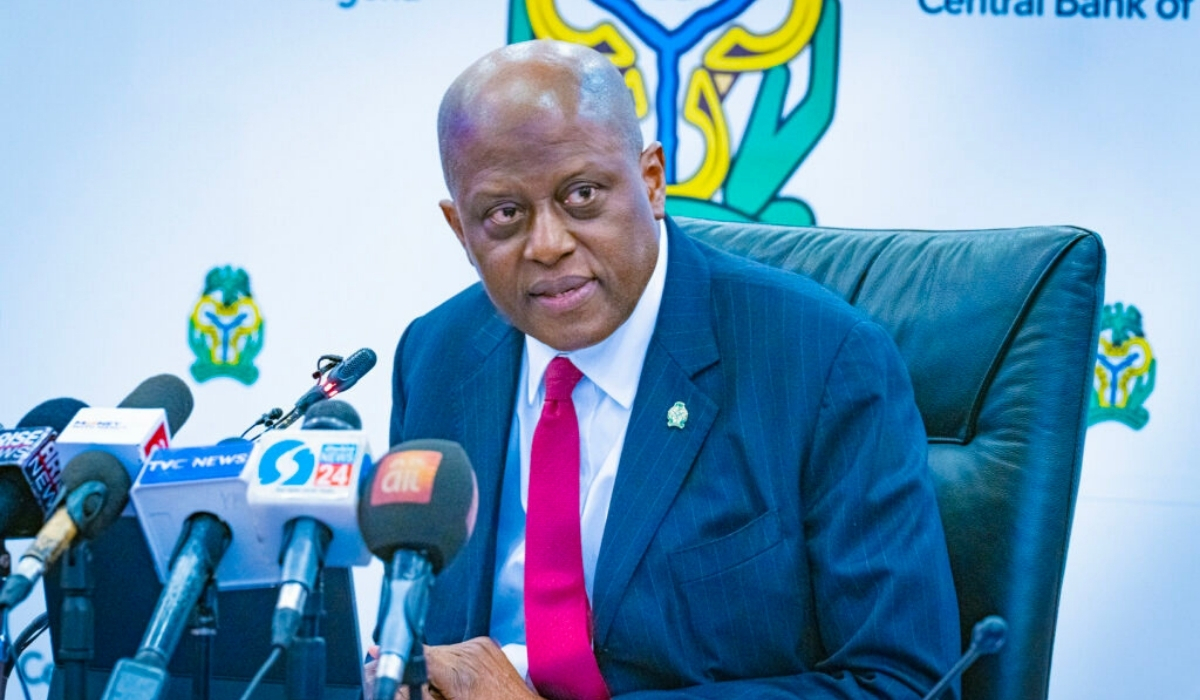
The Governor of the Central Bank of Nigeria (CBN), Olayemi Cardoso, has taken a decisive step toward restoring global confidence in Nigeria’s financial landscape by engaging top-tier business leaders and institutional investors in Washington, D.C. At the US–Nigeria Executive Business Roundtable, held on Monday, December 15, 2024, Cardoso underscored the nation’s unwavering transition toward a rules-based economic management system, positioning Nigeria as a disciplined and predictable destination for long-term capital.
Addressing an audience convened by the US Chamber of Commerce’s US-Africa Business Center, Cardoso highlighted the “organic” rebuilding of Nigeria’s foreign exchange reserves, which have surged to a robust $37.9 billion. He emphasized that this growth was achieved not through borrowing, but through fundamental market reforms, including the launch of the Nigerian Foreign Exchange Code and the Electronic Foreign Exchange Matching System (EFEMS). These tools, he noted, have been instrumental in compressing the once-volatile gap between official and parallel market rates to under two percent.
Central to Cardoso’s pitch was the adoption of orthodox monetary policy—a shift away from the “quasi-fiscal” interventions that had previously blurred the lines between the central bank and the government. He reaffirmed that the CBN has effectively discontinued direct deficit financing for the federal government, a move designed to rein in inflation and protect the purchasing power of the naira. This fiscal discipline, combined with a 70 percent year-on-year increase in foreign capital inflows, serves as a powerful signal that Nigeria’s reform agenda is yielding measurable results.
The roundtable also delved into the modernization of Nigeria’s payment systems and the ongoing banking sector recapitalization, which seeks to build a resilient financial system capable of supporting a trillion-dollar economy. By strengthening capital buffers and digital infrastructure, Cardoso argues that Nigeria is creating the “digital rails” necessary for inclusive growth and expanded financial inclusion.
Investor sentiment at the forum reflected a cautious but growing optimism. Kendra Gaither, President of the US-Africa Business Center, remarked that international markets are responding positively to Nigeria’s “seriousness of purpose.” As the global economy seeks stability amid geopolitical shifts, Cardoso’s message to the US business community was clear: Nigeria is no longer a market defined by opacity and artificial controls, but one anchored in transparency, regulatory clarity, and bankable opportunity.