
World News
China Slams ‘Global Judge’ Status Following US Capture of Maduro
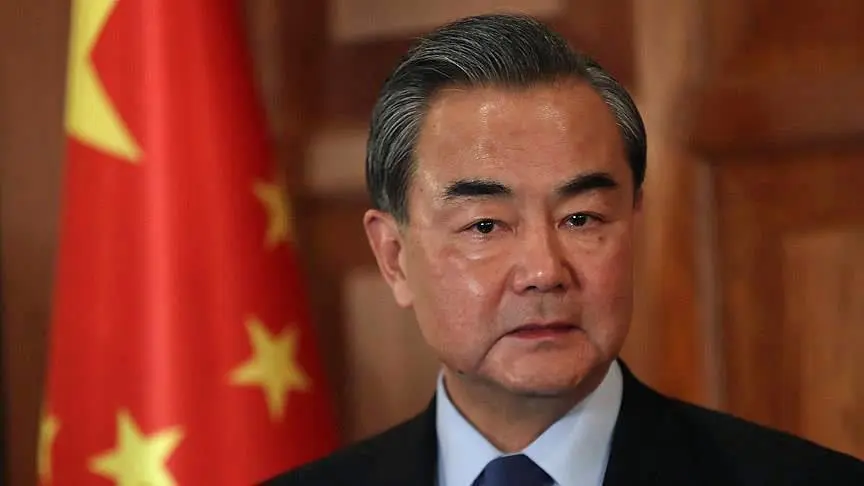
In a sharp diplomatic rebuke that has rippled across the international stage, China has declared that it will not accept any nation acting as a “world judge” or “global policeman.” The statement, delivered by Chinese Foreign Minister Wang Yi on Sunday, marks Beijing’s most significant response to the unprecedented capture of Venezuelan President Nicolás Maduro by United States forces. The 63-year-old leader, who was seized in a dramatic military raid early Saturday, is currently being held in a New York detention center awaiting a high-stakes court appearance on Monday.
Speaking during a meeting with Pakistani Foreign Minister Ishaq Dar in Beijing, Wang Yi avoided naming the United States directly but made his target unmistakable. He emphasized that the “sudden developments” in South America constitute a dangerous breach of the fundamental principles that govern modern civilization. “We have never believed that any country can act as the world’s police,” Wang stated, adding that the security and sovereignty of every nation—regardless of its political alignment—must be fully protected under the umbrella of international law.
The global community has been left in a state of shock following the release of images showing a blindfolded and handcuffed Maduro being transported to the United States. While the White House has framed the operation as a strike against “narco-terrorism,” Beijing views it as an act of hegemonic aggression. This sentiment was echoed in a separate statement from the Chinese Foreign Ministry, which expressed “grave concern” over the forcible seizure of Maduro and his wife, Cilia Flores, calling for their immediate release to avoid a total collapse of regional stability.
For China, the fall of the Maduro administration represents a significant geopolitical and economic setback. Over the last two decades, Beijing has cultivated a strategic partnership with Caracas, investing billions in Venezuela’s oil sector and serving as a critical economic lifeline in the face of Western sanctions. The capture of its primary ally in Latin America is being seen by analysts as a direct challenge to China’s influence in the Western Hemisphere and a test of its resolve to defend sovereign partners against unilateral military intervention.
As Maduro prepares to face drug-related charges in a Manhattan federal court today, January 5, 2026, the focus of the international community has shifted to the legality of the U.S. action. While some nations have cheered the removal of a leader accused of autocratic rule, others have joined China in warning that the raid sets a “dangerous precedent.” With Russia and Iran also issuing stern condemnations, the detention center in New York has become the center of a brewing diplomatic storm that threatens to redefine the boundaries of international intervention for years to come.
The Chinese diplomat’s remarks underscore a growing divide in global governance, where the “rules-based order” championed by Washington is increasingly coming into conflict with the “sovereign-based order” defended by Beijing. Wang Yi’s insistence on the protection of national security under international law suggests that China may lead a coalition of nations in the United Nations to challenge the validity of the U.S. operation. For now, the world waits to see how the American judicial system will handle a sitting head of state captured in his own palace.


