
NEWS
Coffin at Market Gate Sparks Tension in Onitsha
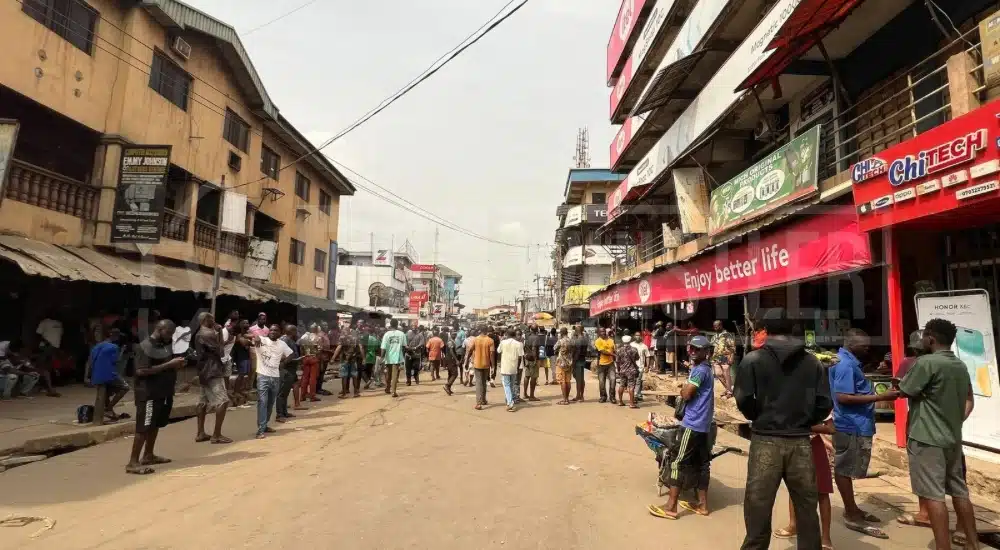
Onitsha, the commercial heartbeat of Anambra State, was gripped by a chilling scene on Monday morning as a mysterious coffin appeared at the entrance of the Onitsha Main Market. The unsettling discovery at the administrative “White House” sent shockwaves through the trading community, coinciding with Governor Charles Soludo’s contentious order to reopen the market following a week-long punitive closure.
The placement of the ritualistic object is widely viewed as a “death threat” from suspected non-state actors aiming to enforce the Monday sit-at-home order. This psychological warfare comes exactly one week after Governor Soludo shut down the market as a penalty for traders’ continued compliance with separatist-linked lockdowns. While the state government officially announced the market’s reopening for February 2, the presence of the coffin ensured that “business as usual” remained a distant reality.
Compounding the fear is the reported resignation of the market’s chairman, Chijioke Okpalaugo. While not yet officially confirmed by the state, sources within the traders’ union suggest Okpalaugo stepped down over the weekend after receiving credible threats to his life. Traders drew grim parallels to the fate of Francis Enibe, the former chairman of Mgbuka Amazu Market, who was kidnapped on a Monday two years ago and remains missing. For many, the coffin was a direct message that enforcing the governor’s reopening could carry a fatal price.
By midday Monday, the usually congested streets around the market were eerie and deserted. Although the massive iron gates were flung open and security forces patrolled nearby, the vast majority of shop owners opted for safety over sales. Many traders admitted to keeping their apprentices at home, fearing that the “White House” coffin was merely a prelude to physical violence.
The standoff highlights a deepening rift between the state government’s “no work, no pay” policy and the reality of grassroots insecurity. While Governor Soludo has remained firm in his stance that Anambra cannot thrive as a “four-day work week state,” traders like Okechukwu Okafor argue that orders from the safety of the capital, Awka, are insufficient. They contend that if the governor wants them to defy armed hoodlums, he must provide more than just a radio announcement—he must provide a visible, foolproof security presence.
As of Monday afternoon, the coffin had been removed by security operatives, but the psychological stain remained. The Onitsha Main Market—often called the largest in West Africa—now stands as the central battleground for the soul of the region’s economy. Whether the market returns to full capacity on Tuesday remains to be seen, but for now, the shadow of the Monday lockdown remains cast long and dark across the Niger.