
METRO
DSS Operative Hits Hiding After Fatal Shooting In Abuja Village
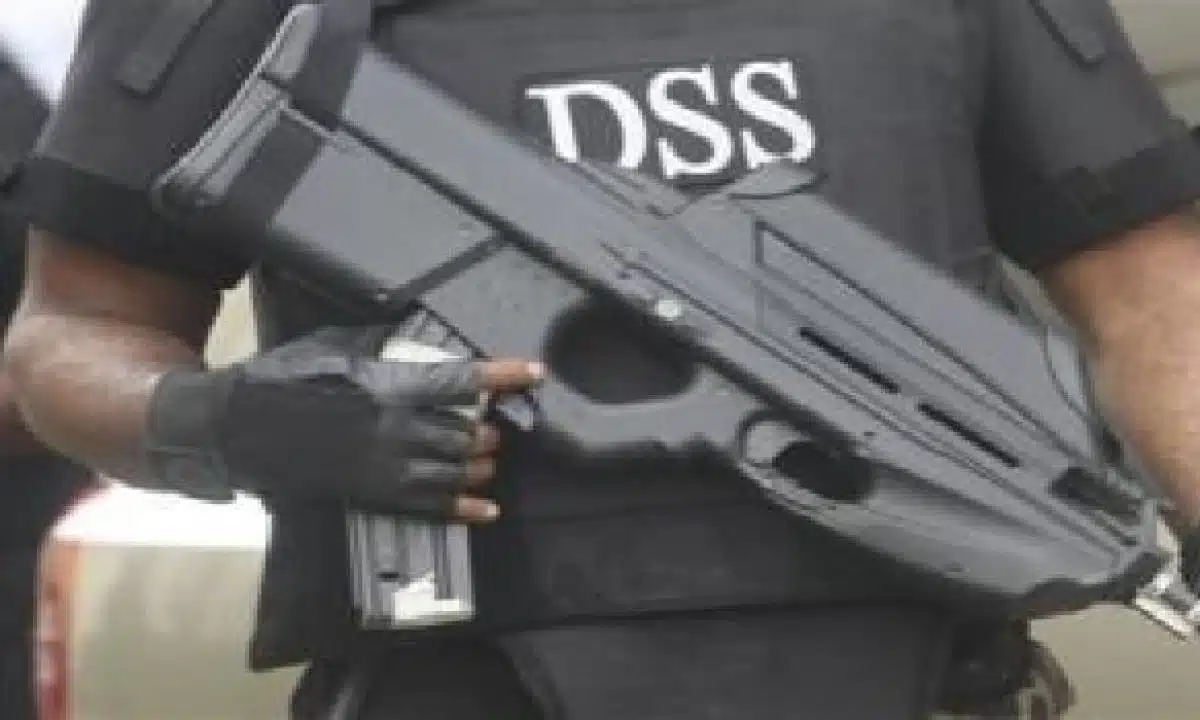
A wave of grief and indignation has swept through the Karmajiji community in the Federal Capital Territory following a tragic shooting involving an operative of the Department of State Services. The incident, which has now claimed two lives, involves Ajayi Abayomi, an officer who reportedly opened fire on three unarmed residents under circumstances that have sparked intense public scrutiny.
What began as a quiet Monday in the Karon Majigi area turned into a scene of horror when the operative’s weapon discharged, striking three men who were reportedly going about their daily activities. The victims, identified as Musa Adamu, Suleiman Salisu, and Abdullahi Ahmed, were caught in the path of a single, devastating discharge from the officer’s service pistol.
The mechanical violence of the event was chilling in its efficiency. According to investigative sources, the bullet first struck Musa Adamu with fatal precision. The projectile then continued its trajectory, slicing through the abdominal wall of Suleiman Salisu before finally lodging in the hand of the third victim, Abdullahi Ahmed.
Musa Adamu succumbed to his injuries just hours after the shooting on January 19, marking the first fatality in an incident that the operative initially described as an accident. Despite the gravity of the situation, the tragedy deepened this week when the second victim, Suleiman Salisu, lost his battle for survival at the Federal Medical Centre in Abuja on Wednesday.
The death of Salisu has shifted the narrative from a localized accident to a major case of extrajudicial killing, placing immense pressure on the DSS to produce the officer involved. Reports indicate that since the initial incident, Abayomi has gone into hiding, effectively evading law enforcement officials who are seeking to clarify the details of the shooting.
Police sources have revealed that the operative has ignored formal invitations to assist with the ongoing investigation. While the officer had previously claimed that he accidentally pulled the trigger, his subsequent disappearance has cast a long shadow of doubt over his account of the event.
At the Federal Medical Centre in Abuja, the atmosphere remains somber as families of the deceased gather to claim the remains of their loved ones. A brother of one of the victims, visibly shaken by the loss, expressed the family’s devastation, calling for divine justice and immediate legal accountability for what he described as a “careless” act by a security official.
The grieving family member emphasized that the victims were innocent citizens with no prior altercation with the law. He noted that the community is now in prayer, seeking both spiritual solace and the intervention of the state to ensure that the rights of the deceased are upheld and that the perpetrator is brought to justice.
Meanwhile, the third victim, Abdullahi Ahmed, continues to receive medical attention at the same facility. His condition remains a point of concern for the community, as the physical and psychological scars of the shooting linger among the residents of Karmajiji.
This incident adds to a growing list of concerns regarding the conduct of security operatives in civilian spaces. The use of firearms in densely populated areas and the accountability measures within the Department of State Services are once again at the forefront of national discourse in the capital.
The community of Karon Majigi, largely populated by resilient and hardworking residents, is now demanding more than just an apology. They are calling for a transparent investigation that explains why a service weapon was unholstered and discharged in a manner that could claim multiple lives with a single shot.
As the police continue their search for the missing operative, the DSS has faced increasing calls to cooperate fully with the Nigerian Police Force. The refusal of an officer to honor an invitation from a sister agency is seen by many legal experts as a significant breach of protocol and a hindrance to the pursuit of justice.
In Abuja, the discourse surrounding the tragedy is focused on the need for stricter rules of engagement for undercover and plainclothes operatives. The thin line between security and tragedy has once again been crossed, leaving families to bury their young men while the man responsible remains at large.
The victims’ families have begun the process of burial according to Islamic rites, but they maintain that the closing of the grave does not mean the closing of the case. They are looking to the authorities to prove that no one, regardless of their badge or agency, is above the law.