
NEWS
Ex-General: Military Shaken by Thwarted Coup Against Tinubu
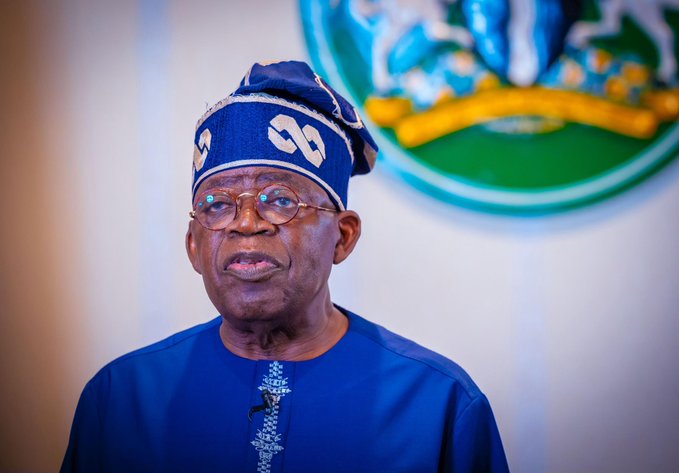
The Nigerian military establishment is reportedly reeling from the shock of a recently uncovered attempt to subvert the democratic administration of President Bola Tinubu. Brigadier-General Sani Kukasheka-Usman (Rtd), a former Director of Army Public Relations, revealed that the high command was caught off guard by the breach of constitutional order, sparking a period of intense internal reflection.
Speaking during a recent broadcast on Arise Television, Usman emphasized that the modern Nigerian soldier has evolved significantly over the last decade and a half. He noted that the military has undergone a rigorous transformation process designed to align its operations with democratic values and the rule of law.
This development comes at a time when Nigeria is celebrating over a quarter-century of uninterrupted civilian rule. According to Usman, the long-standing stability of the current democratic era—spanning 26 years—made the prospect of an extra-constitutional takeover particularly jarring for both the armed forces and the general public.
The retired General clarified that he was not speaking officially for the Defense Headquarters but noted that the issue has largely been addressed through internal mechanisms. He pointed to a recent update from the Director of Defense Information as evidence that the military is taking the matter with the utmost seriousness.
Investigations into the incident have reportedly moved beyond mere suspicion. Usman indicated that the military hierarchy has established clear facts regarding the conspiracy. The charges involved go beyond simple professional misconduct, touching on gross acts of indiscipline and a direct breach of service regulations.
Critically, the investigation highlighted a deliberate attempt to overthrow the democratically elected government. This revelation has forced a “renewed understanding” within the barracks. The military leadership now recognizes that its survival and relevance depend on being in sync with the aspirations of the Nigerian people.
Usman argued that the growing enlightenment of the Nigerian populace serves as a safeguard for democracy. He suggested that an informed citizenry makes the task of governance more streamlined, as people are more likely to understand policy nuances and participate actively in the democratic process rather than seeking radical alternatives.
The former spokesperson noted that the military’s reaction to the plot reflects a departure from the era of frequent interventions. Instead of internal concealment, there is a visible effort to communicate with the public and reaffirm the military’s subordinate role to civilian authority.
The “October statement” referenced by the military’s information wing was described as a foundational document in this saga. The recent updates provided by the Defense Information office serve to close the loop on the investigation, signaling to the rank and file that any deviation from the constitutional path will be met with decisive action.
By acknowledging the shock of the attempted coup, the military high command is essentially admitting that the era of the “man on horseback” is viewed as a relic of the past. The focus has shifted toward professionalizing the force to meet contemporary security challenges like insurgency and banditry, rather than political maneuvering.
Usman’s reflections suggest that the military is learning to navigate the complexities of a democratic society. This involves a delicate balance of maintaining rigorous internal discipline while fostering a transparent relationship with the civilians they are sworn to protect.
The sentiment shared by the retired General echoes a broader consensus among Nigeria’s security elite: that the military is no longer an island. The interconnectedness of modern governance means that the armed forces must be the primary defenders of the ballot box, not its primary threat.
As the dust settles on this attempted breach of order, the Nigerian military appears to be doubling down on its commitment to the constitution. The shock of the attempt has served as a catalyst for a more robust defense of democratic institutions, ensuring that the chain of command remains unbroken and focused on national defense.


