
NEWS
Former IGP Mike Okiro Backs Tinubu for Second Term, Citing Bold Reforms
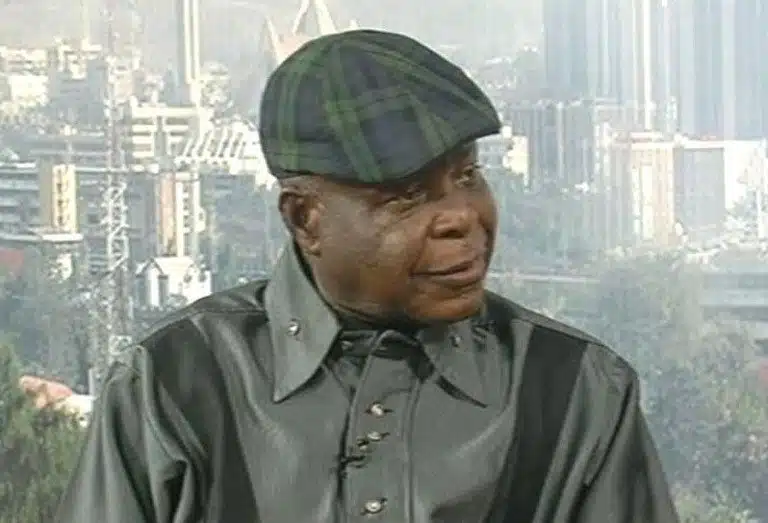
Former Inspector-General of Police, Mike Okiro, has formally endorsed President Bola Tinubu for a second term, characterizing the current administration’s trajectory as a courageous and necessary departure from the status quo. Speaking to a gathering of journalists on Sunday in Ibadan, the veteran security chief argued that the President has displayed an unprecedented level of political will since assuming office. According to Okiro, Tinubu took the reins of power at a time when the nation was facing a labyrinth of structural crises, yet he has managed to confront these challenges with a series of “sequenced and strategic” policy decisions.
Okiro, who served as Nigeria’s top cop during a pivotal era, noted that while the President’s reforms have been met with initial difficulty, they are essential for long-term national stability. He suggested that the “uncommon boldness” seen in the current leadership is exactly what Nigeria requires to move past its long-standing systemic bottlenecks. The former IGP expressed a firm conviction that these cross-sector interventions will yield significant positive outcomes before the conclusion of the President’s first four years, positioning the country for a period of sustainable economic growth.
A central theme of Okiro’s endorsement was the controversial but critical decision to remove the fuel subsidy. He acknowledged the widespread hardship the move initially triggered across Nigerian households but insisted it was a “tough medicine” required to stabilize a hemorrhaging economy. In his view, no Nigerian leader in recent memory has governed with such a high level of audacity, choosing to prioritize the nation’s future fiscal health over short-term political popularity. He urged the citizenry to look beyond the current economic “discomfort” and focus on the stabilizing effects that are gradually beginning to emerge.
Beyond economics, the former police boss touched on the administration’s handling of the country’s security architecture. Drawing from his own professional background, Okiro expressed optimism that the current security strategies under the Tinubu administration would lead to a substantial reduction in criminal activities nationwide. He pointed to his past working relationship with the President—dating back to Tinubu’s tenure as Governor of Lagos State—as evidence of his capacity to build robust and coordinated safety systems. Okiro attributed the relative stability Lagos has enjoyed over the years to the foundation laid during those early years of collaboration.
Okiro emphasized that the President’s track record in Lagos serves as a reliable blueprint for what he can achieve at the federal level if granted a full eight-year tenure. He argued that the consistency and vision demonstrated in the nation’s commercial nerve center are now being scaled up to transform the entire country. “His achievements in Lagos show capacity and vision,” Okiro stated, adding that an eight-year window would allow the President to fully consolidate his ongoing reforms and realize a comprehensive long-term vision for Nigeria.
The visit to Ibadan was also marked by a significant grassroots political move, as Okiro used the occasion to officially inaugurate the “Grassroots Mobilisation for Tinubu” initiative. The former IGP, who holds the traditional title of Maradin Hausawa of Ibadanland, is leveraging his influence within both security and traditional circles to build a base of support for the administration. During his stay in the historic city, he also paid a condolence visit to the family of the late Sarkin Sasa, further solidifying his ties to the local community and its leadership.
Accompanying the former IGP was a diverse group of stakeholders, including leaders from various youth and elders’ forums. Among them was the National Coordinator of the Northern Youth and Elder’s Awareness Forum, Alhaji Mahmud Sani-Yerima, as well as several zonal coordinators. Their presence highlighted the burgeoning inter-regional support network being formed to advocate for the President’s continuity in office. Okiro’s message to these groups was one of patience and sustained backing, asserting that the full benefits of the current “painful but necessary” policies are just over the horizon.
As the political discourse ahead of the next election cycle begins to intensify, the endorsement from a figure of Okiro’s stature adds significant weight to the administration’s narrative of “necessary reform.” By framing the President’s first term as a period of difficult but essential groundwork, Okiro is making the case that a second term is not just a political desire but a developmental necessity. For the veteran cop, the choice is clear: the boldness shown today is the only path toward a more secure and economically viable Nigeria tomorrow.


