
Politics
Hafiz Abubakar Claims Authorship of Kwankwasiyya Movement
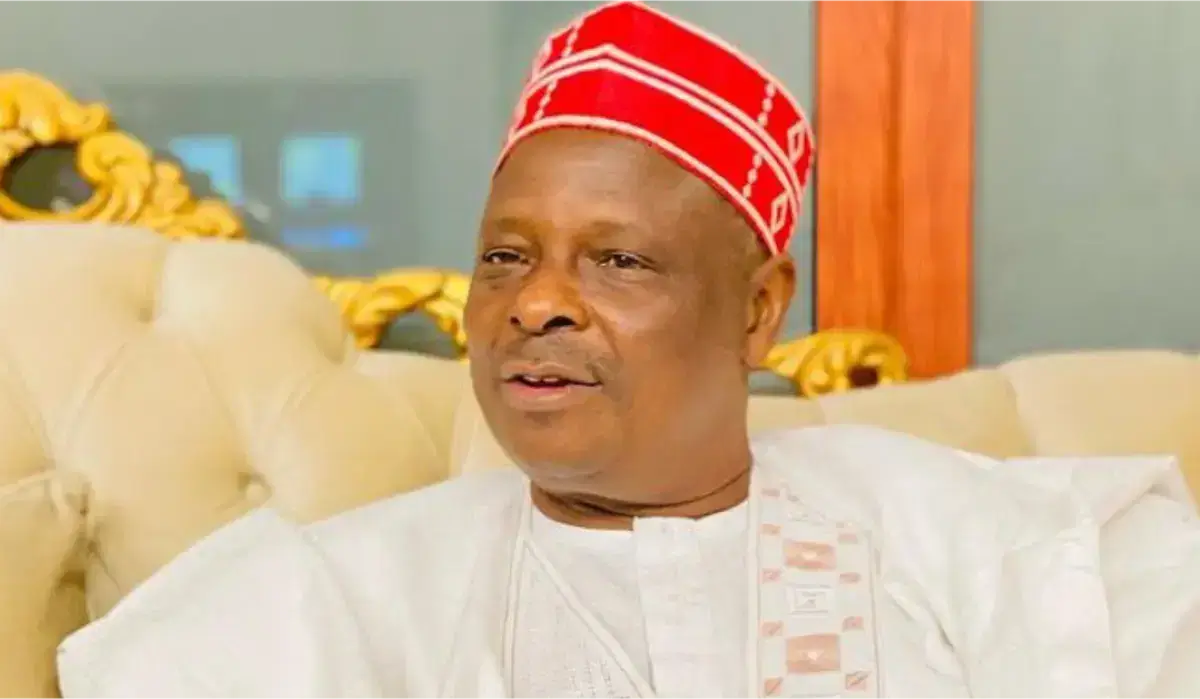
In a surprising twist that has sent ripples through the political landscape of Kano State, former Deputy Governor Hafizu Abubakar has publicly challenged the established narrative surrounding the Kwankwasiyya Movement. For years, the movement has been synonymous with the political identity of Rabiu Musa Kwankwaso, the former governor and presidential candidate. However, Abubakar is now stepping forward to reclaim what he describes as his intellectual property, asserting that the movement was never the brainchild of the man whose name it bears.
The revelation came during a high-profile event at the Kano Government House, where 600 motorcycles were being distributed to social media influencers. Amidst the hum of engines and the gathering of party faithful, Abubakar seized the moment to rewrite a chapter of Nigerian political history. He stated unequivocally that the Kwankwasiyya ideology did not originate from Kwankwaso himself, but rather from a small, dedicated group of strategists looking to safeguard a fragile administration.
Abubakar disclosed that he was one of six original founders who conceived the movement. According to his account, the group emerged during Kwankwaso’s first tenure as governor. At the time, the administration was grappling with internal friction and significant challenges within the People’s Democratic Party (PDP). The movement was designed as a protective shield, a way to consolidate power and create a distinct identity that could withstand the volatile nature of state politics.
The former deputy governor’s claims go beyond mere conceptualization; he also laid claim to the movement’s most iconic symbols. The famous red cap, which has become a ubiquitous symbol of loyalty and political belonging across Northern Nigeria, was not Kwankwaso’s idea, according to Abubakar. He recounted that the choice of the red cap was a spontaneous decision made during a political gathering in Gwale Local Government Area many years ago.
Furthermore, Abubakar insisted that he personally suggested the name “Kwankwasiyya.” He explained that the founders felt it was more strategic to build a powerful movement around the sitting governor’s name rather than splintering off to form a new political party. The goal was to create a “party within a party” that could effectively counter adversaries within the PDP. By naming it after Kwankwaso, they sought to personify the struggle and give the followers a focal point for their loyalty.
However, the tone of Abubakar’s address was marked by a palpable sense of betrayal. He expressed deep bitterness over how the history of the movement has been curated over the last decade. In his view, the narrative has been hijacked by those who joined later or those who sought to centralize all merit within a single individual. He lamented that the contributions of the original architects have been systematically erased from the public record.
Using a vivid metaphor to describe the current state of affairs, Abubakar compared the founders to a group of builders. He likened their efforts to a team of men who pooled their resources, sweat, and intellect to construct a magnificent house. Once the house was completed, they invited a guest to live in it and lead the household. Yet, according to Abubakar, that guest eventually turned around, accused the builders of betrayal, and forcibly chased them out of the very structure they created.
This public falling out highlights the shifting sands of Kano’s political alliances. As the state prepares for future electoral cycles, the legitimacy of political legacies becomes a valuable currency. Abubakar’s decision to speak out now suggests a brewing ideological battle within the ranks of the state’s elite. By distancing the “brand” of Kwankwasiyya from the “person” of Kwankwaso, he is effectively challenging the foundation of the movement’s authority.
The impact of these statements on the rank-and-file members of the movement remains to be seen. For many, the red cap and the name are inseparable from the person of Rabiu Kwankwaso. Yet, Abubakar’s detailed recollection of the movement’s birth in the trenches of PDP internal politics provides a different perspective on how political brands are manufactured and maintained. It portrays the movement not as a cult of personality born from one man’s vision, but as a calculated political tool designed by a committee of loyalists.
As the news of Abubakar’s claims spreads through social media—ironically the very platform the motorcycle recipients are meant to influence—the conversation around political “ownership” in Nigeria intensifies. It raises fundamental questions about loyalty, the evolution of political symbols, and whether a movement can ever truly belong to its founders once it has been adopted by the masses. For now, the “house” of Kwankwasiyya remains standing, but its historical foundation is being fiercely contested by those who claim to have laid the first bricks.