
NEWS
Igbokwe Dismisses El-Rufai’s 2027 Election Warning
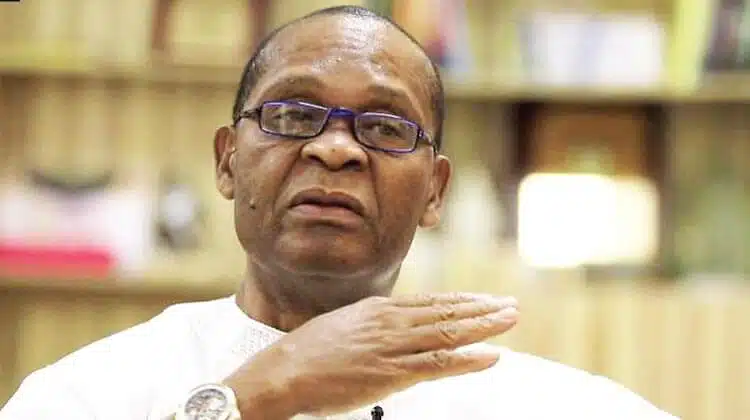
The political atmosphere in Nigeria is intensifying as All Progressives Congress (APC) chieftain Joe Igbokwe launched a spirited defense of President Bola Ahmed Tinubu’s electoral prospects. Reacting to a pessimistic forecast by former Kaduna State Governor Nasir El-Rufai, Igbokwe asserted that a defeat for the incumbent in 2027 is a statistical and political impossibility. The exchange highlights a growing ideological rift within the ruling party as the nation looks toward the next general election cycle.
The controversy was sparked by El-Rufai’s remarks at the 23rd Daily Trust Dialogue, where the former governor suggested that the APC might lose its grip on power by 2027. El-Rufai had argued that Nigeria’s political landscape is inherently contestable, noting that the PDP’s sixteen-year reign eventually crumbled and the APC is not immune to a similar fate. His comments, delivered from Brussels, Belgium, suggested that the party must prepare for a possible exit if governance fails to meet the public’s expectations.
Igbokwe, a staunch loyalist of the President, took to social media to systematically dismantle El-Rufai’s “permutations.” In a detailed post, he argued that the current administration is “fixing Nigeria in a way never seen before.” Igbokwe maintained that Tinubu possesses a unique, deep-seated knowledge of the nation’s structural problems, citing his decades of preparation for the presidency as a primary reason why his mandate will remain secure.
Central to Igbokwe’s argument is the President’s track record of “monumental bridge-building” across the country. He described Tinubu as the most cerebral leader Nigeria has seen in the last 30 years, labeling him a “financial guru” and a “bean counter” capable of navigating the nation’s complex economic challenges. According to the APC chieftain, the institutional frameworks currently being adopted by various states were originally pioneered by Tinubu during his tenure as Governor of Lagos State.
Beyond administrative technicalities, Igbokwe emphasized the President’s “mercy and unprecedented giving” as a factor that endears him to the grassroots. He argued that Tinubu has “touched more lives than any Nigerian, living or dead,” through his philanthropic efforts and his ability to mentor a vast network of leaders who now occupy key positions across the federation. This capacity for human capital development, Igbokwe noted, is what fundamentally separates the President from his political contemporaries.
The discourse reflects the high stakes of the 2026 political calendar, as factions within the APC begin to align or distance themselves from the presidency. While El-Rufai warns of a potential democratic shift, Igbokwe’s rebuttal serves as a rallying cry for party unity and a testament to the belief in the “Tinubu project.” He insisted that the President’s humanitarian background and strategic foresight have created an electoral fortress that the opposition will find impossible to breach in the coming years.
The exchange has also reignited debates about the performance of the Fourth Republic and the durability of ruling coalitions in West Africa. Igbokwe’s defense suggests that the presidency is relying heavily on its reformist agenda and its network of political beneficiaries to maintain control. For Igbokwe, the work being done in Abuja is not just about governance but about securing a legacy that will naturally translate into an electoral landslide in 2027.
As the nation watches the verbal sparring between these two influential figures, the focus remains on whether the “Lagos blueprint” can successfully scale to solve Nigeria’s national crises. While El-Rufai warns against complacency, Igbokwe is betting on the President’s historical resilience and his “financial wizardry” to prove the skeptics wrong. The coming months will likely see more of these internal debates as the APC attempts to define its identity ahead of the next transition.


