
Politics
Kano Politics: The Unraveling of the Tinubu-Kwankwaso Alliance
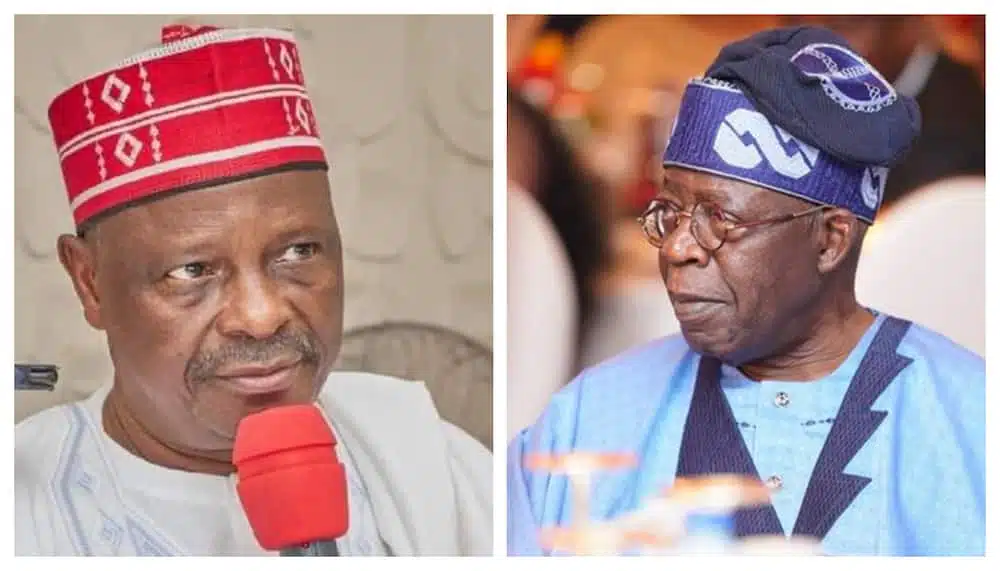
In the high-stakes arena of Nigerian power plays, the collapse of the potential alliance between President Bola Tinubu and Senator Rabiu Musa Kwankwaso has become a defining moment for the 2027 political cycle. What began as a strategic courtship of the formidable “red cap” Kwankwasiyya movement has dissolved into a narrative of irreconcilable demands and shifted loyalties. Insiders within the All Progressives Congress (APC) have now pulled back the curtain on why the deal, once considered a game-changer for the North-West, ultimately hit a brick wall.
The crux of the failure lay in what presidency sources describe as “excessive and unrealistic” conditions set by the New Nigeria Peoples Party (NNPP) leader. Negotiations reportedly hit a dead end when Kwankwaso requested a staggering 20 percent control of the APC’s national structure. To the ruling party’s veterans, this was more than a request for inclusion; it was seen as an attempt to hijack the party’s machinery from within. When Kwankwaso further pressed for a vice-presidential slot and long-term guarantees extending into 2031, the APC leadership concluded that the price of his cooperation was simply too high.
A senior party chieftain familiar with the closed-door sessions noted that even President Tinubu has never made such specific demands for a personal percentage of the party’s structure. The insistence on a vice-presidential ticket was particularly jarring, as the position was never considered vacant. By seeking to influence the party’s succession plans nearly a decade in advance, Kwankwaso was viewed as overreaching, prompting the presidency to reconsider the value of the “gatekeeper” of Kano politics.
As talks with Kwankwaso stalled, the President’s team executed a sharp tactical pivot. Recognizing that the political landscape in Kano was no longer a monolith under a single man’s control, the presidency turned its attention toward Governor Abba Kabir Yusuf. The calculation was pragmatic: why negotiate with a godfather making impossible demands when you can deal directly with the incumbent governor who holds the state’s resources and executive leverage?
The turning point came with the realization that the once-unbreakable bond between Kwankwaso and his political godson, Governor Yusuf, had begun to fray. Exploiting these internal cracks, the APC successfully facilitated Yusuf’s high-profile defection to the ruling party in late January 2026. This move effectively bypassed Kwankwaso, leaving the former governor in a precarious position as his most significant political asset—the Kano State Government—switched sides without him.
Kwankwaso has since described the Governor’s defection as a “betrayal of the highest order,” but the reality on the ground suggests a new power dynamic. With Governor Yusuf now firmly in the APC fold and leading a wave of defectors from the State Assembly, the presidency has successfully integrated Kano into the ruling party’s map without conceding to Kwankwaso’s “mega-demands.” The strategy shifted from a merger of giants to a surgical acquisition of the state’s leadership.
The collapse of this deal marks a significant shift in Northern political alignment. While Kwankwaso remains a potent force with a loyal grassroots following, the APC’s decision to prioritize the incumbent governor over the movement leader indicates a preference for administrative stability over ideological pacts. The ruling party has bet that federal might and incumbency will outweigh the traditional influence of the red-cap movement when the 2027 polls arrive.
For now, the “red cap” politics of Kano enters an era of unprecedented fragmentation. Kwankwaso finds himself fighting to retain the soul of the NNPP while his former proteges settle into their new roles within the APC hierarchy. The failed deal serves as a stark reminder that in the world of political mergers, overplaying one’s hand can lead to total exclusion from the table.


