
Politics
Kano Power Play: Deputy Governor Gwarzo Digs In Amid Impeachment Rumors
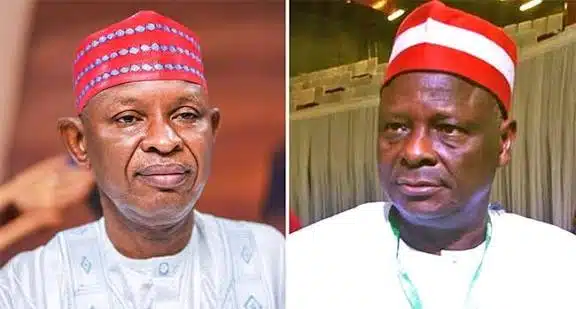
The political landscape of Kano State is currently weathering a significant tremor as the bond between Governor Abba Kabir Yusuf and his Deputy, Comrade Aminu Abdussalam Gwarzo, faces its most rigorous test yet. Following the Governor’s high-profile defection to the All Progressives Congress (APC), the state’s political machinery is buzzing with reports of a deepening rift that could lead to a legislative showdown.
Central to the tension is Gwarzo’s steadfast refusal to follow his principal into the APC. While Governor Yusuf has transitioned his political identity to align with the center, Gwarzo remains rooted in the New Nigeria Peoples Party (NNPP), creating a rare and volatile “split ticket” in the Government House. This ideological divide has prompted loyalists of the Governor within the State House of Assembly to begin discussions regarding the Deputy Governor’s future.
Sources within the legislative circle suggest that Gwarzo is being pressured to resign voluntarily. The argument from the pro-Yusuf camp is simple: a unified government is necessary for effective administration. They contend that Gwarzo’s continued presence as a member of the opposition within the executive arm is untenable. However, the Deputy Governor appears unmoved by these calls, opting instead for a strategy of calculated patience.
A senior official within the Deputy Governor’s office, speaking on the condition of anonymity, revealed that Gwarzo has no immediate plans to step down. According to the source, Gwarzo is not acting on his own volition but is waiting for a “green light” from the national leader of the NNPP and the architect of the Kwankwasiyya movement, Senator Rabiu Musa Kwankwaso. This highlights the enduring influence of Kwankwaso as the ultimate arbiter in Kano’s political disputes.
“He is in a state of jeopardy, but he is a loyalist to the core,” the source stated. While associates have reportedly advised Gwarzo to resign to avoid the indignity of a forced removal, he remains tethered to the directives of his political godfather. This standoff suggests that the Deputy Governor’s seat has become a pawn in a larger chess match between the Governor’s new APC affiliations and the Kwankwasiyya stronghold.
The Kano State House of Assembly, currently the theater of anticipation, has yet to take formal action. Kamal Shawai, the spokesperson for the Assembly, clarified that while the Governor’s defection has been a hot topic of informal debate among members, no motion for impeachment has been officially filed. The Assembly is currently on recess, which has provided a temporary cooling-off period for all parties involved.
Shawai noted that the House is expected to reconvene on February 2. Until then, any talk of impeachment remains speculative, though he did not rule out the possibility of the matter being tabled once plenary resumes. “If there is anything of this nature, it will be brought up for deliberation in February,” he confirmed, signaling that the next few weeks will be critical for Gwarzo’s survival.
The political implications of this friction are vast. Kano has historically been a volatile political environment where loyalty is the highest currency. If the Assembly moves forward with impeachment, it could further polarize the electorate and create a permanent fracture within the grassroots movements that brought the current administration to power.
Observers are also watching Senator Kwankwaso’s next move with keen interest. As the mentor to both Yusuf and Gwarzo, his silence or intervention will dictate whether this crisis ends in a quiet resignation or a messy legislative battle. For now, the Deputy Governor remains in his office, caught between the shifting loyalties of his principal and the rigid expectations of his party leader.
For the residents of Kano, the primary concern remains how this administrative friction will affect governance. With the Deputy Governor effectively acting as an opposition figure within the cabinet, the synergy required for policy implementation is at risk. The coming month will reveal whether Kano can maintain its stability or if it is headed for a period of protracted political litigation and legislative maneuvering.
As the February 2 resumption date approaches, the eyes of the nation remain fixed on Kano. Will Gwarzo yield to the pressure of the APC-leaning Assembly, or will a directive from Kwankwaso provide him with a path to stay? One thing is certain: the “red cap” politics of Kano is entering a new, unpredictable chapter where today’s allies are tomorrow’s rivals.