
NEWS
Kwankwasiyya Movement Celebrates Loyalty Amidst Kano’s Political Realignments
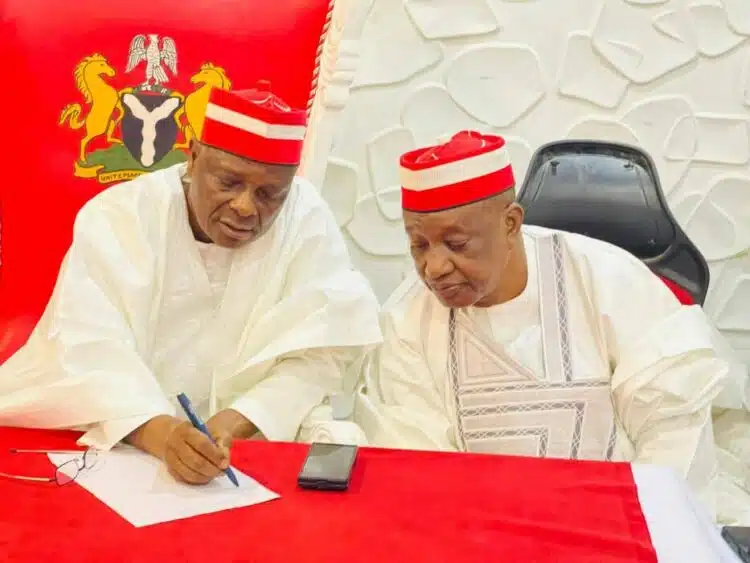
In the volatile theater of Kano State politics, the Kwankwasiyya Movement has issued a glowing tribute to its high-ranking members and elected officials who have chosen ideological consistency over political convenience. The movement, spearheaded by its National Spokesperson Dr. Habibu Sale Mohammed, took a public stand on Sunday to applaud Deputy Governor Aminu Abdulsalam Gwarzo and a host of lawmakers for their unwavering allegiance to the movement’s leader, Senator Rabiu Musa Kwankwaso. This formal commendation comes at a time when the state’s political landscape is being reshaped by a wave of high-profile resignations and shifting alliances.
The statement from the group serves as both a defense and a celebration of “political integrity.” It specifically highlights the actions of a broad spectrum of officials, including a sitting Senator, several Members of the House of Representatives, and a significant portion of the Kano State House of Assembly. According to the movement, these individuals have remained “resolute” in the face of what they describe as immense pressure and “numerous inducements” from both state and federal actors. For Kwankwasiyya, this loyalty is not merely a gesture toward a leader, but a fidelity to the mandate given by the people of Kano.
The heart of the current crisis in the state involves a mass exodus of political appointees from the Kano State Government. Scores of commissioners, special advisers, and executive secretaries have recently vacated their offices, citing an incompatibility between their personal convictions and the current direction of the administration. The movement has characterized these resignations as profound “sacrifices driven by conviction,” noting that these officials knowingly forfeited the perks and benefits of high office to maintain their alignment with Kwankwaso’s vision.
Interestingly, the movement revealed that Senator Kwankwaso himself had reached out to some of these appointees, urging them to reconsider their resignations. However, the spokesperson clarified that this request was not born out of political weakness or fear. Instead, it was an appreciative gesture for their contributions to governance. Despite this appeal, the officials reportedly insisted on stepping down, arguing that they could no longer serve within a “Gandujiyya-led orientation” that they perceive as being at odds with their foundational principles of social justice.
The ripple effect of these departures has extended far beyond the state capital, reaching deep into the grassroots of Kano’s twenty-four local government areas. The statement noted that local council secretaries, supervisory councillors, and even personal assistants have joined the trend of mass resignations. For the movement, this widespread participation is evidence of a “deep grassroots commitment” to fairness. They argue that the movement has successfully transitioned from a mere political faction into a social ideology that can survive even when its members are out of power.
This show of solidarity is a significant development in the ongoing rivalry between the Kwankwasiyya and Gandujiyya factions. By praising those who have stayed loyal, the movement is effectively drawing a line in the sand, signaling that it remains a potent force in Kano despite the loss of administrative control. The group’s leadership emphasized that the core of their movement is built on “service and sacrifice,” rather than just the desire to hold public office. They believe that the current wave of loyalty will ultimately “boost public confidence” in the possibility of principled governance in Nigeria.
The spokesperson’s remarks also touched upon the broader implications for Nigerian democracy. By resisting “inducements”—a common euphemism for political bribes or promises of future favors—the movement argues that its members are setting a rare example of political character. In a climate where party-switching is often the norm for survival, the Kwankwasiyya leadership sees this period of realignment as a “clarifying moment” that separates those driven by personal interest from those driven by the movement’s collective vision.
As Kano continues to navigate these turbulent political waters, the eyes of the nation remain fixed on how these resignations will impact the state’s stability. The government house has yet to fully detail its plan for replacing the dozens of high-ranking officials who have walked away, but the Kwankwasiyya Movement appears confident that their exodus has left a void that cannot be easily filled by political maneuvers. The movement remains steadfast in its belief that its ideological foundation is stronger than any temporary hold on state power.
Ultimately, the statement serves as a morale booster for those who remain within the fold and a warning to those who might be considering a switch. It reaffirms the movement’s commitment to its “Red Cap” identity and the social justice principles it was founded upon. For the Kwankwasiyya Movement, this period is not a crisis of desertion, but a “triumph of integrity” that they believe will pay dividends when the electorate next returns to the polls.