
Politics
Labour Party Leadership: INEC Lists Nenadi Usman Following Court Mandate
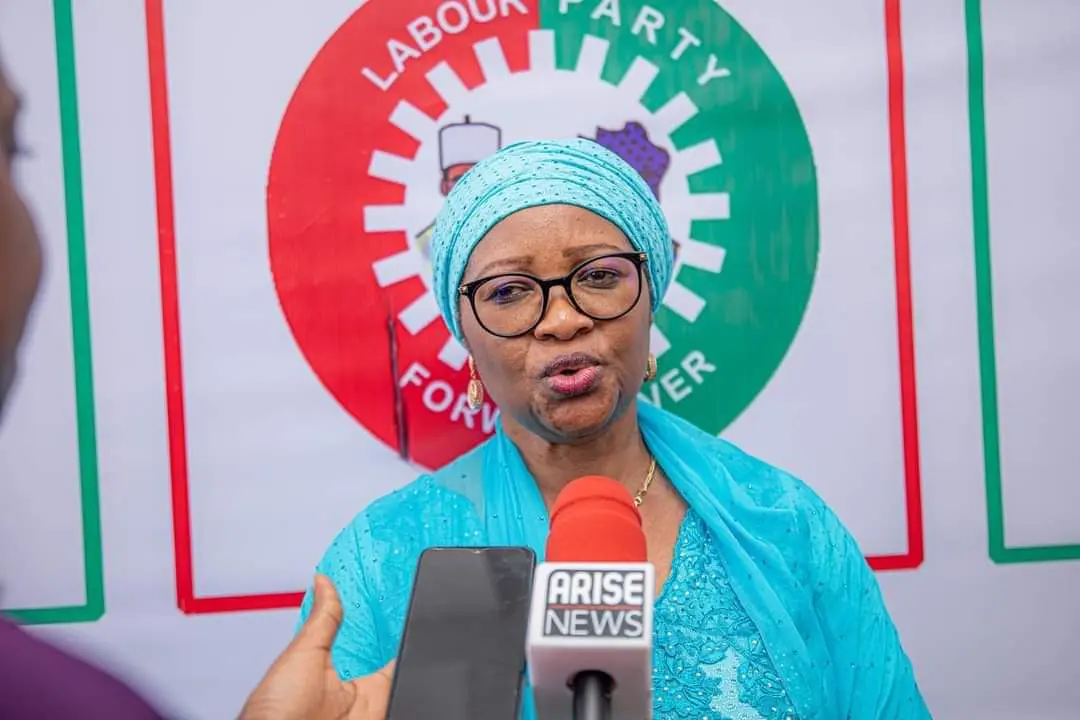
The prolonged leadership tug-of-war within the Labour Party (LP) has reached a definitive milestone as the Independent National Electoral Commission (INEC) formally updated its records to recognize the National Working Committee (NWC) led by Senator Nenadi Usman. This move, visible on the electoral umpire’s official portal as of Friday, marks a significant shift in the party’s administrative hierarchy following months of bitter internal disputes and high-stakes legal battles.
The update follows a January 21, 2026, ruling by Justice Peter Lifu of the Federal High Court in Abuja. The court directed INEC to immediately acknowledge the Usman-led caretaker committee as the authentic leadership of the party. In his judgment, Justice Lifu noted that the tenure of Julius Abure, the embattled former national chairman, had legally expired, rendering the appointment of a caretaker committee a constitutional necessity for the party’s continued operation.
According to the newly updated INEC database, Nenadi Usman is now officially listed as the Caretaker Committee Chairperson. She is supported by a team that includes Senator Darlington Nwokocha as National Secretary, Hamisu Santuraki as National Treasurer, Aisha Madije as National Financial Secretary, and Eric Ifere as National Legal Adviser. These appointments are expected to remain in place until the party conducts a valid national convention to elect substantive leaders.
The decision has been met with fierce resistance from the Julius Abure faction, which has already vowed to take the matter to the Court of Appeal. Obiorah Ifoh, the spokesperson for the Abure group, argued that the High Court’s ruling contradicts earlier Supreme Court positions, which suggest that the leadership of a political party is an internal affair beyond the jurisdiction of the courts. The faction maintains that their mandate remains valid despite the electoral commission’s recent administrative update.
The timing of this leadership change is particularly poignant as the 2027 general elections begin to loom on the horizon. The Labour Party, which became a formidable third force during the 2023 cycle under the “Obidient” movement, has seen significant structural changes in recent months. Most notably, Peter Obi, the party’s 2023 presidential candidate, has officially moved to the African Democratic Congress (ADC) as part of a broader opposition coalition, further complicating the Labour Party’s future trajectory.
With Governor Alex Otti of Abia State now serving as the national leader under this new arrangement, the Nenadi Usman-led committee faces the monumental task of reunifying a fractured party. The internal wrangling had previously led to the exclusion of the party from several consultative meetings and training sessions, a hurdle that the new leadership hopes to clear with this official recognition from INEC.
As the legal battle moves to the appellate level, the Labour Party remains at a crossroads. For many supporters, the focus has shifted from internal bureaucracy to the broader goal of maintaining the momentum gained in the last election. However, with the “Doctrine of Necessity” now being cited by the courts to justify this leadership overhaul, the party must move quickly to stabilize its ranks if it hopes to remain relevant in Nigeria’s evolving political landscape.
This recognition by INEC effectively strips the Abure faction of its official bargaining power with the commission, at least for the time being. Whether the Usman-led committee can hold the party together long enough to organize a successful convention remains the biggest question. For now, the “new” Labour Party is officially open for business under the watchful eyes of Nigeria’s electoral authorities.


