
NEWS
NAFDAC Tightens Grip on Sachet Alcohol Ban to Curb Youth Addiction
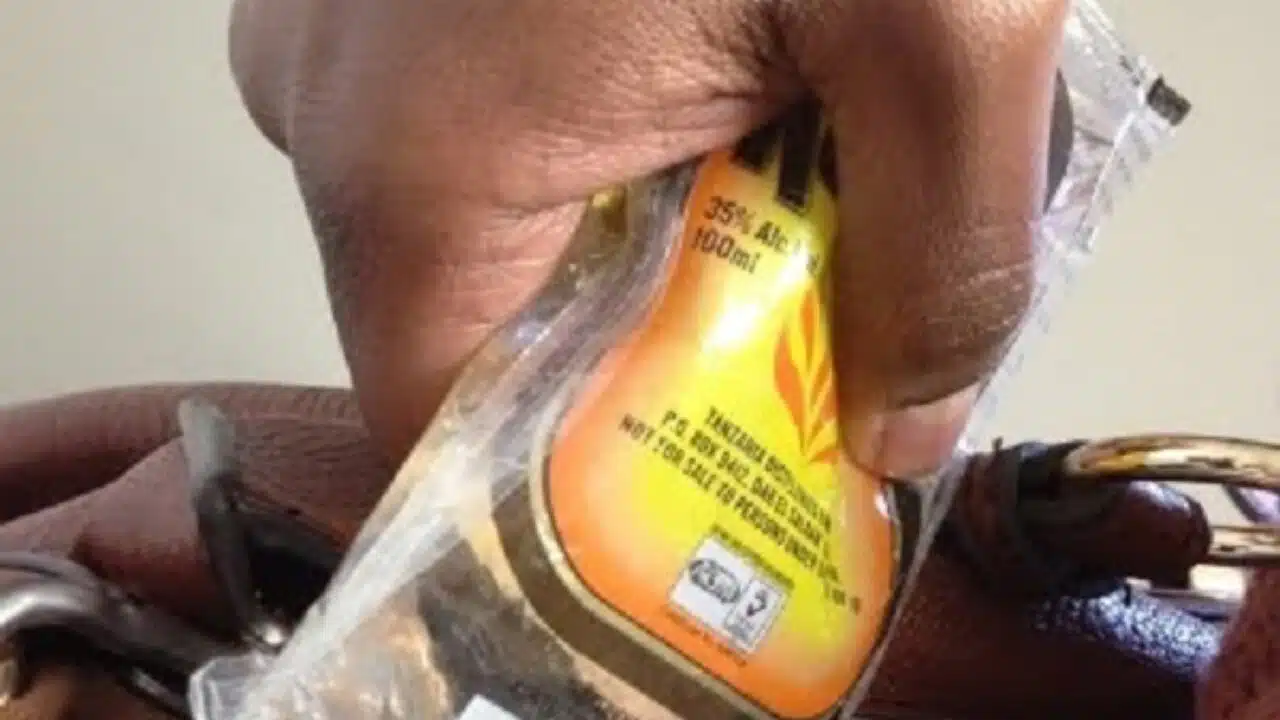
The streets of Lagos and Abuja are witnessing a regulatory showdown as the National Agency for Food and Drug Administration and Control (NAFDAC) ramps up its enforcement against small-scale alcohol packaging. For years, the sight of colorful, high-potency spirit sachets has been a staple at motor parks and kiosks, but the agency says the party is over for manufacturers who favor portability over public safety.
Professor Mojisola Adeyeye, the Director-General of NAFDAC, is leading this charge with a clear message: the health of Nigeria’s youth is not for sale. The agency has officially resumed the ban on alcoholic beverages packaged in sachets and PET or glass bottles smaller than 200ml. This isn’t a sudden ambush; it is the culmination of a five-year phase-out agreement that was meant to give companies time to pivot their business models.
The primary driver behind this aggressive stance is the alarming rise in underage drinking. Because these sachets are incredibly cheap—often costing less than a loaf of bread—and small enough to be hidden in a school uniform pocket, they have become the “drug of choice” for students. NAFDAC reports that the accessibility of these “pocket-sized” spirits has created a silent epidemic of addiction within the walls of secondary schools.
One particularly chilling anecdote shared by Professor Adeyeye involved a student who confessed to being unable to sit for an examination without first consuming a sachet of alcohol. This level of dependency among minors has signaled a red alert for the government. The agency argues that the “Not for Under 18” labels on these packs have proven entirely ineffective, as the physical format of the product itself invites abuse and easy concealment from parents and teachers.
Beyond the classroom, the social costs are mounting. The NAFDAC boss linked the prevalence of these small spirit packs to a spike in road traffic accidents, domestic violence, and school dropouts. When high-concentration alcohol is sold in bite-sized portions, it encourages frequent, impulsive consumption. The agency maintains that while it isn’t shutting down the alcohol industry entirely, it is mandating a shift to larger volumes that are harder to hide and more expensive for children to purchase.
However, the enforcement has hit a wall of resistance from the industrial sector. The Manufacturers Association of Nigeria (MAN) and various labor unions have raised the alarm over the economic fallout. Protesters recently gathered at NAFDAC’s Lagos office, claiming that this ban puts over five million jobs at risk. In an economy already grappling with inflation, critics argue that removing affordable spirits will devastate low-income workers and the distillers who serve them.
Industry leaders describe the policy as a “regulatory misstep” that fails to account for the economic reality of the average Nigerian. They argue that the ban will not stop alcohol abuse but will instead push the trade underground, potentially giving rise to unregulated, poisonous “moonshine” that could be far more lethal than the regulated sachets currently on the market.
Despite these protests, NAFDAC remains unmoved. The agency clarified that the moratorium, which was extended to December 2025, is the final grace period. No further extensions will be granted. The Senate has backed this resolution, aligning Nigeria with the World Health Assembly’s global strategy to reduce the harmful use of alcohol. To NAFDAC, the economic argument, while significant, cannot outweigh the long-term cost of a “broken generation” struggling with substance abuse.
Professor Adeyeye insists the move is protective rather than punitive. She emphasized that spirits are still legal, provided they are in containers of 200ml or more. The goal is to create a barrier to entry for the most vulnerable populations. By making alcohol less “pocket-friendly,” the government hopes to reduce the casual, daily consumption that leads to chronic health issues and social instability.
The agency is now collaborating with the National Orientation Agency and the Ministry of Health to launch a massive sensitization campaign. They aim to educate the public on why these “harmless” sachets are a threat to the nation’s future. As the 2025 deadline approaches, the tension between economic survival for manufacturers and the health mandate of the regulator is set to reach a breaking point.
For now, the enforcement teams are back on the field, seizing non-compliant goods and ensuring that the “sachet era” comes to a definitive close. NAFDAC’s message to the industry is simple: retool your production lines or face the consequences. The agency believes that the true wealth of Nigeria lies in the well-being of its citizens, a metric that cannot be measured by the profit margins of spirit producers.

