
NEWS
Nigeria Eyes Global Supply Chain Shift to Boost Jobs and Industry
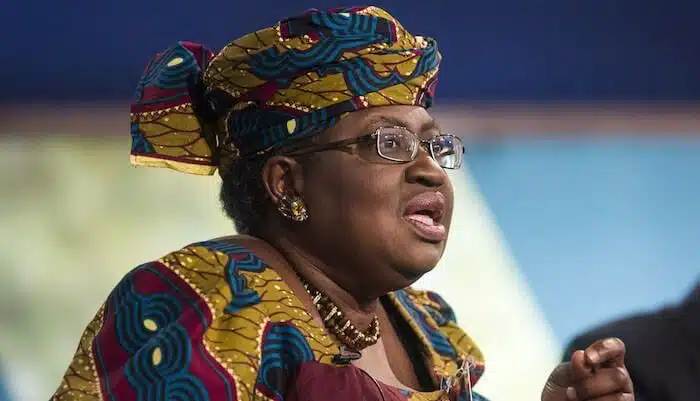
The Director-General of the World Trade Organization, Dr. Ngozi Okonjo-Iweala, has called on Nigeria to take an aggressive stance in courting global investors as the world’s supply chains undergo a historic realignment. Speaking on Wednesday at the “Nigeria House” pavilion during the 2026 World Economic Forum in Davos, Switzerland, the WTO chief emphasized that the “China+1” strategy—where multinational firms diversify production away from a single-country reliance—presents a golden opportunity for Nigeria to slash its import bill and solve its unemployment crisis.
Geopolitical friction and trade restrictions have triggered a massive movement of manufacturing hubs across the globe. While much of this shift has remained within Asia, specifically moving toward India and Vietnam, Okonjo-Iweala argued that Nigeria must fight for a “sizeable chunk” of these investments. She noted that while recent economic stabilization reforms under the current administration are encouraging, they must now pivot sharply toward tangible job creation to be truly successful.
Dr. Okonjo-Iweala’s strategy for Nigeria involves moving beyond passive reception of trade to active pursuit. She urged the government and private sector to “map where the opportunities are” and intentionally go after investors in major economies like the United States and China. According to her, every platform should be used to showcase Nigeria as a destination that is not only “open for business” but is a reliable partner in the global value chain.
The WTO head highlighted several specific sectors where Nigeria possesses a natural competitive advantage but remains dangerously dependent on foreign goods. She pointed to renewable energy, questioning why Nigeria continues to import solar panels despite its vast renewable capacity. “Let’s build solar panels in Nigeria,” she urged, noting that local manufacturing in this sector would serve both domestic energy needs and export potential.
Beyond energy, the textile and fashion industries were identified as low-hanging fruit for industrialization. Okonjo-Iweala lamented the irony of Nigerian fashion, observing that many of the high-quality textiles worn by citizens are imported rather than made at home. She called for an investment drive that brings textile factories back to Nigerian soil, ensuring that the “wax” and fabrics that define the nation’s culture are also products of its labor.
The pharmaceutical sector was also flagged as a critical area for supply chain localization. With Africa importing over 90% of its medicines, the WTO leader believes Nigeria can position itself as a regional manufacturing anchor. This would not only secure the nation’s health needs but also turn Nigeria into a hub for the African Continental Free Trade Area (AfCFTA), supplying essential drugs to the rest of the continent.
Supporting this investment drive, the Managing Director of the Bank of Industry, Dr. Oludapo Olusi, and the Minister of Finance, Mr. Wale Edun, reinforced the government’s commitment to fiscal discipline and infrastructure development. The launch of the first-ever “Nigeria House” in Davos, inaugurated by Vice President Kashim Shettima, serves as the physical manifestation of this new, deliberate approach to global economic engagement.
As the 2026 forum concludes, the message from the global trade community is clear: Nigeria cannot wait for the world to come to it. By targeting the “China+1” movement and prioritizing local manufacturing in energy, fashion, and health, the country can transform from a consumer of global goods into a vital architect of the world’s new supply chain network.


