
NEWS
Onoh Dismisses Concerns Over Tinubu’s Ankara Slip as Political Distraction
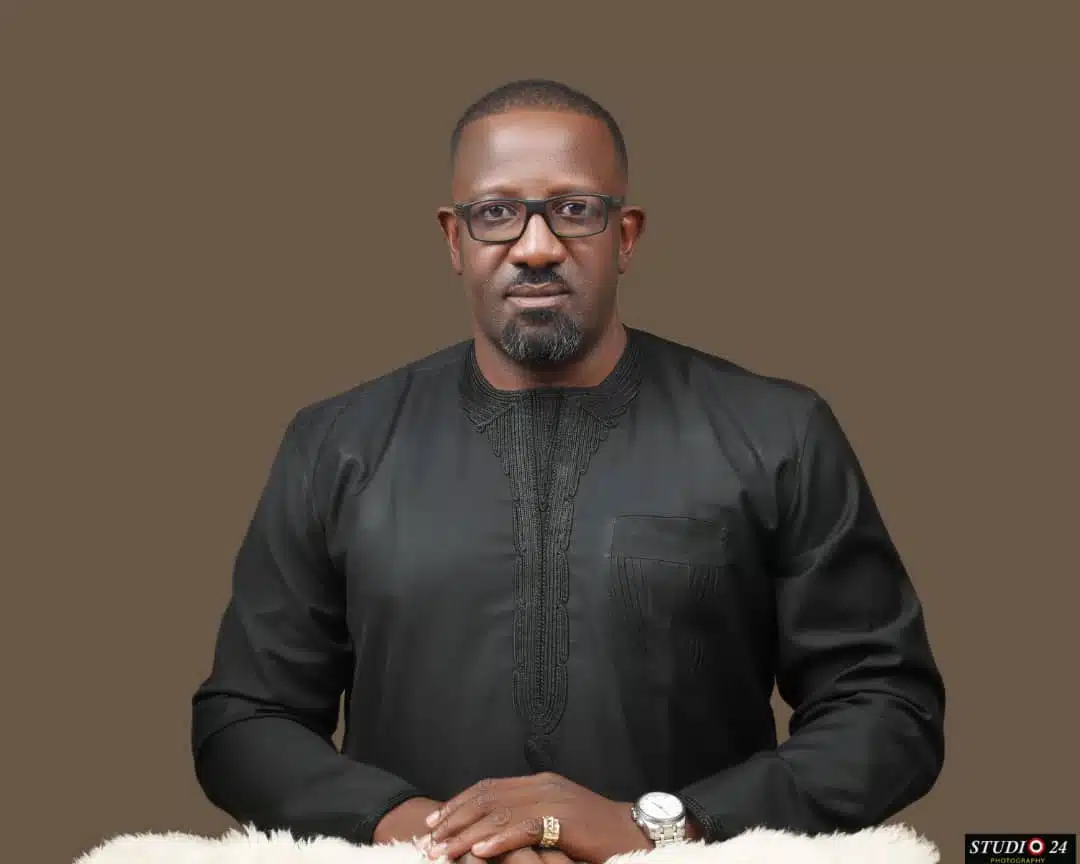
Denge Josef Onoh, the former Southeast Spokesman for President Bola Ahmed Tinubu, has moved to quell rising anxieties and speculative reports following a brief physical stumble by the President during his state visit to Ankara, Turkey. Onoh, who also serves as the Chairman of the Forum of Former Members of the Enugu State House of Assembly, characterized the incident as a routine human occurrence rather than an indicator of underlying medical issues.
The incident took place during a ceremonial welcome on Tuesday, where President Tinubu appeared to lose his footing momentarily. Footage of the event quickly saturated Nigerian digital spaces, prompting a wave of commentary ranging from genuine concern to sharp political criticism. However, Onoh was quick to describe the subsequent narrative as “baseless propaganda” orchestrated by opposition elements looking to capitalize on a fleeting moment of vulnerability.
In a detailed response, Onoh maintained that the slip did not detract from the high-level diplomatic objectives of the mission to Turkey. He emphasized that the President’s immediate recovery and seamless continuation of his official schedule demonstrated both physical resilience and professional composure. According to Onoh, the fixation on a single misstep reflects a shallow approach to political discourse in Nigeria.
The former spokesman argued that the environment of high-stakes diplomacy often involves demanding schedules and unfamiliar settings that can challenge any individual’s coordination. He noted that such incidents are far from unique to the Nigerian presidency and have historically affected some of the most powerful leaders in modern history without impacting their capacity to govern.
To provide global context, Onoh pointed to a long list of international precedents. He recalled the 1975 incident involving U.S. President Gerald Ford on the steps of Air Force One in Austria, as well as more recent examples like Joe Biden’s trip on aircraft stairs in 2021 and Barack Obama’s stumble at Andrews Air Force Base in 2015. He even referenced similar moments involving Chinese President Xi Jinping and the late Cuban leader Fidel Castro to illustrate that gravity is a universal equalizer.
These historical references were intended to remind the Nigerian public that physical slips are human moments that do not define a leader’s mental acuity or constitutional fitness. Onoh insisted that if the world’s most scrutinized leaders can recover from such moments without their health being questioned, the same standard of grace should be extended to President Tinubu.
Addressing the technical cause of the slip, Onoh echoed the explanation provided by the President’s advance team, which identified a poorly laid ceremonial carpet as the culprit. The uneven surface created a minor hazard during the procession, which led to the temporary loss of balance. He stressed that the event was purely environmental and not a physiological failure.
Following the stumble, the President proceeded to hold critical bilateral talks with Turkish President Recep Tayyip Erdoğan. These discussions focused on strengthening the economic and security ties between Nigeria and Turkey, a goal that Onoh described as the true priority of the trip. He argued that the success of these diplomatic engagements should be the focus of national headlines rather than a “three-second misstep.”
Onoh’s defense also took a philosophical turn, suggesting that the rigors of leadership often involve personal discomforts and sacrifices. He posited that any minor physical hiccup endured while advancing the “greater good of the nation” is ultimately insignificant in the grander scheme of national development and international relations.
The statement served as a direct challenge to opposition figures, whom Onoh accused of lacking constructive policy alternatives. He urged critics to engage the administration on economic reforms, national security strategies, and social welfare programs rather than amplifying “fleeting incidents” for cheap political points.
Furthermore, Onoh reaffirmed that the President remains in robust health and is fully capable of executing the demanding duties of his office. He called for a shift in national focus toward unity and progress, warning that excessive focus on trivialities only serves to polarize the country and distract from the actual work of governance.
The resilience displayed by the President in Ankara, according to Onoh, should be seen as a metaphor for the administration’s approach to national challenges: a brief hurdle followed by an immediate and focused return to the task at hand. He concluded by urging Nigerians to disregard the sensationalism of social media and trust in the stability of the presidency.
As the President continues his engagements in Turkey, the administration hopes that the focus will shift back to the tangible outcomes of the visit, including trade agreements and defense cooperation. For Onoh and other supporters, the Ankara incident is already a closed chapter, a mere footnote in a much larger narrative of Nigerian-Turkish partnership.