
METRO
Oyedepo Warns Against Church Fraudsters
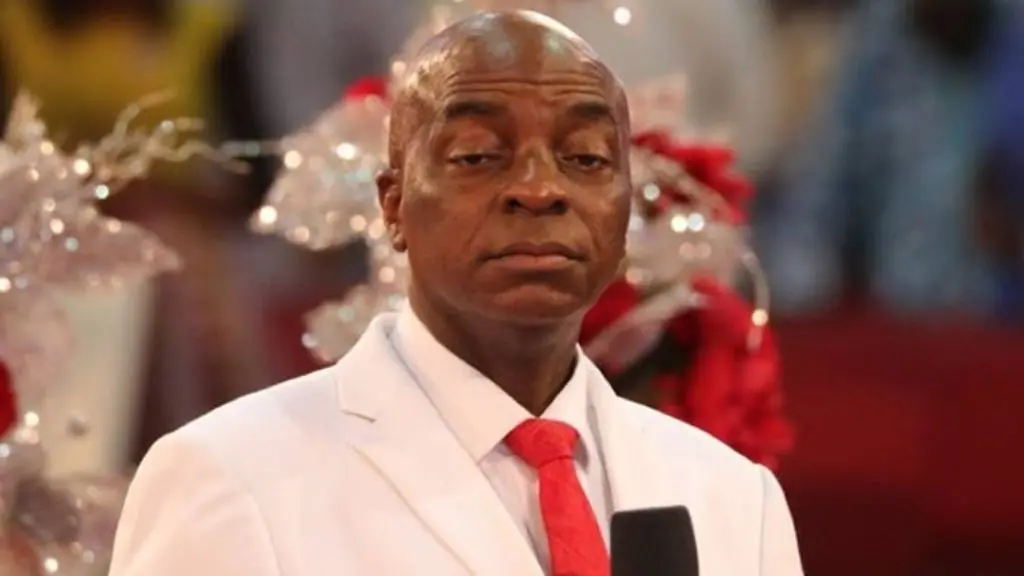
The spiritual landscape of Nigeria has been stirred by a candid warning from Bishop David Oyedepo, the founder of Living Faith Church Worldwide, regarding the rising tide of impersonation and financial scams targeting the faithful. Speaking during a recent mid-week service at the church’s headquarters, the influential cleric revealed that even the most sacred spaces are not immune to the activities of “419” practitioners. He shared a startling personal account of how an impostor attempted to use his identity to extort money from unsuspecting individuals, highlighting the sophisticated methods now employed by digital criminals.
During his sermon, Bishop Oyedepo recounted a specific incident where a fraudster successfully mimicked his persona to solicit funds. The scheme was nearly successful until a vigilant assistant intervened, leading to a direct confrontation that exposed the scam. According to the Bishop, the fraudster was so bold that when the assistant offered to put the “real” Oyedepo on the phone, the criminal could not maintain the facade. The cleric used this narrative to underscore a grim reality: his image and reputation are being weaponized by bad actors to trap those who are not spiritually or mentally alert.
The Bishop’s message was blunt and uncompromising, reflecting the urgency of the situation in an era where deepfakes and social media impersonation are becoming commonplace. He noted that fraudsters are “plenty” not just in the secular world—such as markets and schools—but are also infiltrating religious institutions. His counsel to the congregation was rooted in the concept of “walking in the truth,” a spiritual and practical directive aimed at ensuring that members do not fall prey to emotional or financial manipulation.
This revelation comes at a time when many Nigerians are increasingly vulnerable to “get-rich-quick” schemes and fraudulent prophetic claims. By speaking out, Oyedepo is attempting to fortify the defenses of his global audience, urging them to verify every claim, even those that seem to come from high-ranking religious figures. He emphasized that the “Lord’s curse” often follows those who persist in such deceit, but more importantly, he stressed that the responsibility for safety lies with the individual’s commitment to discernment and truth.
While the elder Oyedepo addressed the challenges of modern-day ministry, his son, Pastor Isaac Oyedepo, is making headlines for taking a radically different approach to church administration. The younger Oyedepo, who recently founded the Isaac Oyedepo Evangelistic Ministries, has announced the commencement of Sunday services in Abuja. However, it is the financial policy of this new assignment that has ignited a firestorm of discussion across social media and theological circles.
In a viral video that has since been widely debated, Pastor Isaac announced that his ministry would not be collecting offerings during its services. He attributed this unconventional decision to a direct instruction from God, stating that for this particular phase of his assignment, the focus must remain entirely on soul-winning and discipleship rather than financial contributions. This move is particularly striking given the long-standing traditions of many Nigerian mega-churches where tithes and offerings are central to the service structure.
Pastor Isaac was careful to clarify that his stance is not a critique of other ministries or the general biblical principle of giving. He acknowledged that while offerings are a standard practice in the body of Christ, his specific mandate for the Abuja services is to strip away the “traditional church financial practices” to prioritize the spiritual growth of his followers. His mission, he explained, is centered on a pure pursuit of Jesus Christ, aimed at reaching a generation that may have grown skeptical of organized religion due to financial controversies.
This development has drawn a spectrum of reactions from the public. Some see it as a refreshing “reset” for Nigerian Christianity, potentially bridging the gap between the church and those who feel financially burdened by religious obligations. Others view it as a bold, albeit risky, step in faith that challenges the status quo of ministry sustainability. Regardless of the perspective, the decision has positioned Pastor Isaac as a reformer within his own right, independent of the massive institutional structure established by his father.
The contrast between the two narratives is profound. On one hand, Bishop David Oyedepo is sounding the alarm on the external threats of fraud that seek to exploit the church’s resources and reputation. On the other, his son is internalizing a change in how those resources are gathered, opting for a model of radical trust in divine provision. Both stories highlight a shift in the Nigerian religious experience as leaders grapple with the complexities of the 21st century—be it through fighting digital impersonation or reimagining the “business” of faith.
Ultimately, the Bishop’s warning serves as a call for heightened vigilance. In a world where “419” has become a pervasive cultural shadow, his message is clear: whether in the market or the sanctuary, the truth is the only shield against the trap of the deceiver. As the Living Faith Church continues to expand, and as Pastor Isaac’s ministry carves its own unique path in the capital city, the overarching theme remains one of protection—protecting the flock from wolves in sheep’s clothing and protecting the message of the gospel from being overshadowed by the pursuit of silver and gold.

