
Politics
Political Tsunami Hits Kano as Governor Abba Yusuf Returns to APC
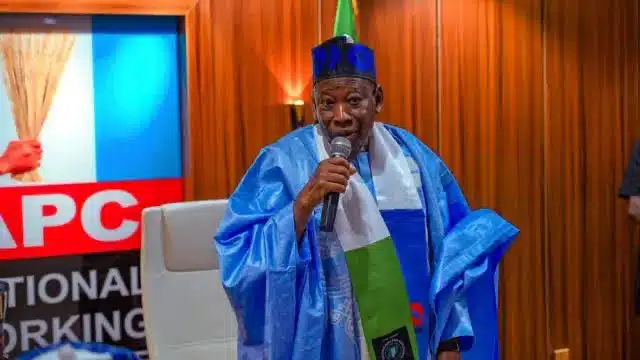
The political landscape of Northern Nigeria experienced a seismic shift today, Monday, January 26, 2026, as Kano State Governor Abba Kabir Yusuf officially formalised his return to the All Progressives Congress. In a move that local commentators are already describing as a “political earthquake,” the Governor ended months of high-stakes speculation by dumping the New Nigeria Peoples Party, a party that served as his vehicle to power in 2023. The defection was marked by the high-profile return of former APC National Chairman and erstwhile Governor of Kano State, Abdullahi Umar Ganduje, who arrived in the state to lead the welcoming party.
Ganduje, arriving in Abuja at dawn from a brief visit to London for his daughter’s graduation at King’s College, headed straight for Kano to spearhead the reception. His involvement is particularly poignant given the historically frosty relationship between the two leaders, suggesting a significant realignment of interests within the state’s power corridors. The former chairman’s Chief of Staff, Muhammad Garba, confirmed that Ganduje would not only welcome the Governor but also launch the APC’s latest electronic membership registration exercise, a legacy project from his tenure as party chairman.
The defection is far from a solo move. Governor Yusuf was accompanied into the APC by a massive contingent of loyalists, including 22 members of the Kano State House of Assembly, eight members of the House of Representatives, and all 44 local government chairmen across the state. In his formal address, the Governor described the shift as a “homecoming,” referencing his previous membership in the APC back in 2014. He cited the need for national cohesion and a desire to align Kano State directly with the Federal Government’s development agenda as the primary catalysts for his decision.
The reaction from the NNPP camp has been swift and stinging. Senator Rabiu Musa Kwankwaso, the national leader of the Kwankwasiyya movement and the Governor’s long-time mentor, reportedly described the day as “World Betrayal Day.” The fallout has effectively fractured the NNPP, which had long considered Kano its strongest fortress. Opposition parties, including the PDP and Labour Party, have also weighed in, accusing the defecting governors of prioritizing personal political safety over the mandates entrusted to them by the electorate.
For Governor Yusuf, the strategic benefits of the move appear to outweigh the immediate political backlash. By joining the ruling party, he secures a more direct line to President Bola Tinubu’s administration, which he believes will accelerate infrastructure projects and security coordination in Kano. Spokespersons for the Governor emphasized that “prevailing realities of governance” made the move inevitable, as the state seeks to maximize its influence at the national level ahead of the 2027 general elections.
As the APC e-registration commences at the Coronation Hall of the Government House, the atmosphere in Kano remains electric. The influx of NNPP heavyweights into the APC is expected to fundamentally alter the state’s voting blocs and campaign strategies for years to come. While critics argue that such mass defections weaken the country’s multi-party democracy, supporters insist that unity between the state and the federal center is the only viable path to meaningful development in Nigeria’s most populous state.