
NEWS
Shettima Launches Literacy Drive for 10 Million Nigerians
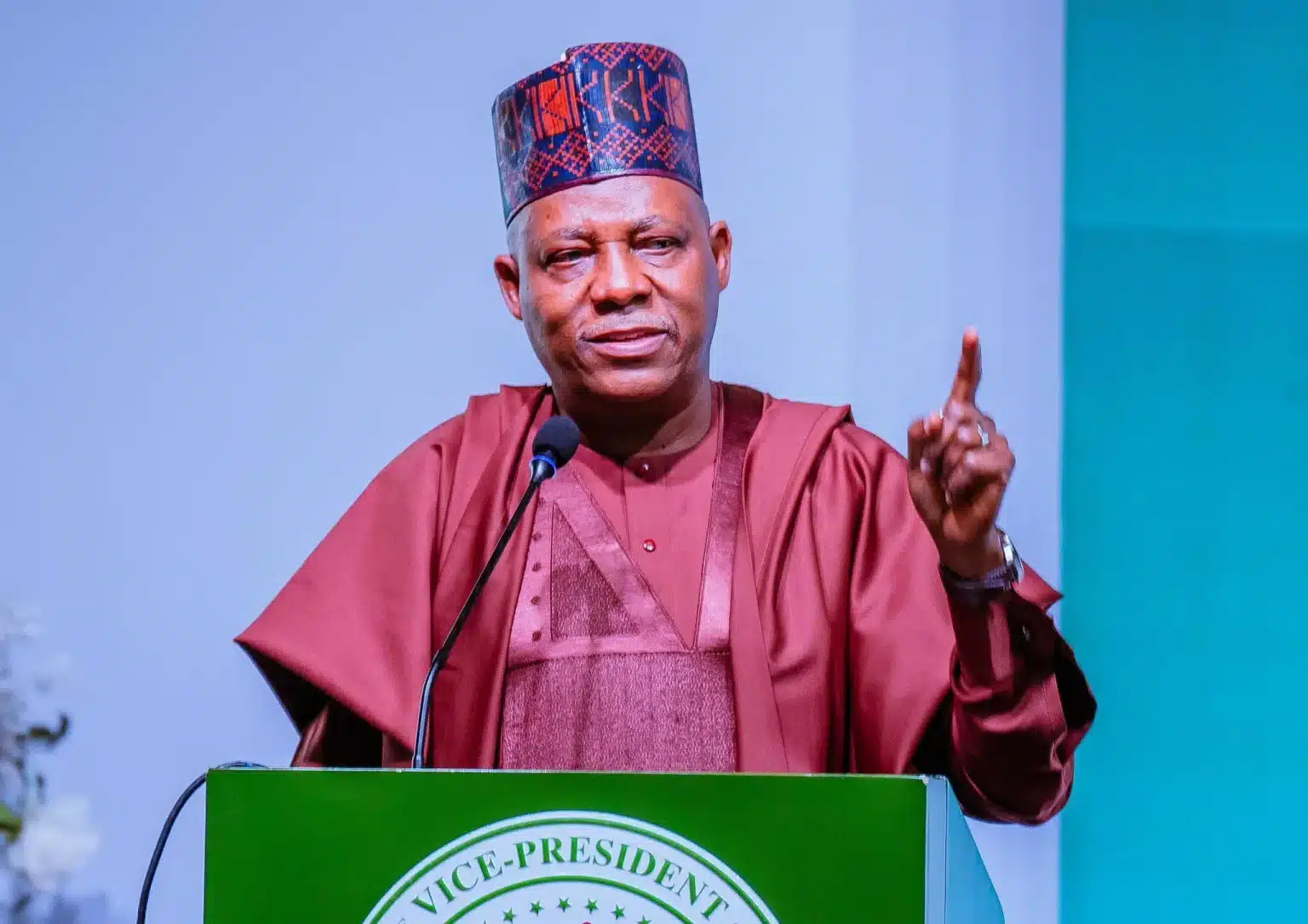
In a decisive move to bridge the gap between financial access and economic empowerment, Vice-President Kashim Shettima has officially flagged off a massive national initiative. The Federal Government is set to provide free financial literacy and inclusion training to 10 million Nigerians, with a deliberate focus on uplifting women and the youth. This ambitious project, spearheaded by the Presidential Committee on Economic and Financial Inclusion, marks a shift from simply opening bank accounts to building a workforce capable of navigating the complexities of a modern digital economy.
The Vice-President emphasized that the initiative is much more than a classroom exercise; it is a strategic investment in Nigeria’s human capital. During the launch event, he argued that the nation’s dream of achieving a one-trillion-dollar economy cannot be built on a foundation of weak skills or fragmented standards. For Shettima, the goal is to transform the “demographic dividend” of Nigeria’s massive youth population into a tangible economic engine. This requires not just access to money, but the competence and ethical grounding to manage it effectively.
Central to the success of this programme is a newly signed Memorandum of Understanding between the government and six of Nigeria’s most prestigious professional bodies. These institutions include the Institute of Chartered Accountants of Nigeria (ICAN), the Chartered Institute of Bankers of Nigeria (CIBN), and the Chartered Institute of Stockbrokers (CIS). Also joining the fray are the National Institute of Credit Administration (NICA), the Chartered Risk Management Institute, and the Nigerian Institute of Innovation and Entrepreneurship.
This partnership is designed to pull expertise directly from the heart of the financial sector. These bodies will be responsible for designing training modules that cover everything from investment knowledge and digital competencies to credit risk management. The Vice-President noted that for too long, financial inclusion has been treated as a slogan. He believes that without accountants who can help small businesses formalize, or bankers who prioritize consumer protection, the system will remain broken.
The “Aso Accord on Economic and Financial Inclusion” serves as the guiding light for this mission. It operates on the principle that true inclusion is achieved through trust and capability. Shettima warned that the digital age brings new threats, and therefore, risk professionals must be trained to anticipate digital vulnerabilities while innovators are empowered to turn raw ideas into sustainable enterprises. The training aims to create a ripple effect where informed citizens become the bedrock of an inclusive growth strategy.
By prioritizing women and youths, the government is targeting the demographics most frequently sidelined in formal economic circles. The programme seeks to equip these groups with the tools needed to thrive in a rapidly evolving marketplace where digital literacy is no longer optional. The Vice-President was clear in his directive: the MoU must not become another piece of paperwork gathering dust. It is a “living document” intended for immediate and aggressive execution across the 36 states and the Federal Capital Territory.
Technological support for the project will be provided by WAWU Africa, acting as the technical partner. The organization is tasked with building and maintaining the digital platforms required to reach millions of Nigerians simultaneously. This digital-first approach ensures that the training can scale quickly, overcoming the geographical barriers that often hinder large-scale government interventions. It allows for a standardized certification pathway, giving participants a recognized credential that can help them secure employment or credit.
Supporters of the move, including ICAN President Malam Haruna Yahaya, have praised the initiative as a natural progression of the Tinubu administration’s economic reforms. They argue that as the economy stabilizes and begins to grow, the citizenry must be prepared to participate in that growth. The involvement of professional institutes adds a layer of credibility and institutional memory that is often missing from purely political projects. It ensures that the curriculum is grounded in real-market practices.
Dr. Nurudeen Zauro, the Technical Adviser to the President on Economic and Financial Inclusion, reinforced the sentiment that infrastructure alone is not a silver bullet. He pointed out that having a mobile phone or a bank branch nearby means nothing if the individual does not know how to use those tools productively or sustainably. This programme is designed to provide that missing link, ensuring that the “unbanked” or “underbanked” do not just enter the financial system, but flourish within it.
As the training kicks off, the eyes of the nation will be on the Presidential Committee to see how effectively these modules are delivered. If successful, the programme could redefine wealth creation for a generation of Nigerians, moving the needle from mere survival to genuine financial independence. Vice-President Shettima’s declaration serves as a call to action for every professional body involved to treat this as a national emergency—one where the prize is a more resilient and inclusive Nigerian economy.


