
Entertainment
Speed Darlington on American Struggles
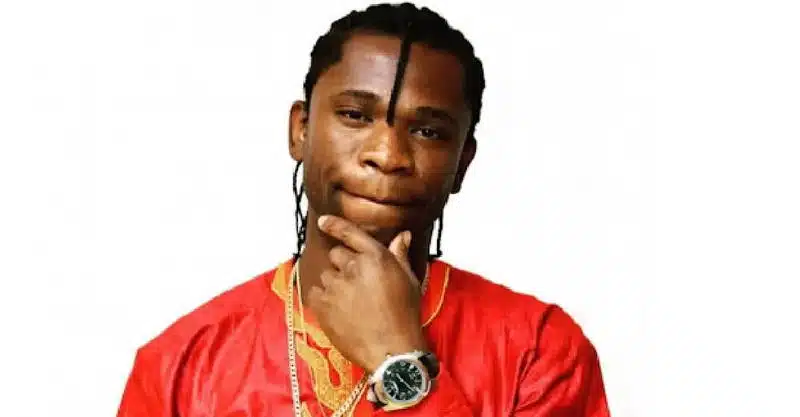
In a strikingly vulnerable social media broadcast, the polarizing Nigerian entertainer Speed Darlington has pulled back the curtain on the psychological toll of his long-term residency in the United States. The singer, known for his eccentric persona and unfiltered commentary, confessed that his twenty-three years abroad did not yield the “American Dream” many expect. Instead, he described a decades-long experience that systematically eroded his self-worth and left him with little more than a string of legal entanglements.
Central to his revelation was the profound impact of the American social climate on his identity as a Black man. Darlington explained that the atmosphere in the U.S. often demands that Black men “over-prove” themselves just to attain a baseline of respect. For him, this constant pressure resulted in a self-confidence that he described as being “in the gutter.” He admitted that while he maintains the right to enter and exit the country at will, he no longer views it as a place conducive to his mental or physical well-being.
One of the most candid moments in his reflection involved his inability to navigate romantic or social interactions while in the States. The singer revealed that he suffers from a crippling lack of confidence whenever he attempts to approach women in America. He cited deep-seated anxieties regarding his accent and a nagging fear of being mocked or deemed inadequate. This social paralysis, he noted, led to intense periods of isolation and loneliness that sometimes lasted for years, creating a cycle of frustration he is no longer willing to endure.
Darlington’s critique of his time abroad was not limited to his social life but extended to his financial and legal history. He lamented that after more than two decades, his primary “inheritance” from the United States consisted of a recurring cycle of arrests and criminal records. “America did not favor me,” he stated bluntly, challenging the narrative that migration automatically leads to success. He painted a picture of a man who felt “caged” despite being in the center of a global superpower.
In a sharp contrast, the artist credited Nigeria as the source of his tangible achievements and financial independence. He proudly pointed to his mansion, complete with a rooftop swimming pool, as a testament to the opportunities he found in his home country. Interestingly, he attributed a significant portion of the funding for his property to his public disputes and viral moments within the Nigerian entertainment scene. He specifically mentioned his high-profile “feud” with fellow artist Portable, noting that the revenue generated from that local controversy helped finalize the construction of his home.
The singer’s preference for the Nigerian environment is rooted in a sense of belonging and racial visibility. He noted that in Nigeria, the shared identity of being Black and dark-skinned removes the “othering” he felt in the West. He described a feeling of being “something” in Lagos, whereas he felt like “nothing” in the United States. This sense of communal validation has become a cornerstone of his mental health, leading him to decide that he will only visit the U.S. for short intervals to see family before returning to his base in Nigeria.
Darlington’s narrative serves as a provocative counter-commentary to the “Japa” phenomenon, a term used to describe the mass emigration of Nigerians seeking better lives abroad. By openly discussing his failures and the “mansion money” he made at home, he challenges the youth to reconsider the value of their local influence. He argued that it is better to be “in a forest climbing trees and be free” than to exist in a prestigious location while feeling psychologically imprisoned.
The entertainer’s admission about his “endless loneliness” and the resulting habits of a solitary life in the U.S. added a raw, humanizing layer to his usually boisterous public image. It revealed a man grappling with the complexities of the diaspora experience—the feeling of being caught between two worlds and finding that the one promised to be “greater” was actually the one that diminished him most.
As the video continues to circulate, it has sparked a wider conversation about the hidden costs of migration, including the loss of cultural confidence and the struggle for dignity in foreign systems. For Speed Darlington, the choice is now clear: he values the freedom and financial rewards of the Nigerian “forest” over the suffocating constraints of the American city. His story remains a unique, if controversial, testament to the idea that home is not just where you live, but where you feel adequate.