
NEWS
Stalemate at the Senate: Electoral Act Reforms Hang in the Balance
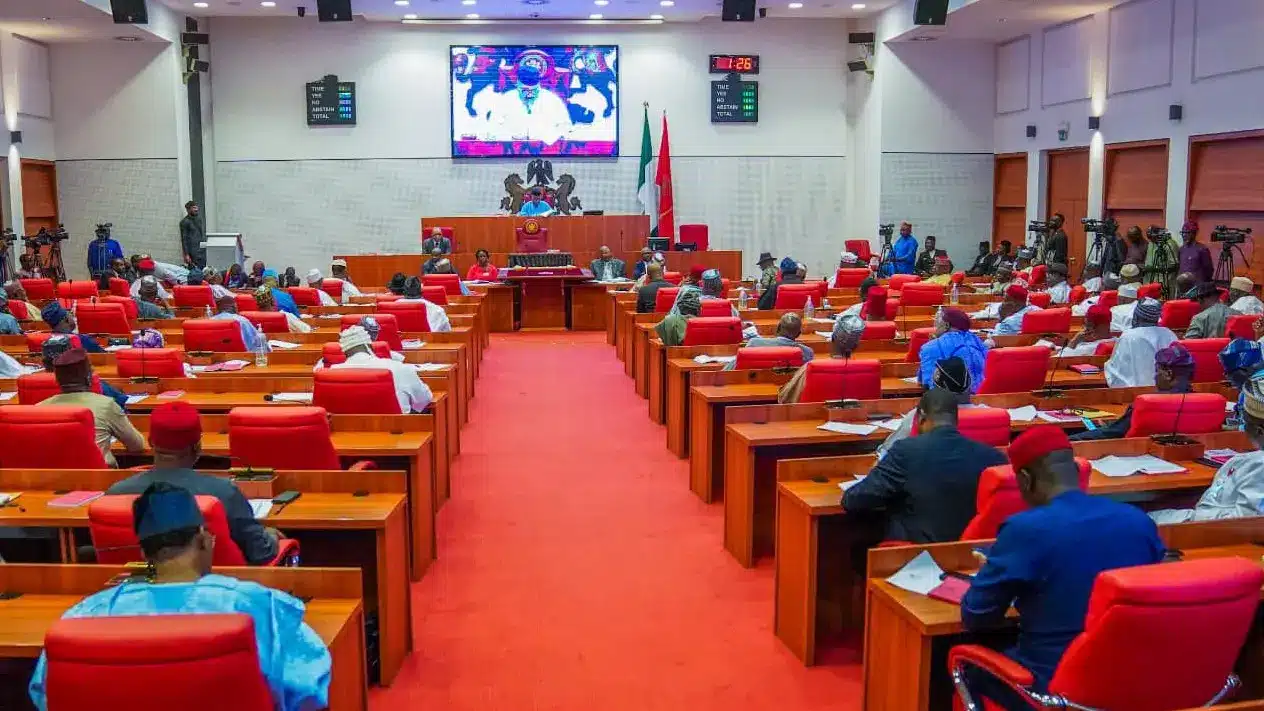
The hallowed chambers of the Nigerian Senate became a theater of high-stakes legislative maneuvering on Tuesday as the much-anticipated passage of the Electoral Act 2022 Repeal and Re-enactment Bill hit a significant roadblock. For over four hours, the nation’s lawmakers remained sequestered behind closed doors, grappling with the technical and political intricacies of a document that many believe will define the integrity of Nigeria’s future democratic exercises. Despite the marathon deliberation, the session ended in a cliffhanger, leaving the fate of the 2026 amendment bill shrouded in uncertainty.
The day began with a palpable sense of urgency. The Senate had converged to review the consolidated report of a seven-member ad hoc committee, a group tasked with the Herculean labor of harmonizing the diverse and often clashing opinions of the country’s senators. This committee, birthed from a heated debate just a week prior, was supposed to provide the legislative roadmap needed to navigate the complexities of the repeal and re-enactment process. However, as the clock ticked past the four-hour mark in a restricted session, it became clear that a consensus was far from reach.
Senate President Godswill Akpabio emerged from the executive session with a measured demeanor that revealed little of the tension inside. Instead of the expected announcement regarding the bill’s progress or its passage to a third reading, the Senate leadership opted for silence. Akpabio declined to disclose the specific outcomes of the secret deliberations, choosing instead to adjourn the plenary to the next legislative day. This tactical retreat has effectively stalled the momentum of the bill, sparking a wave of speculation within the corridors of power.
The ad hoc committee at the heart of this process is led by Senator Niyi Adegbomore, the Chairman of the Senate Committee on Judiciary, Human Rights, and Legal Matters. His team is a star-studded lineup of legislative heavyweights, including former governors and veteran politicians such as Senators Adamu Aliero, Aminu Tambuwal, Adams Oshiomhole, and Danjuma Goje, alongside Senators Tony Nwoye and Titus Zam. This group was given the mandate to distil a unified report from a mountain of submissions, a task that has proven to be as much about political diplomacy as it is about legal drafting.
Earlier in the Tuesday session, the chamber had briefly discussed the documents submitted by the Chairman of the Senate Committee on Electoral Matters, Senator Simon Lalong. These papers reportedly contained exhaustive proposals and rigorous justifications for refining the country’s electoral laws. The shift to a closed-door format was intended to allow lawmakers to scrutinize these sensitive documents away from the glare of the public eye, presumably to speak more candidly about the potential shifts in the electoral landscape.
The delay is particularly striking given the weight of expectations resting on the 2026 Bill. With the scars of previous electoral cycles still fresh in the national memory, the demand for a more robust framework—one that addresses electronic transmission of results, voter accreditation technology, and the independence of the electoral umpire—has reached a fever pitch. Yet, the Senate’s inability to move past the committee report stage suggests that deep-seated disagreements still persist over the fine print of these reforms.
This is not the first time the upper chamber has hit the pause button on this specific legislation. Last week, the Senate deferred consideration of the bill to give members more time to digest the proposed changes. Many observers had hoped that Tuesday’s session would be the “final push” needed to move the bill toward presidential assent. Instead, the lack of a clear resolution has raised uncomfortable questions about whether the bill is being refined or if it is being slowly suffocated by political interests.
Inside sources suggest that the friction points revolve around the balance of power between local and federal electoral authorities, as well as the transparency of data during the collation process. In a country where the Electoral Act serves as the manual for political survival, every comma and period in the new bill is a potential battleground. The ad hoc committee’s challenge is to find a middle ground that satisfies both the reformists calling for total transparency and the pragmatists wary of over-digitization.
The silence from the Senate leadership following the adjournment has only added to the public’s anxiety. Without a formal briefing, Nigerians are left to wonder if the bill will resurface in its original form or if it will be significantly watered down during these private sessions. The postponement effectively places the electoral roadmap in a state of suspended animation, a move that critics argue could undermine the preparations of the Independent National Electoral Commission (INEC).
As the Senate prepares to reconvene, the pressure on the Niyi Adegbomore-led committee and the Senate President continues to mount. The eyes of the international community and the Nigerian electorate remain fixed on the National Assembly, waiting for a sign that the legislative branch is ready to deliver a law that can withstand the pressures of a general election. For now, the Electoral Act Amendment Bill remains a work in progress, trapped in the delicate gears of parliamentary compromise.


