
NEWS
Sunday Igboho Cleared to Return to Nigeria Following Exile
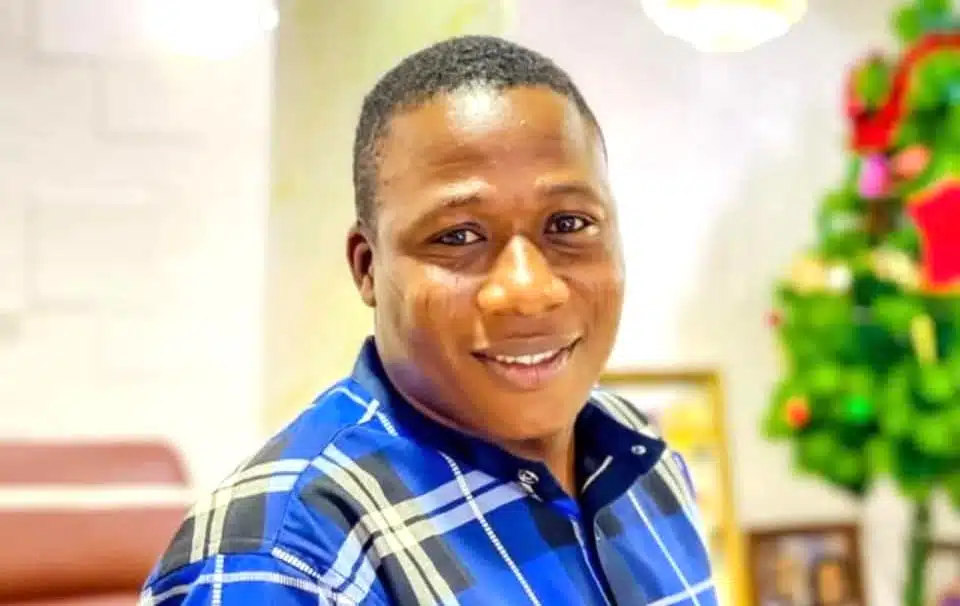
The long-running saga of Yoruba Nation activist Sunday Adeyemo, widely known as Sunday Igboho, appears to be reaching a peaceful resolution as reports emerge of his imminent return to Nigeria. After years of self-imposed exile and legal battles that stretched across international borders, the prominent figure is finally set to set foot on home soil. This development comes as a significant relief to his supporters across the South-West and the diaspora, marking the end of a turbulent chapter in the region’s recent political history.
The news of his homecoming was facilitated by the high-level intervention of prominent Yoruba traditional rulers, most notably the Olubadan of Ibadanland, Oba Rashidi Ladoja, and the Ooni of Ife, Oba Adeyeye Ogunwusi, Ojaja II. These monarchs, alongside other influential stakeholders, reportedly engaged in quiet but persistent diplomacy to ensure that Igboho could reintegrate into society without the threat of immediate arrest. Their involvement underscores the deep cultural and social weight the activist continues to hold within the Yoruba heartland.
Olayomi Koiki, the spokesperson for the activist, confirmed the development in a statement that resonated with a sense of triumph. He noted that the hurdles preventing Igboho’s return have been effectively cleared, describing the moment as one of profound joy for Ibadanland and the wider Yoruba community. According to the camp’s narrative, the authorities no longer list him as a wanted man, effectively granting him the status of a free citizen once again.
While the exact date of his arrival remains under wraps for logistical and security reasons, the atmosphere in Ibadan is already one of anticipation. For many, Igboho’s return represents more than just a personal homecoming; it is seen as a symbolic victory for communal advocacy. His team has promised to make travel arrangements public in the coming days, as they prepare for what many expect to be a massive reception in his home state of Oyo.
The journey to this point has been fraught with hardship for the Ibadan-based businessman. Just last year, in 2025, Igboho made an emotional public appeal, expressing his exhaustion with life in exile. During a visit to the Olugbon of Orile-Igbon, Oba Olusola Alao, he pleaded with the administration of President Bola Tinubu to rectify the legal anomalies that kept him abroad. He argued that he was not a criminal and should not be subjected to the restrictions that had frozen his bank accounts and rendered his Nigerian passport unusable.
Igboho’s legal troubles began under the previous administration of the late President Muhammadu Buhari. His activism reached a boiling point in early 2021 when he issued a controversial eviction notice to herders in the Igangan area of Oyo State, following a series of violent attacks on local residents. While his actions earned him the status of a folk hero among those frustrated by insecurity, they also placed him directly in the crosshairs of federal security agencies.
The situation turned violent on July 1, 2021, when operatives of the State Security Service (SSS) conducted a midnight raid on his Ibadan residence. The operation resulted in a deadly shootout that claimed the lives of two of his associates and left his property in ruins. Igboho managed to escape the raid, eventually surfacing in the Republic of Benin. However, his attempt to flee to Germany was cut short at the Cotonou Airport, where he was arrested by Beninese authorities on July 19, 2021.
What followed was a protracted legal battle in the neighboring West African nation. Igboho spent nearly two years in detention and under strict judicial supervision in Cotonou. His incarceration sparked frequent protests across major Nigerian cities and among the diaspora, with many viewing his detention as a politically motivated attempt to silence regional advocacy. Even after his release from Beninese custody in March 2022, he remained in a state of limbo, unable to return to Nigeria due to the pending charges and his “wanted” status.
In the wake of the latest news, Igboho’s camp has expressed immense gratitude to President Bola Tinubu for what they perceive as a more accommodating approach to the situation. They also extended thanks to the various Yoruba sons and daughters worldwide who provided financial and moral support during his years in the wilderness. The shift in the federal government’s posture is being viewed as a gesture of goodwill aimed at fostering national reconciliation and regional stability.
As Nigeria prepares for his return, questions remain about what role, if any, Igboho will play in the current political landscape. While his focus in the past was on the perceived marginalization of the Yoruba people and issues of rural security, it is yet to be seen if he will resume his activism or settle into a more quiet, private life. Regardless of his future path, his return marks a definitive conclusion to a period of intense friction between local advocacy and federal authority.