
NEWS
Sunday Igboho Returns: How Tinubu Paved the Way for Activist’s Homecoming
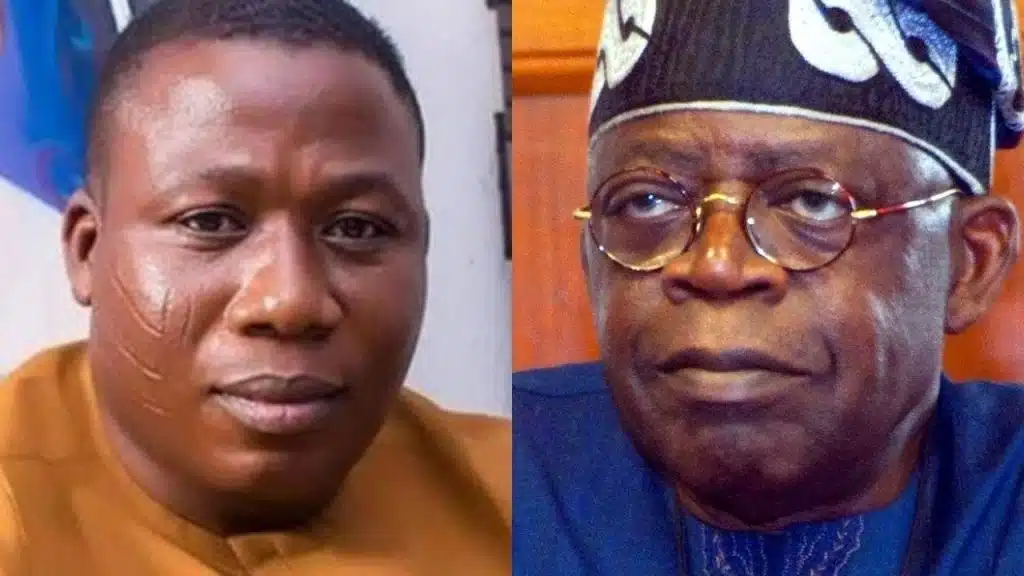
The socio-political landscape of Southwest Nigeria experienced a seismic shift this week as Sunday Adeyemo, the firebrand Yoruba nation activist better known as Sunday Igboho, officially ended his nearly five-year exile. His return to Nigerian soil marks a dramatic conclusion to a saga that began with a bloody midnight raid and ended with a high-level diplomatic and political resolution involving the presidency and traditional rulers.
In a candid statement issued from the heart of Ibadan, the Oyo State capital, Igboho broke his silence on the circumstances surrounding his reappearance. He explicitly credited President Bola Ahmed Tinubu for exercising “mercy and magnanimity” by granting him the freedom to return home without the looming threat of immediate arrest or persecution that had defined his relationship with the previous administration.
The activist’s journey into the wilderness began in July 2021, following a violent encounter with the Department of State Services (DSS) at his Soka residence. The raid, which resulted in the deaths of two aides and the detention of several others, forced Igboho to flee across the border into the Republic of Benin. He was subsequently detained in Cotonou for several months, facing a legal battle that kept him in a state of diplomatic limbo for years.
Now back on his home turf, Igboho’s tone has shifted from the militant rhetoric of the past to one of reconciliation and collaboration. He acknowledged that his freedom was not an isolated event but the result of intense lobbying and intervention by the South West’s most powerful traditional and political figures. He expressed deep gratitude to the “revered” traditional institution for brokering the peace that allowed him to walk free.
Specifically, Igboho lauded the roles played by the Ooni of Ife, Oba Adeyeye Ogunwusi, and the Olubadan of Ibadan, Oba Rashidi Ladoja. These monarchs, along with the Olugbon of Orile Igbon, Oba Francis Olushola Alao, were instrumental in navigating the delicate political waters between the activist and the Federal Government. Their involvement underscores the enduring influence of traditional rulers in resolving internal security and political tensions.
The activist also extended an olive branch to the Federal Government, offering to partner with the Tinubu administration to address the “ravaging insecurity” currently plaguing the nation. He emphasized his readiness to support measures that enhance peace and socio-economic growth, particularly within the South West region, signaling a transition from an agitator to a potential stakeholder in regional stability.
Political observers view this development as a significant win for President Tinubu’s administration in its quest for internal cohesion. By facilitating Igboho’s return, the presidency has effectively de-escalated one of the most potent sources of ethnic friction in the South West. It reflects a tactical shift toward dialogue rather than the heavy-handed security approach that characterized the later years of the Buhari era.
Igboho did not hold back in his appreciation for the governors of the South West, praising them for their collective and individual roles in maintaining the interests of the Yoruba people. He gave a special nod to Governor Seyi Makinde of Oyo State, whom he described as a visionary leader. He specifically noted the visible infrastructural transformation of Oyo State under Makinde’s watch, which he claimed has become the envy of other states.
The timing of his return coincides with the 50th anniversary of Oyo State, a milestone that Igboho noted with pride. He celebrated the “giant strides” made by past and present leaders in building a foundation for the state’s current growth. His presence in Ibadan during such a celebratory period adds a layer of symbolic closure to a chapter of unrest that had long troubled the ancient city.
Despite his newfound cooperation with the state, Igboho reaffirmed his commitment to the “collective interest” of the Yoruba ethnic nationality. He stated that the love and support he received from his kinsmen during his exile were “massive” and pledged to continue advocating for the protection and unity of his people, albeit through more collaborative channels than before.
The return of Sunday Igboho is more than just a personal homecoming; it is a litmus test for the “Renewed Hope” agenda’s ability to heal old wounds. Whether this peace holds will depend on the continued synergy between the activist, the traditional council, and the security agencies. For now, the streets of Ibadan remain calm, reflecting a cautious optimism that the era of confrontation has finally given way to a season of reconciliation.

