
Politics
The Buhari Factor: How an Unlikely Alliance Secured Kano
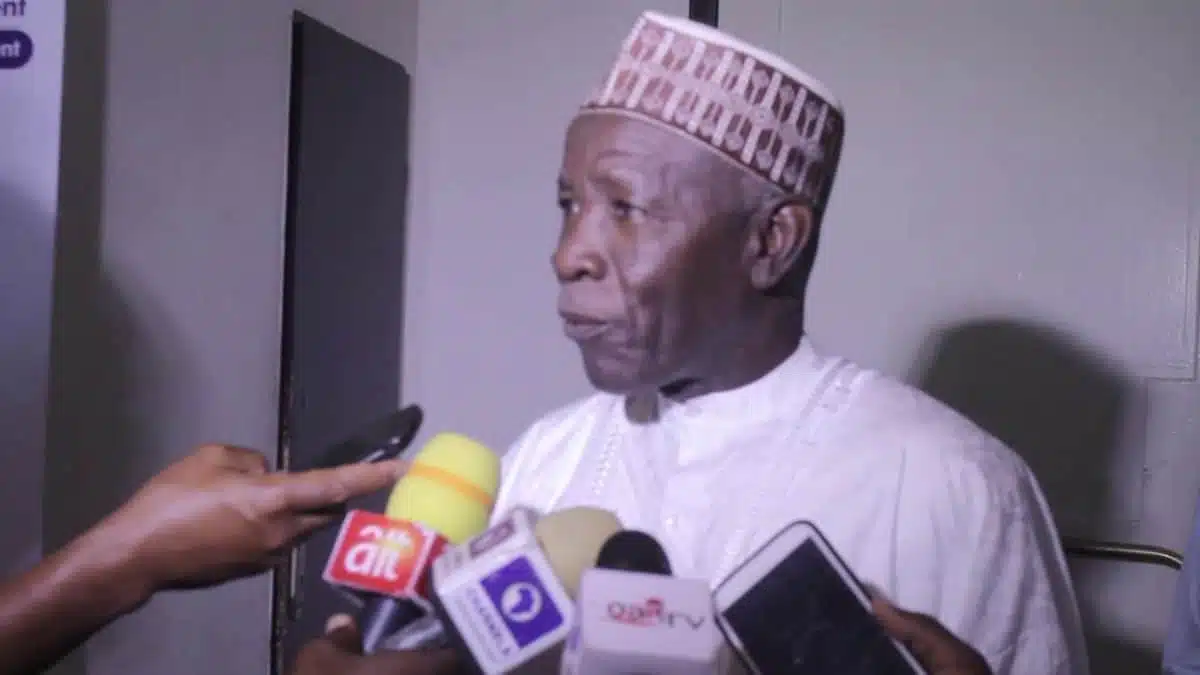
The political landscape of Northern Nigeria is rarely short of drama, but the latest revelations from Buba Galadima have sent shockwaves through the power corridors of the Sahel. Galadima, a seasoned political strategist and a chieftain of the New Nigeria Peoples Party (NNPP), has pulled back the curtain on the 2023 Kano State governorship election. His claim is as startling as it is controversial: that former President Muhammadu Buhari was the secret architect behind Governor Abba Kabir Yusuf’s ascent to power.
According to Galadima, the story of the 2023 election cannot be told without revisiting the wounds of 2019. For years, the NNPP and its supporters have nursed the grievance that the 2019 mandate was snatched from them and handed to the incumbent at the time, Abdullahi Ganduje. Galadima alleges that it was Buhari himself who facilitated that initial “theft” of victory. However, in a twist of fate that reads like a political thriller, the former president reportedly experienced a change of heart that reshaped the destiny of Kano four years later.
The catalyst for this shift, Galadima suggests, was a personal falling out between the former president and his one-time ally, Ganduje. The veteran politician alleges that Buhari’s support evaporated after he felt personally insulted by the former governor. The specific bone of contention was an alleged use of a derogatory Hausa metaphor by Ganduje. By likening a leader to a notorious caricature of irresponsibility, Ganduje reportedly crossed a line that the stoic retired general could not ignore.
This personal friction supposedly translated into a directive for justice during the 2023 transition. Galadima claims that when forces within the All Progressives Congress (APC) sought to repeat the 2019 playbook and overturn Abba Yusuf’s victory, Buhari stood his ground. The former president allegedly insisted that since Yusuf had been deprived once before, he must be allowed to keep his hard-won mandate this time. It is a narrative that portrays Buhari not just as a departing leader, but as a repentant kingmaker seeking to balance the scales of history.
Galadima did not stop at the presidency; he also cast a long shadow over the Nigerian judiciary. He painted a grim picture of the legal battles that followed the election, alleging that the tribunal and appellate processes were marred by intimidation and “written judgments.” He claims that judges were whisked away to Abuja to deliver predetermined verdicts. It was only at the Supreme Court, according to Galadima, that the “bloodbath” feared by many was averted. He suggests that the apex court judges were keenly aware of the 2019 injustice and refused to be complicit in a second electoral heist.
However, the most stinging part of Galadima’s revelation wasn’t about the past, but the present. In a move that highlights the shifting sands of political loyalty, he criticized Governor Abba Yusuf for what he perceives as a betrayal of the divine path that brought him to power. Galadima lamented that Yusuf has shifted his allegiance from “the house of God” to “the house of Tinubu.” This critique suggests a growing rift within the NNPP, as the governor seeks to navigate the complex waters of federal-state relations under the current administration.
Galadima’s warning to the governor was stern and steeped in religious undertones. He cautioned that relying on human political structures—specifically the APC’s machinery—over the principles of justice would lead to a “temporary victory.” By seeking a cozy relationship with the presidency in Abuja to secure a 2027 win, Galadima argues that Yusuf is forsaking the very grassroots and divine support that fought for his mandate in the first place.
The veteran politician’s disclosures serve as a reminder that in Nigerian politics, the official result is often only a fraction of the story. The roles of personal ego, ancient grudges, and backroom directives often outweigh the visible democratic process. If Galadima is to be believed, the 2023 victory in Kano was a product of Buhari’s guilt and a desire for a clean exit, rather than a simple tally of votes.
As the 2027 general elections slowly appear on the horizon, these revelations set a tense stage for Kano. The state remains the ultimate prize in Northern politics, and the battle for its soul continues to involve the biggest names in the country. Whether Abba Yusuf can maintain his grip on power while balancing the expectations of his original benefactors and his new allies in Abuja remains the million-naira question. For now, Galadima has ensured that the “world knows” his version of how the crown was won—and how easily it might be lost.


