
NEWS
Diezani Denies Bribery: Former Petroleum Minister Fights London Corruption Charges
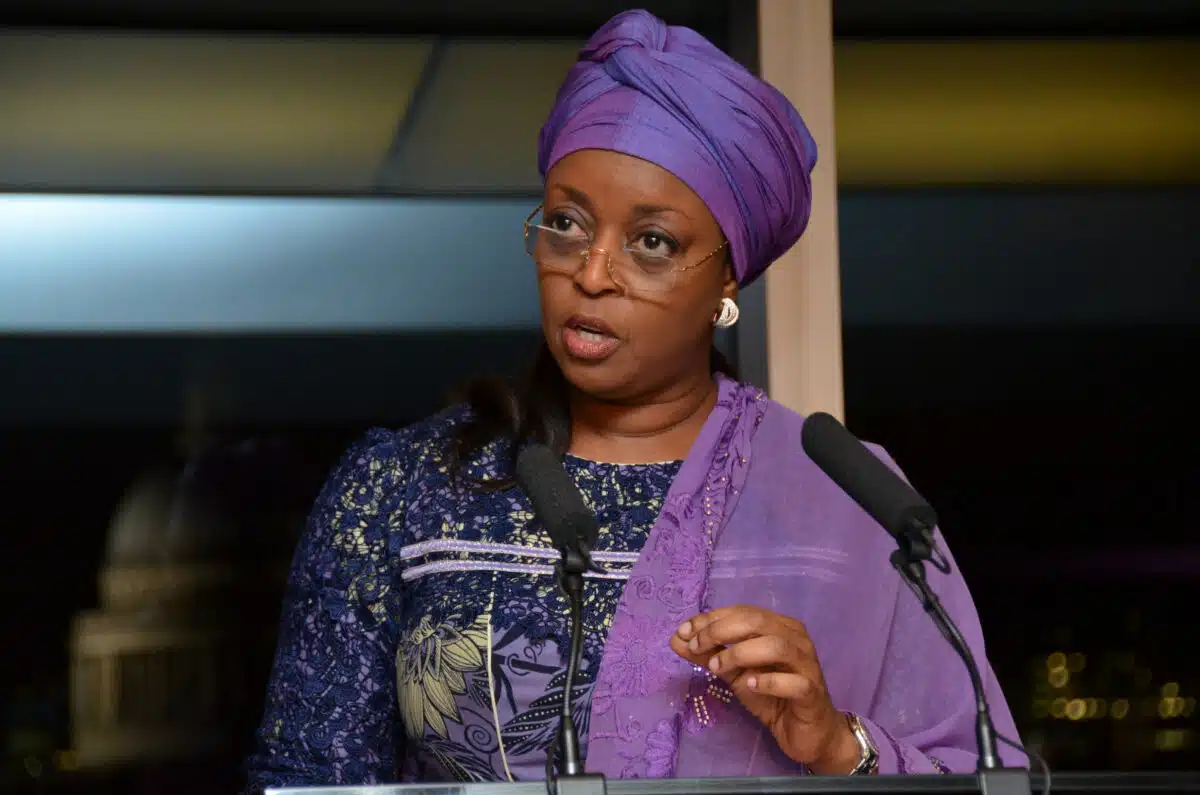
The long-awaited legal showdown involving one of Nigeria’s most powerful former officials has finally reached a fever pitch in the United Kingdom. Diezani Alison-Madueke, the former Minister of Petroleum Resources, stood before a London court this week to formally deny a litany of corruption allegations. With a firm plea of not guilty, she set the stage for a high-stakes trial that promises to peel back the curtain on the inner workings of Nigeria’s oil sector during her tenure.
Dressed for the gravity of the occasion, the 65-year-old former minister faced five counts of accepting bribes and one charge of conspiracy to commit bribery. The charges, brought by the UK’s National Crime Agency, span a four-year window between 2011 and 2015. This period coincides with her leadership of the petroleum ministry, a role that gave her immense influence over the continent’s largest oil reserves and the state-owned oil corporation.
Prosecutors laid out a staggering narrative of excess and illicit influence-peddling. They alleged that Alison-Madueke sat at the center of a web of “significant financial advantages” offered by individuals desperate for lucrative oil and gas contracts. According to the Crown’s case, the former minister didn’t just accept traditional cash payments; she allegedly benefited from a lifestyle funded by those seeking her favor.
The details presented in Southwark Crown Court sounded more like a script for a high-society drama than a legal proceeding. The prosecution claimed she received roughly £100,000 in cold cash, the use of chauffeur-driven luxury vehicles, and multiple private jet flights to and from Nigeria. The allegations extended to her domestic life, including the expensive refurbishment of several London properties and the coverage of staff costs.
Beyond the real estate and travel, the charges touched on deeply personal expenses. The court heard claims that bribes were funneled into paying the school fees for her son. Furthermore, prosecutors pointed to a trail of luxury goods from world-renowned retailers like Harrods and Louis Vuitton, suggesting that the spoils of office were used to fund a taste for high-end fashion and lifestyle items.
However, the defense team, led by Jonathan Laidlaw, offered a starkly different interpretation of these events. Laidlaw presented a defense rooted in the practicalities—and restrictions—of Nigerian political life. He argued that the former minister was legally forbidden from maintaining foreign bank accounts while in office, which necessitated a different way of handling expenses while abroad.
The defense insists that while purchases were made on her behalf, there was no intent to defraud or accept illicit gains. According to her legal team, any personal expenses incurred were reimbursed by Alison-Madueke once she was back in Nigeria. They contended that expenses related to her official duties as a government representative were appropriately covered by state coffers, rather than by private interests seeking favors.
This “reimbursement” defense is central to her strategy. Laidlaw told the jurors that his client disputes the scale of the benefits the prosecution claims she received. He argued that she received no actual financial advantage from her position and that the narrative of corruption is a misunderstanding of how high-level Nigerian officials must navigate international travel and logistics without foreign banking access.
The trial is being watched closely on both sides of the Atlantic. In Nigeria, Diezani Alison-Madueke remains a polarizing figure, symbolizing to many the alleged excesses of the previous administration. In the UK, the case represents a significant test of the National Crime Agency’s ability to prosecute “grand corruption” involving foreign politically exposed persons (PEPs) who use London as a hub for their financial activities.
For years, the former minister has lived in the UK, often citing health concerns as a reason for her continued absence from Nigeria, where she also faces various legal inquiries. This London trial, however, is the most direct legal challenge she has faced to date. It forces her to answer for the specific items and services that the UK government claims were the “price” for doing business in Nigeria’s oil industry.
As the proceedings continue, the court will likely delve deeper into the identities of the businessmen who allegedly provided these benefits. The prosecution intends to prove that there was a direct “quid pro quo” relationship—that the private jets and luxury shopping trips weren’t mere gestures of friendship, but calculated investments aimed at securing oil contracts worth billions of dollars.
The defense, meanwhile, will seek to humanize the former minister and frame her actions as part of the complicated reality of a high-ranking official working within a rigid Nigerian legal framework. They aim to show that the paper trail of “benefits” is actually a trail of logistics and reimbursements that has been mischaracterized by investigators unfamiliar with Nigerian administrative norms.
This case serves as a landmark moment in international anti-corruption efforts. It highlights the increasing cooperation between global law enforcement agencies to track the movement of wealth and the influence of powerful figures across borders. For the Nigerian public, the trial offers a rare, detailed look at the allegations that have dominated headlines for nearly a decade.
The outcome of this trial will have far-reaching implications. A conviction would be a massive win for the UK’s anti-bribery units and a significant moment for Nigerian activists calling for accountability. An acquittal, on the other hand, would be a major vindication for Alison-Madueke and a stinging rebuke to the investigators who have pursued her across continents.
As the evidence continues to unfold at Southwark Crown Court, the world remains focused on the woman who once held the keys to Nigeria’s most valuable resource. Whether she was a victim of administrative complexity or the architect of a massive bribery scheme is now in the hands of a London jury.