
METRO
Soludo Widens Crackdown on Market Sit-at-Home
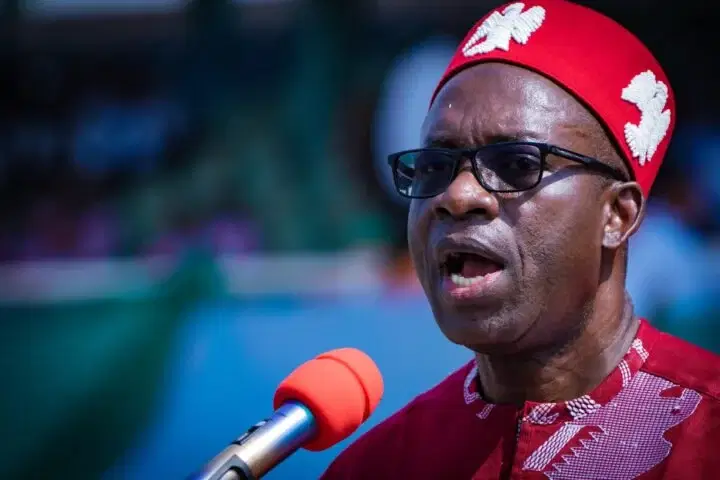
Anambra State Governor Chukwuma Soludo has intensified his administration’s offensive against the illegal Monday sit-at-home, extending a compulsory “open for business” mandate to twelve more major markets. The directive follows the high-profile sealing of the Onitsha Main Market, a move that sent shockwaves through the region’s commercial nerve center after traders allegedly defied government orders to resume operations on the first day of the week.
The state government, through a circular signed by Chief Evarist Uba, Special Adviser to the Governor on Trade and Markets, made it clear that the era of choosing when to open is over. Markets now under the microscope include heavyweights like Ochanja Central, Bridgehead, and the Building Materials Market in Ogidi. Also listed are the sprawling auto parts hubs in Nnewi, Nkpor, and Obosi, signaling that the crackdown is aimed at the state’s most critical economic arteries.
The administration has framed this as a battle against “economic sabotage.” Officials estimate that Anambra alone hemorrhages approximately N8 billion every Monday the shops remain shut, a staggering figure that contributes to a regional loss of nearly N20 billion. Governor Soludo has remained firm, insisting that the state cannot allow its future to be held hostage by a practice that has no legal standing and serves only to cripple local livelihoods.
The penalty for non-compliance is severe. Any market that fails to show full activity on Mondays faces a potential one-month closure. Furthermore, individual shops that remain locked risk being sealed by the government, with the added threat of legal prosecution for the owners. It is a high-stakes game of chicken between the state’s executive power and a long-standing tradition of fear-induced compliance with non-state directives.
Tensions have already boiled over in Onitsha, where the one-week closure of the Main Market sparked protests. Traders, caught between government sanctions and the fear of violent reprisals from those enforcing the sit-at-home, marched through the streets demanding a more nuanced approach to security. While some leaders have appealed for leniency, the government has responded by deploying a heavy security presence to ensure its orders are not ignored.
To address the brewing crisis, Governor Soludo has summoned market leaders to a crucial meeting on Thursday, January 29, at the International Convention Centre in Awka. The gathering is expected to be a frank discussion on the “soul of Anambra’s future,” with chairmen, secretaries, and zonal leaders from across the state’s trading hubs in attendance. Security is expected to be tight, with officials screening attendees to prevent any outside interference or disruption.
The government’s stance is that the sit-at-home has outlived any perceived purpose and has transitioned into a habitual economic drain. While critics argue that forced openings may escalate insecurity, the Soludo administration maintains that reclaiming Mondays is essential for meeting the state’s ambitious 2026 revenue goals and restoring investor confidence. As the February deadline for civil servant pay adjustments also looms, the message from Awka is unmistakable: Anambra is open for business, even on Mondays.
The coming days will prove whether this “tough love” approach can finally break the cycle of weekly shutdowns or if it will further strain the relationship between the government and the millions of traders who power the state’s economy. For now, the shutters are expected to stay up, or the locks might just stay on—courtesy of the state.


